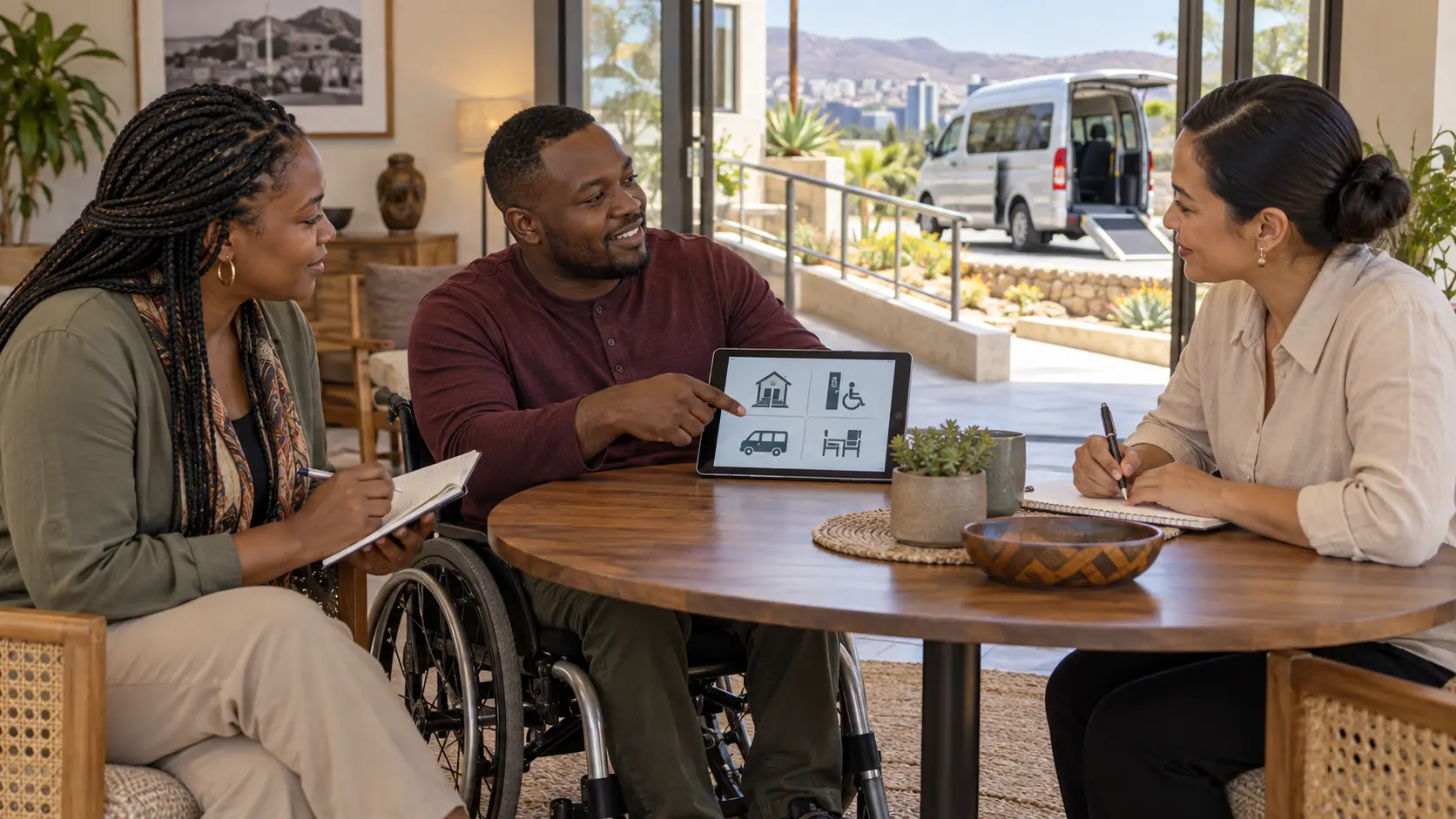
To find out whether a service will work for you, don’t just ask “is it accessible?” Describe what the person needs to be able to do, and ask about features someone can actually observe or measure. A step-free entrance, the usable width of a doorway, the height of the step into a vehicle, the distance over gravel or sand, a seat with a backrest, a quiet space, written instructions or the option of someone accompanying you are all separate questions. For a domestic flight, tell the airline about your needs when you book: with FlyNamibia, assistance must be booked no later than three working days before departure. A precise answer lets you decide; a bare “yes” leaves far too much open to interpretation.
In short
- Share only the functional needs that matter for the service, not a medical file.
- Break the visit into stages: arrival, entrance, moving around, toilets, the activity itself, breaks and departure.
- Ask for measurements, recent photos or descriptions whenever a detail would change your decision.
- Add the questions your route raises: gravel roads, raised vehicles, camps, charging equipment.
- Flights: mention your needs when you book; with FlyNamibia, no later than three working days before departure.
- Sort what is essential, what is preferred and what is flexible, then get the adjustments, their cost and the fallback plan in writing.
Start with the person, and leave the decision with them
If you are booking for someone else, begin by asking what they want to share and what usually helps them judge a place or a service. Two people using the same equipment can have quite different needs. Don’t promise on their behalf that a step “won’t be a problem”, or that a helping hand will make up for an adjustment that isn’t there.
You usually don’t need to explain a diagnosis. A functional description is far more useful: “I can walk a few metres but can’t manage steps”, “I need the key information in writing”, “the child needs a quiet space to take a break” or “the wheelchair is this wide”. The provider can then respond to a concrete situation rather than a label.
Walk through the whole visit
| Stage | Questions to ask |
|---|---|
| Arrival | Where can the vehicle drop you off? What surface, how far, what slope? |
| Entrance | Are there steps, a threshold, a ramp, a heavy or narrow door? |
| Moving around | How far, over which surfaces, past which obstacles, and where can you sit down? |
| The service | Can the pace, instructions, sound, lighting or format be adjusted? |
| Toilets | Where are they, how do you get there and what fittings are there? |
| The unexpected | Is there a shorter way out, a quiet space or an alternative? |
A chain is only accessible if every link you need is. A step-free room doesn’t help if the transfer from the car park is impossible. An adaptable tour isn’t enough if the vehicle can’t carry the equipment. For a journey between towns, combine this grid with the intercity transport checklist.
What a Namibian route adds to the list
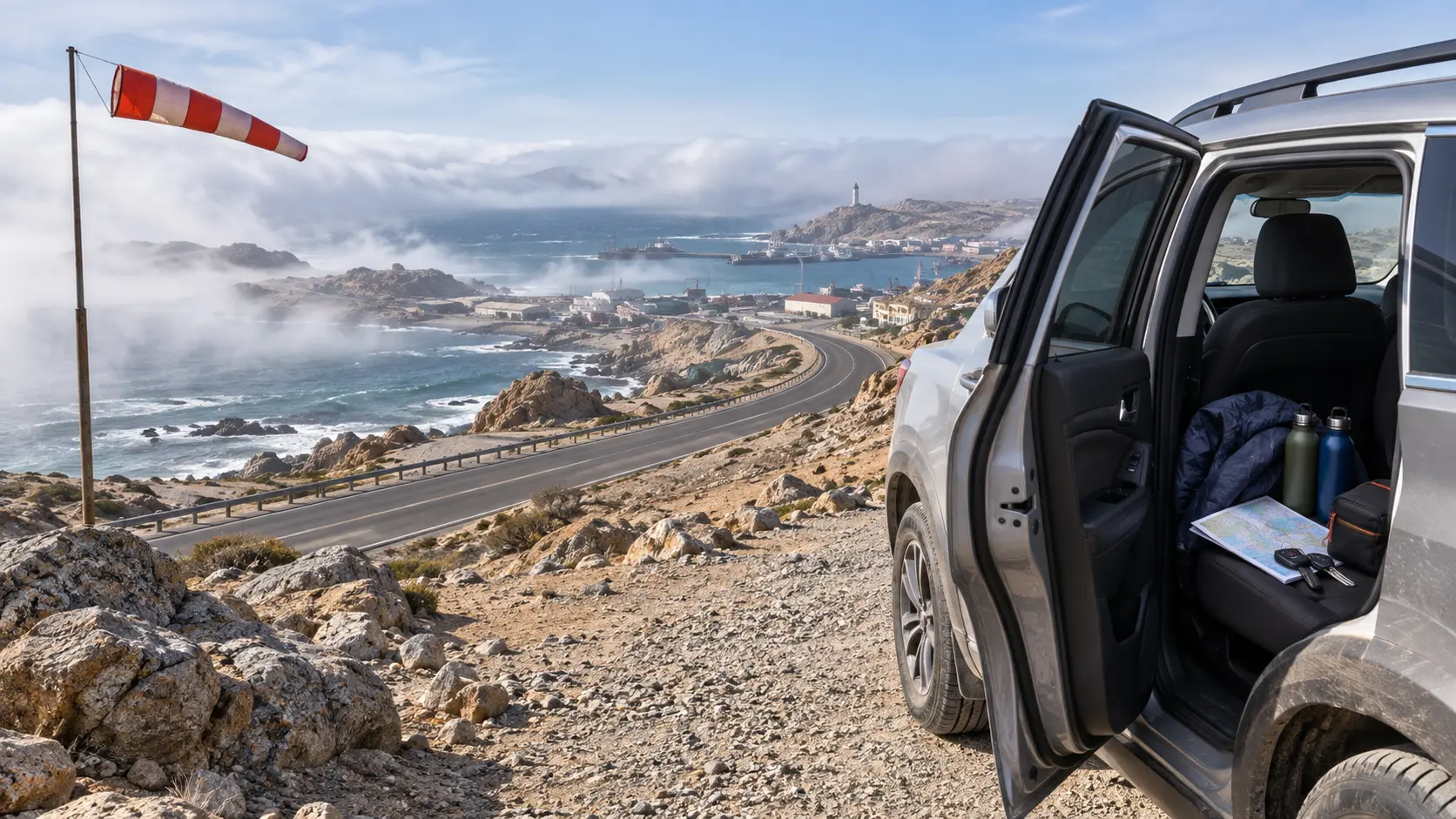
A trip through Namibia can mix towns, long drives and remote places. The table below doesn’t describe any real venue: it turns situations you might meet into measurable questions. Ask only the ones that match your plans.
| If your route includes… | A measurable question to ask |
|---|---|
| A gravel-road arrival or an unpaved car park | What is the surface between the drop-off point and the entrance (gravel, sand, earth, paving), and over how many metres? Can the vehicle get any closer? |
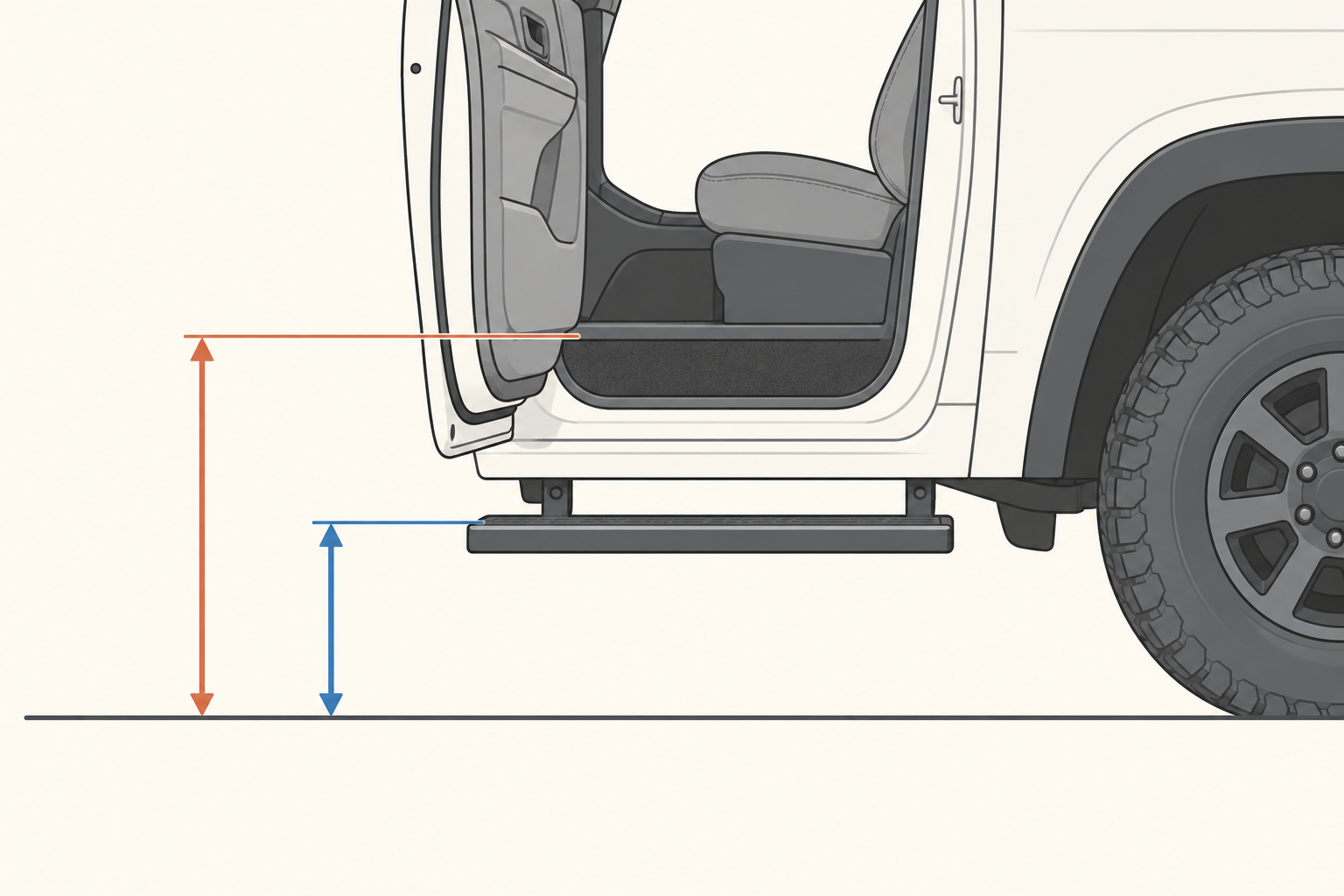
| A safari vehicle or a raised 4x4 | How high is the first step, or the floor? Is there an intermediate step, a grab handle, a seat you can reach without climbing over anything? Where and how is the wheelchair stowed during the drive? |
| A fixed tent, a chalet or a room on a deck | How many steps between the path and the room? Is there a ramp, and if so how steep and how wide? Are the bathroom facilities inside, or how far away? |
| Equipment that needs charging (powered wheelchair, breathing device, hearing aid) | Is there electricity in the room, and at what times? What type of socket? Does a generator or solar system limit the power available? |
| An outdoor activity in the hot part of the day | How long without shade? Where can you sit? Can the timing move to early morning? |
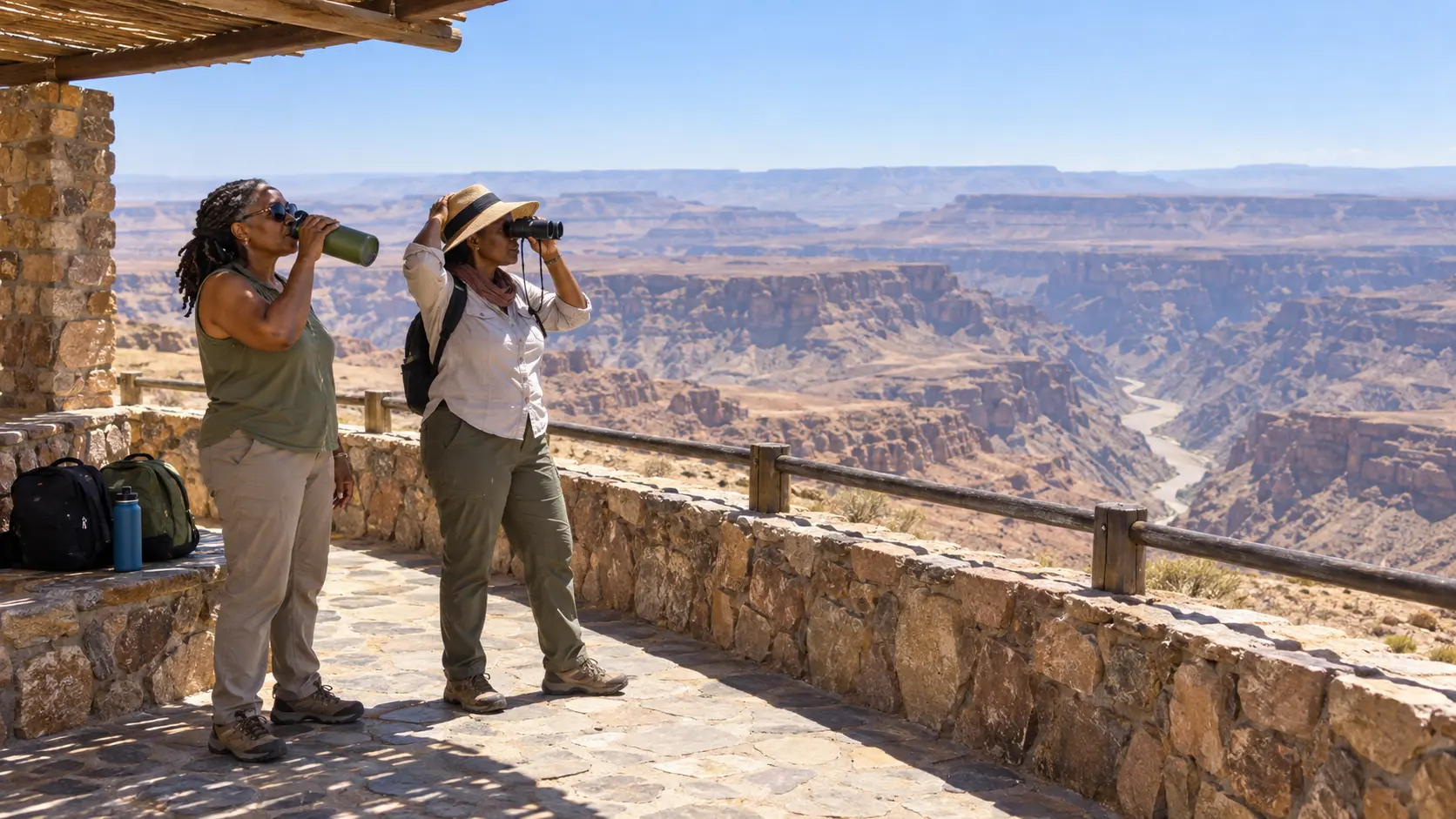
| A viewpoint, a dune or a site reached on foot | How far from the vehicle, how much of a climb, what surface? Is there a viewing point you can reach without steps? |
The season matters too. The same outing asks very different things of your body on a cool winter morning in the southern hemisphere and on a scorching afternoon. Our guide to choosing your season in Namibia helps you put the most demanding stages at the right time of year. If a day of game viewing from a vehicle is on your list, the first-trip guide to Etosha helps you picture the day; use it to frame your questions about how long you will be seated and when you can stop.
Domestic flights and the airport: what two Namibian operators say
Assistance rules depend on each airline and each airport. Here is what two documents published by Namibian operators said on 4 October 2026. They don’t apply to other airlines and may change: read the current version before you book.
- Hosea Kutako International Airport (Namibia Airports Company): the passenger information page asks travellers to report any need for assistance or particular medical condition at the time of booking. It states that the authorised ground-handling agent assists at the airlines’ request, and that the airport provides wheelchairs at no extra charge. So the request goes through your airline first.
- FlyNamibia, Conditions of Carriage (section 6): wheelchair and medical assistance is booked through the reservations desk, Monday to Friday from 08:00 to 17:00, no later than three working days before departure. One mobility aid of up to 32 kg, a manual wheelchair for example, is carried free of charge on top of the baggage allowance. A wheelchair that can’t be loaded by hand is only accepted if both airports have the equipment to load it. In some cases the airline requires an adult companion. An assistance dog must be identifiable (vest, harness or ID card) and booked at least three working days before departure.
If you use a powered wheelchair, read sections 6.2.6 and 6.2.7 carefully: on 4 October 2026, FlyNamibia stated that a battery-powered aid, or one weighing more than 32 kg, travels as cargo rather than as baggage, while also describing procedures for batteries. Before buying the ticket, get written confirmation of how your wheelchair will travel.
Swap adjectives for details you can check
“Easy”, “spacious”, “close” and “suitable” all depend on who is asking. Ask instead for the number of steps, whether there is a handrail, the width of the passage, the seat height, the type of floor or the approximate distance. If a measurement is decisive, give your minimum and ask for a current measurement rather than an estimate.
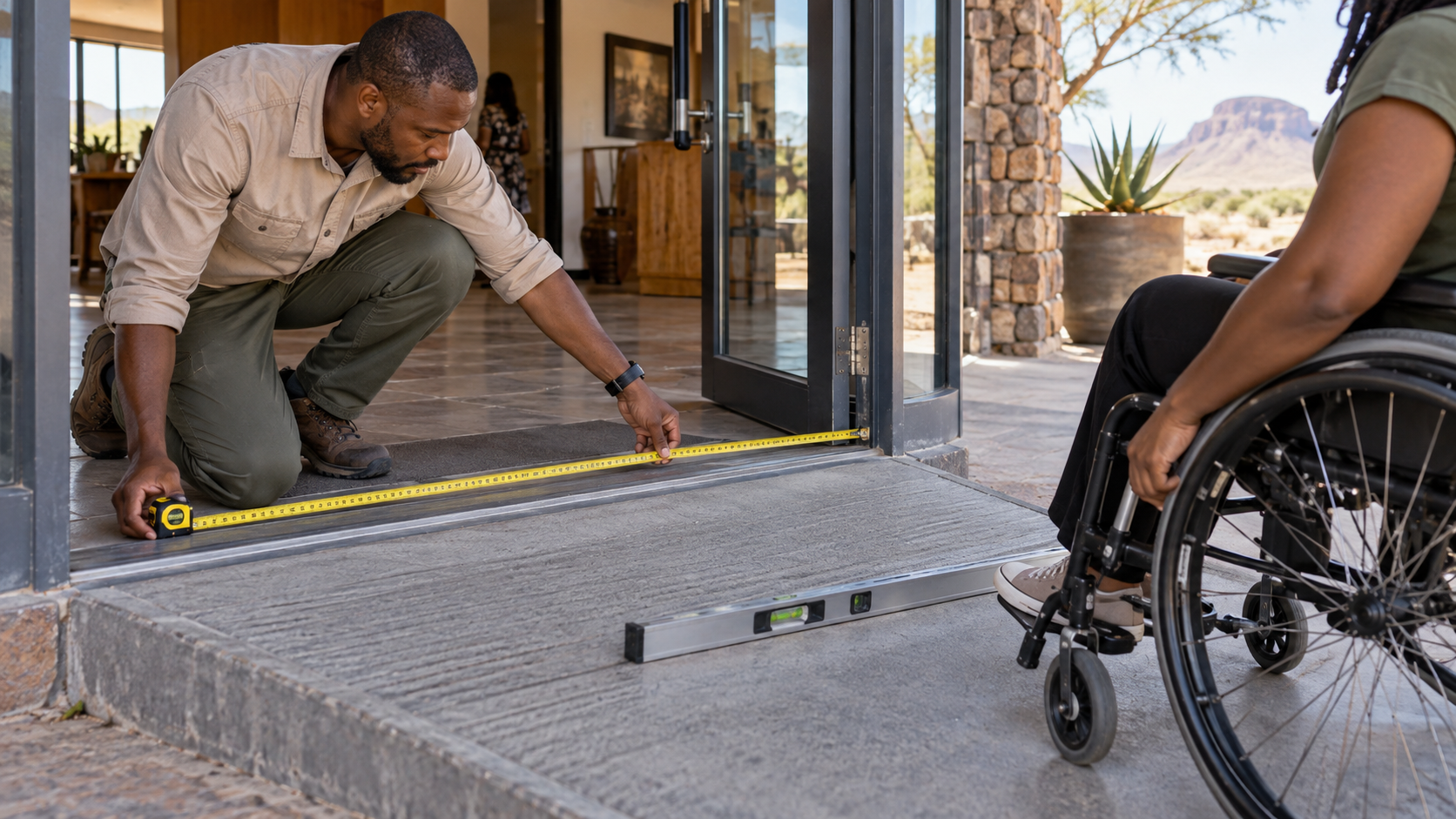
A photo can help you understand an entrance, a bathroom or the space inside a vehicle. Ask for the whole route, not one flattering angle. A short video can sometimes make a series of thresholds clearer, but it shouldn’t show other guests or personal information without good reason. Don’t assume an old picture still shows how things are today.
A respectful message that gets usable answers
Hello, we would like to book [service] on [date]. To know whether it will work for us, I need to check the following: [need 1], [need 2] and [need 3]. Could you describe the route from [arrival point] to [activity/room], including the type of surface and the distance, and tell me [decisive measurement: door width, vehicle step height, number of steps]? Please also let me know which adjustments are possible, any extra cost, and what the alternative would be if the arrangement you describe isn’t available on the day.
Rank your requests. Essential means you can’t use the service without it. Preferred makes a real difference to the experience. Flexible means another solution would work for you. This ranking stops the provider from treating a preference as a condition, or the other way round. Ask one clear question at a time if the list is long, and keep the replies in writing so both sides can find them later.
Judging the reply
A good reply goes through your questions one by one, admits what hasn’t been checked and suggests how to check it. It doesn’t just talk about “assistance”: it says who can help, with what, and with your agreement. It doesn’t promise there will be “no problem at all” while several unknowns remain.
If the provider can’t answer straight away, ask when they can check and with whom. If someone else will deliver the service — a subcontracted transport company, an independent guide, a camp run by another operator — the confirmation should come from whoever actually knows the vehicle, the place or the activity.
What Ayivoo search can and can’t do
On 4 October 2026, the search for places to stay in Namibia offered filters by type of accommodation and by amenities (private bathroom, shower, parking, airport shuttle and so on), but no accessibility filter. A missing filter doesn’t mean no place to stay will suit you; it means the checking happens by message. Apply the same caution to transport providers and tours and experiences: a listing guarantees neither that it meets an accessibility need nor that it is available on your dates. Use it to find out whom to write to, then send the message above.
Human assistance, independence and dignity
Asking what help is possible doesn’t mean accepting that help should routinely replace independence. Ask exactly what the help involves: carrying a bag, giving verbal directions, pushing a wheelchair, helping with a transfer, or accompanying someone in a particular area. The person concerned decides what is acceptable and how they want to be helped.
For a companion, clarify the seat, ticket, meals, accommodation or access they will need. For an assistance dog or a piece of equipment, ask about the practical conditions without assuming the answer. The rules can depend on the transport, the place or the activity; they need to be confirmed for your specific case, not inferred from a general article — this one included.
Before paying, and the day before
- Summarise the confirmed adjustments and the features you have checked.
- Ask for the total price, including any cost for a companion or equipment.
- Ask what the change terms are if the arrangement becomes unavailable.
- Identify a contact for the day itself and a fallback plan you can accept.
- Reconfirm the critical points shortly before the service, especially flight assistance and charging for equipment.
Keep these confirmations available offline with the rest of your travel documents. When you go through your packing list for Namibia, add the adapters, chargers and spare parts your equipment depends on. If something that was confirmed is missing on arrival, go back to the facts: what was promised, what is missing, and the solution you are asking for.
Frequently asked questions
Do I have to tell a provider about my disability to book?
Share the needs that matter for the service to be delivered properly. A full diagnosis isn’t a condition for asking about a door width, an adjusted pace or written instructions.
What should I do if the provider just replies “yes, it’s accessible”?
Thank them, then come back to the two or three observable features that will decide your choice. Ask for a measurement or a recent photo if the detail is essential.
How do I request a wheelchair at Hosea Kutako International Airport?
According to the Namibia Airports Company information page consulted on 4 October 2026, you report the need for assistance when you book, through your airline; ground handling then assists at the airline’s request. Check your own airline’s notice period. If your flight leaves from Eros, Windhoek’s other airport, ask your airline about the procedure.
How much notice does FlyNamibia need for assistance on a domestic flight?
FlyNamibia’s Conditions of Carriage, consulted on 4 October 2026, ask for wheelchair or medical assistance, and an assistance dog, to be booked no later than three working days before departure, through the reservations desk, which is open Monday to Friday from 08:00 to 17:00.
How do I compare two services both described as accessible?
Compare the whole route, how much you can do independently, the help required, how reliable the information is, the total cost and the fallback plan. An adjustment is only worth something if it meets your essential needs.
Does Ayivoo check the accessibility of venues and providers?
No. An Ayivoo listing is not an accessibility check. On 4 October 2026, the accommodation search had no accessibility filter: use listings to find out whom to contact, and ask for a specific confirmation.
Sources consulted and limits
Consulted on 4 October 2026. FlyNamibia, Conditions of Carriage, sections 6.1 to 6.11 (assistance, mobility aids, companions, assistance animals). Namibia Airports Company, passenger information (undated page). Filters on Ayivoo’s accommodation search, checked on the French-language interface. Nobody was interviewed for this article, and no accessibility feature of any specific place, vehicle or provider is claimed. Measurements, adjustments, assistance and availability must be confirmed for the service concerned.
To get the conversation going: pick the three features that will genuinely change your decision, add the row from the Namibian table that matches your route, and send the message. An answer with real measurements is worth more than a reassuring promise you can’t use.