What to remember before planning a first Etosha trip
- Etosha is a route decision, not just a wildlife stop. The value of the park depends on gates, camps, driving time, waterholes, season, vehicle comfort and how much patience the group has for slow game viewing.
- Do not plan Etosha as one generic safari day. The southern, central, eastern and western access points shape very different itineraries, especially for first-time travellers coming from Windhoek, Damaraland or the Zambezi Region.
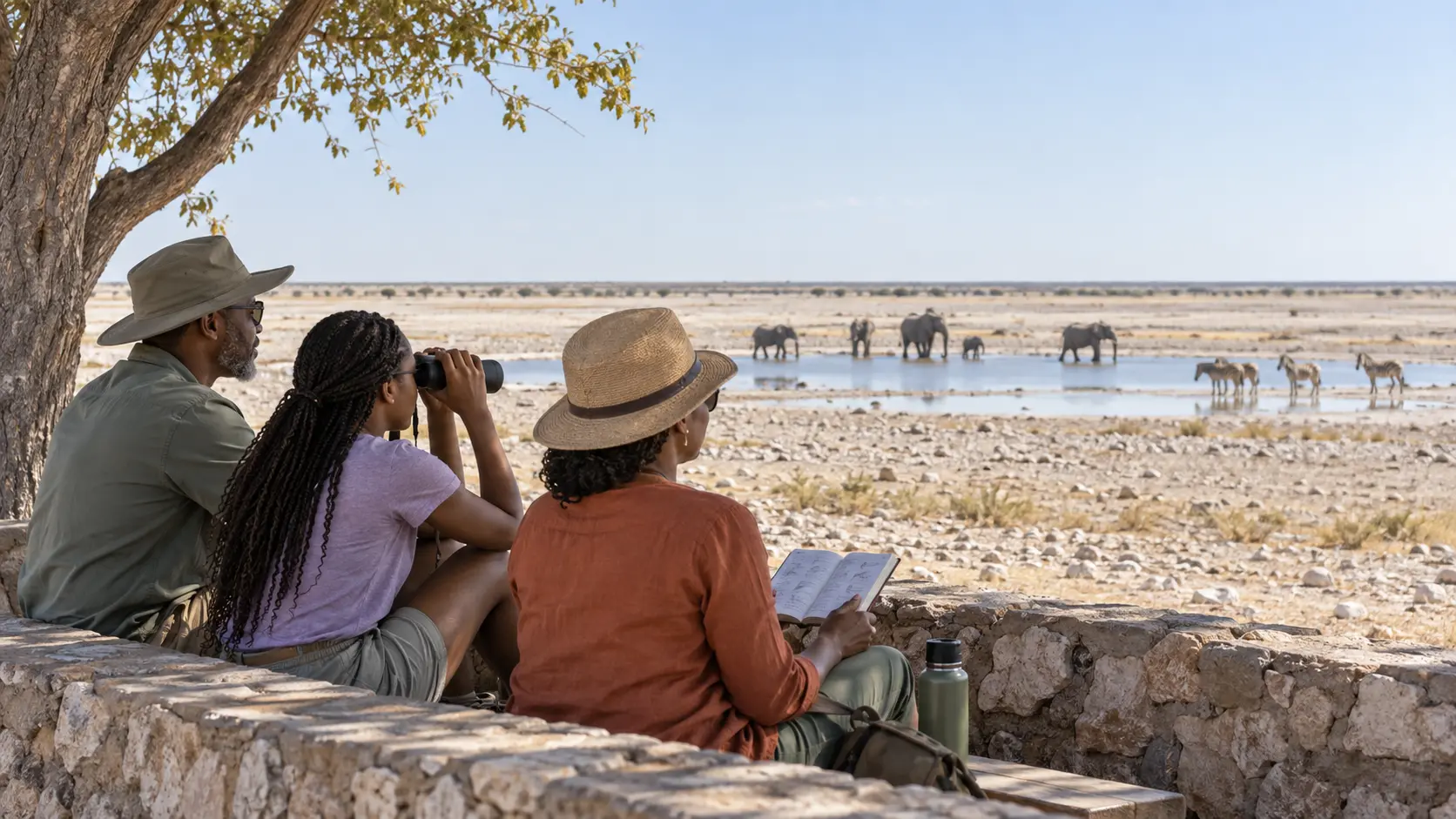
- Waterholes are the planning unit. In the dry season, wildlife viewing often depends on time spent around productive waterholes rather than racing across long distances.
- Book accommodation and route support early. Etosha is popular and availability inside or near the park can shape the entire northern Namibia route.
- Use Ayivoo before committing. Compare Etosha providers and experiences, guided tours, lodges and camps, and transport options before locking dates.
Why Etosha matters in a Namibia itinerary
Etosha National Park is one of Namibia's most important wildlife destinations and one of the places travellers most often imagine when they begin planning the country. The park is famous for open landscapes, salt pan horizons, dry-season waterholes and the possibility of seeing large mammals in a setting that feels very different from denser bushveld reserves elsewhere in Southern Africa.
For a first trip, the main challenge is not deciding whether Etosha is worth including. It usually is. The harder question is how to include it without weakening the route. Etosha is far enough from Windhoek, Sossusvlei and the coast that poor timing can create tired drives, rushed sightings and unnecessary pressure. A good plan gives the park enough time to work.
The best Etosha itineraries combine patience and structure. Travellers need a base, a gate strategy, realistic daily distances, time at waterholes, enough food and water, and a clear decision on whether to self-drive, book guided support, or combine both.
The first route choice: where Etosha fits
Etosha can sit in several different Namibia routes. The right sequence depends on where travellers are coming from and where they go next.
| Route pattern | Who it suits | Planning watchpoint |
|---|---|---|
| Windhoek to Etosha and back | Short wildlife-focused trips and first-time visitors with limited days | Do not underestimate the drive; keep arrival and departure days realistic |
| Windhoek, Damaraland, Etosha | Travellers wanting desert scenery before wildlife | Remote-road timing, fuel, supplies and vehicle readiness matter more |
| Etosha then Zambezi Region | Longer routes continuing toward rivers, wetlands and border areas | Confirm distances, overnight stops and park exit strategy before booking |
| Etosha after the coast | Travellers connecting Swakopmund, Damaraland and the north | Make sure the itinerary does not become a chain of long transit days |
Use Ayivoo's Etosha search to compare local providers who can help with route fit, not just single bookings. The best advice is often about what to remove from the route, not what to add.
How many nights does a first Etosha visit need?
A one-night Etosha stop can work only when travellers accept that it is a taste, not a full wildlife experience. Two nights give the park more space. Three nights or more allow a better rhythm across different areas, especially when travellers want slower waterhole time, early and late drives, and less pressure to move constantly.
For most first-time visitors, the practical minimum is:
- One night: only for tight itineraries or travellers passing through with modest expectations.
- Two nights: a stronger first-trip baseline, especially if the group wants both arrival recovery and meaningful wildlife time.
- Three nights: better for wildlife-focused travellers, photographers, families and anyone combining different park areas.
Availability may decide the final structure. Namibia Wildlife Resorts manages several accommodation options inside the park, and surrounding lodges can also shape the route. Always verify current booking status, entrance rules, fees and opening times before publication or travel.
Season, waterholes and expectations
Etosha changes dramatically through the year. Dry-season travel is often associated with waterhole viewing, because animals concentrate around reliable water sources. Rainy-season travel can bring greener landscapes, birdlife and different photographic conditions, but roads and wildlife patterns may be less predictable.
A first-time traveller should avoid asking only, "What is the best season?" The better question is, "Which season matches the way I want to experience the park?"
| Travel priority | Planning implication |
|---|---|
| Classic waterhole wildlife viewing | Build time around productive waterholes and be patient rather than constantly moving |
| Birding and greener scenery | Check seasonal road conditions and be realistic about wildlife distribution |
| Photography | Prioritise light, waiting time, dust, distance and where the vehicle can safely stop |
| Family comfort | Choose bases and drive lengths that preserve rest, meals and shade breaks |
Self-drive, guided tour or hybrid?
Etosha is often approached as a self-drive destination, but self-drive is not the only good option. The right choice depends on confidence, budget, vehicle, travel style and how much interpretation travellers want.
Self-drive gives independence and flexibility. It works best for travellers who are comfortable with long rural drives, slow wildlife viewing, park rules, navigation and vehicle responsibility. It requires patience and restraint: rushing from sighting to sighting usually weakens the experience.
Guided tours can help first-time travellers understand animal behaviour, waterhole strategy, route timing and safety. A guide can also reduce the mental load for travellers who do not want to manage every decision.
A hybrid approach can be the sweet spot: self-drive between bases, then use a local guide for one or two focused drives or route briefings. Compare Etosha safari and tour providers on Ayivoo to see which model fits your group.
Questions to ask before booking Etosha providers
Whether you book accommodation, a guided drive, transport or route support, ask questions that reveal practical competence.
- Which gate or base does this service work best with?
- What time should we arrive to avoid rushing the first afternoon?
- What is included: park fees, vehicle, guide, fuel, meals, water, pickup and drop-off?
- How do you handle poor road conditions, delays or changes in park rules?
- Is the plan suitable for children, older travellers or photographers?
- What should we bring that travellers often forget?
- How do you balance waterhole waiting time with route coverage?
Providers who answer in specifics are usually more useful than providers who promise guaranteed sightings. Wildlife is never guaranteed. Good planning improves the chance of a satisfying experience without pretending to control nature.
Safety, park rules and traveller discipline
Etosha requires calm behaviour. Travellers should follow park rules, stay in permitted areas, respect speed limits, avoid feeding wildlife, keep distance, and never treat animals as predictable props. The best wildlife experiences often happen when travellers are quiet, patient and observant.
Logistics safety also matters:
- carry enough water for the day;
- start with fuel planned rather than assumed;
- keep food protected and vehicle doors closed where required;
- avoid driving tired after long transfers;
- keep accommodation, gate and emergency contacts accessible offline;
- check road and park updates before entering.
Etosha is a protected area, not a drive-through zoo. The quality of the visit depends partly on traveller discipline.
A simple first-trip Etosha plan
A conservative first-trip structure might look like this:
- Day before: sleep within realistic reach of the chosen gate, confirm supplies, fuel, documents and booking references.
- Day one: enter without rushing, drive slowly to the first base, spend the late afternoon around nearby waterholes.
- Day two: focus on early and late wildlife time, with a midday rest or camp break rather than constant movement.
- Day three: choose either another focused drive or a controlled exit toward the next destination.
This is deliberately simple. Travellers can add complexity later, but a first Etosha visit should leave enough space for waiting, surprise and rest.
FAQ for first-time Etosha travellers
Is Etosha suitable for a first Namibia trip?
Yes, if the itinerary gives it enough time and does not force the park into a rushed transit day. Etosha is often one of the clearest wildlife anchors in a first Namibia route.
Can I self-drive Etosha?
Many travellers do, but self-drive requires route discipline, patience, respect for rules and comfort with rural driving. A guided or hybrid approach may be better for travellers who want interpretation or less stress.
Should I stay inside or outside the park?
Both can work. Staying inside can reduce movement and support early/late wildlife time, while outside lodges may suit route, budget or comfort needs. Availability and gate strategy often decide the best choice.
Can a provider guarantee wildlife sightings?
No responsible provider should guarantee wild animal sightings. They can improve timing, positioning, interpretation and safety, but wildlife remains unpredictable.
Sources to verify before publication
- Namibia Wildlife Resorts for current Etosha accommodation, booking notices, fees and park-related resort information.
- Namibia Ministry of Environment, Forestry and Tourism for official park, conservation and road or management updates.
- U.S. State Department Namibia travel advisory or the traveller's own official advisory for current route, safety and health context.
- Ayivoo live listings for Etosha-area tours, accommodation, transport and provider availability before publication.
Next step on Ayivoo
Start with Etosha providers on Ayivoo, then decide what kind of first Etosha experience you want: independent self-drive, guided support, lodge-based wildlife viewing or a hybrid route. The strongest Etosha plan is the one that gives the park time to reveal itself.