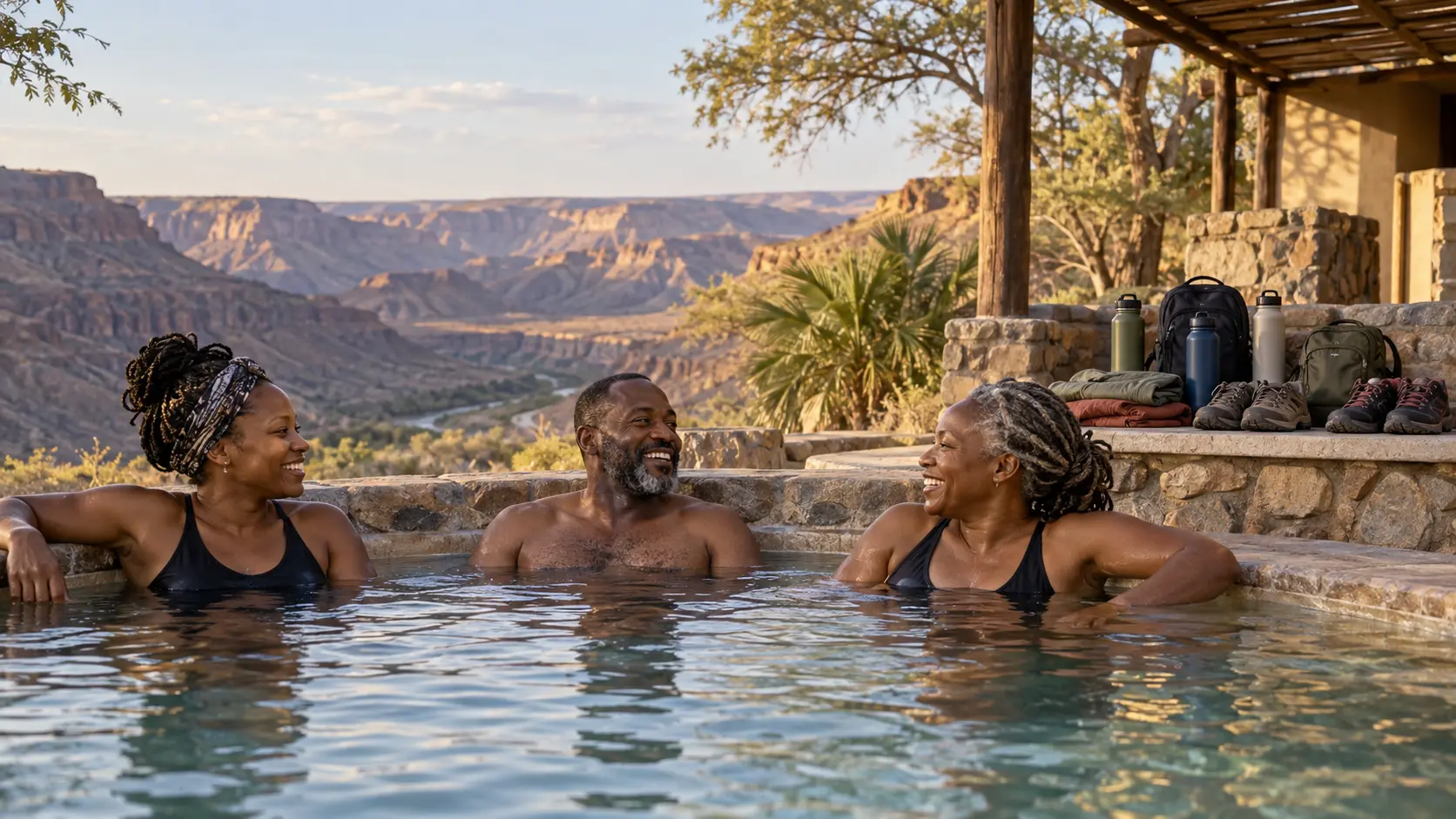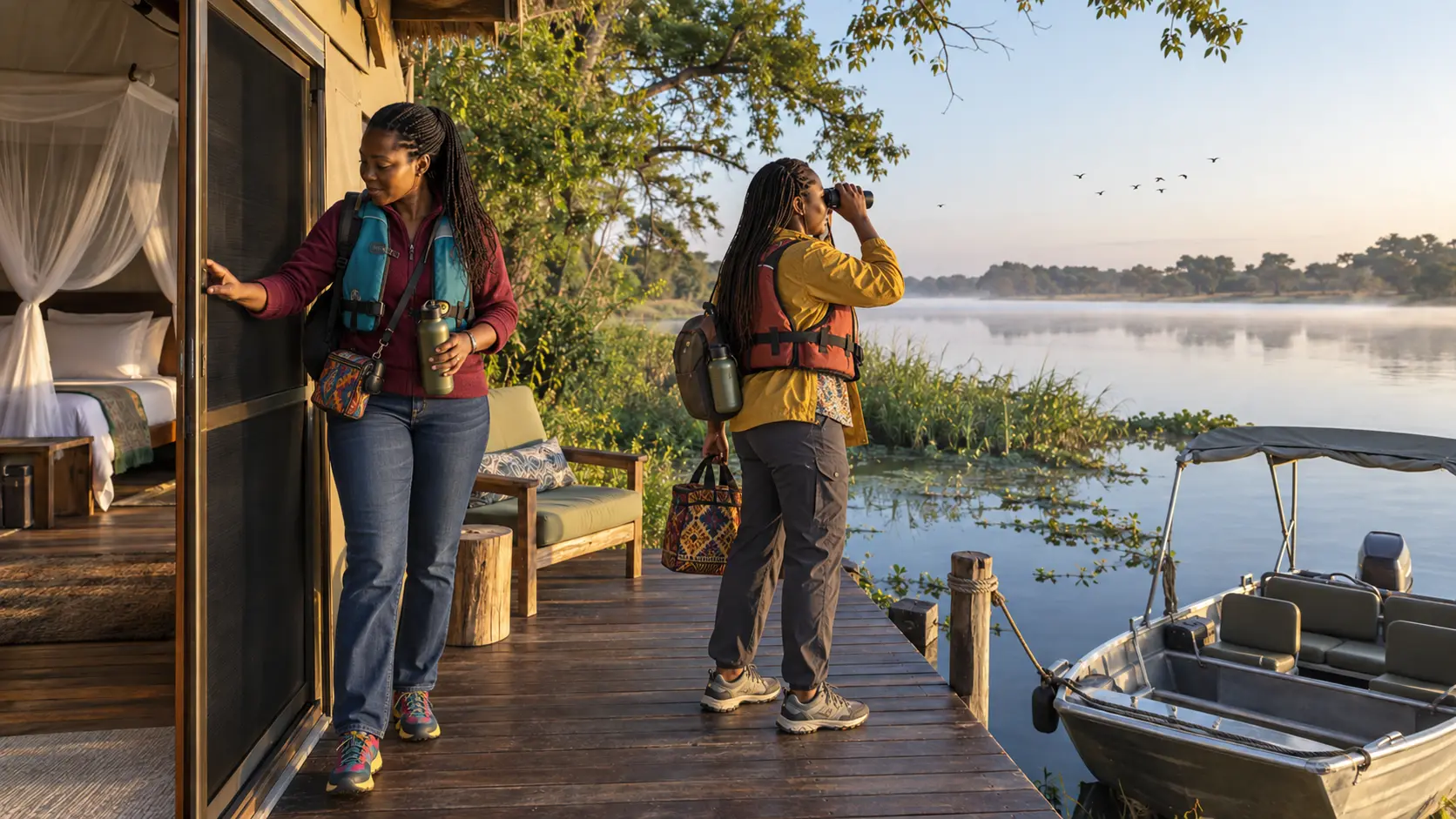
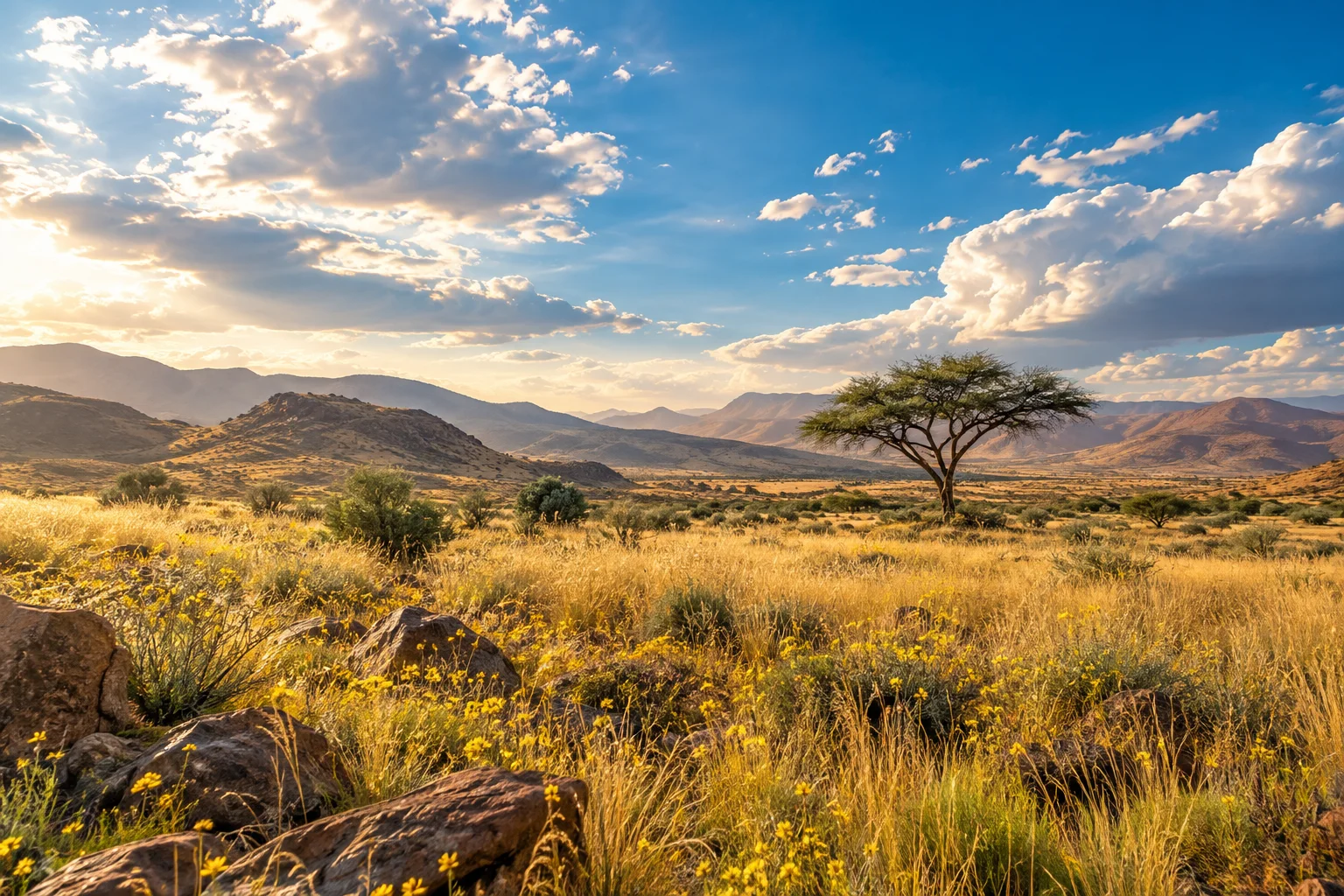
The short answer: for a first trip built around safari, May to October is usually the easiest period to plan around: drier weather, pleasant daytime temperatures and wildlife more concentrated around waterholes. For birds, greener landscapes and stormy light, November to April can be more rewarding. There is no universal “best month”, though: Etosha, the Atlantic coast, Sossusvlei and the Fish River Canyon follow neither the same climate nor the same constraints.
The right choice therefore comes down to four decisions: your priority, the regions you plan to visit, how well you cope with cold or heat, and how much flexibility you need. Namibia is a year-round destination; the table below gives you a starting point, and the sections that follow help you decide without turning the weather into a promise.
At a glance: which period suits your priority?
| Your priority | Period to look at first | Trade-off to accept |
|---|---|---|
| Classic safari in Etosha | May to October, with strong demand from July through to November | Cold winter nights, more visitors at the well-known stops |
| Birdwatching | November to April | Heat, irregular rain and wildlife less concentrated around waterholes |
| Sossusvlei and the desert | May to September for early starts that are generally cooler | Very wide gap between morning and midday; early rising in any case |
| The coast, Swakopmund and Walvis Bay | All year, depending on activities | Fog, wind and cool air possible even when the interior is hot |
| The long Fish River Canyon hike | May to September according to Namibia Wildlife Resorts, subject to the river level | Opening decided by the operator, strict registration conditions; separate booking |
| A greener trip less focused on big game | December to April | Variable rain, heat and potentially less predictable driving times |
Benchmarks checked on 23 September 2026 with the Namibia Tourism Board, Namibia’s Ministry of Environment and Namibia Wildlife Resorts; climate, driving, high season and the Fish River Canyon season re-read on 4 October 2026. A climate trend is not a guarantee for any given week.
May and June: the easiest compromise for a first trip
May often marks a comfortable transition: the wet period is fading, temperatures become milder and the landscape may still hold traces of green, depending on how much rain actually fell. June settles further into the southern winter. Days often remain pleasant, but pre-dawn starts and evenings can be genuinely cold in the interior.
These two months suit a route that mixes desert, coast and safari. They do call for a suitcase planned in layers, though: a T-shirt or light shirt for the day, a fleece and a windproof jacket within reach in the morning. Our Namibia packing checklist helps you adapt your bag to a self-drive trip, a safari or camping.
Choose it if: you want a balanced first trip, can accept cold mornings and would rather avoid the heart of the busiest period. Check: the night-time temperature at each stop and the seasonal opening hours given by your accommodation or the parks.
July and August: easy to read for safari, less flexible to book
For wildlife viewing, the dry winter is the simplest benchmark. In Etosha, the water available shapes animal movements more strongly, and waiting near a waterhole becomes a real strategy. That improves your chances of sightings; it guarantees neither a species nor a particular scene. The ministry describes Etosha as an ecosystem organised around its salt pan and numerous waterholes, with several camps that let you extend your time watching wildlife.
July and August require more planning ahead. The Namibia Tourism Board places the high season from July to November and recommends booking your itinerary in advance. Well-located accommodation, certain vehicle categories and small-group outings may therefore offer less choice. Compare the whole day, not just the room rate: a night closer to a park gate can save you a very early start, fuel and a stressful arrival before the gate closes. To get your bearings before asking for dates, look up accommodation listings that mention Etosha on Ayivoo and check on a map how far each one really is from the gate you are aiming for.
Choose it if: Etosha is your priority and you can fix your main stops early. Avoid it if: you want to decide each night at the last minute or struggle with cold mornings. To build this stage, read our Etosha first-trip guide, then browse safari provider listings around Etosha. A published listing does not prove availability on your dates: ask for confirmation.
September and October: strong safari, rising heat
As the dry season goes on, the landscape can look starker and daytime heat climbs again. September is often sought after for combining safari and driving; October can become much hotter, especially in the north, the south and the desert. This is not just a comfort detail: heat changes your departure time, how much water to carry, the pace of walks and the driver’s fatigue.
This period suits travellers who want to make safari the centrepiece without necessarily travelling in the depths of winter. You do need to protect the middle of the day, though, and avoid overloading driving days. On gravel, the Namibia Tourism Board recommends not exceeding 80 km/h; that figure is a ceiling, not a speed to hold. Road condition, visibility, the vehicle and fatigue can call for a much slower speed.
Choose it if: you accept rising heat and put wildlife at the heart of the trip. Question for your hire company: what realistic driving time do they advise, in current conditions, between your two stops? If your route goes through the desert, also plan the day with our Sossusvlei guide.
November and December: a hot transition, first rains possible
November should not automatically be presented as low season: it is still included in the high season given by the tourism board. The heat can be intense, and the first rains, when they come, change the atmosphere without following a reliable calendar. Some areas turn green quickly; elsewhere, showers stay very local.
The trip becomes less predictable, but no less interesting. Photographers may enjoy more dramatic skies and stronger contrasts. Birdwatchers enter a favourable period, while a classic safari means accepting wildlife that is sometimes less concentrated around waterholes. Showers can also alter a driving plan: a buffer becomes more useful than a tight list of stops.
Choose it if: you are looking for the landscape in transition and for birds, and can adapt your pace. Check on the day: local weather, the condition of the next road, a realistic arrival time and your accommodation’s instructions.
January to March: wet season, birds and a more conditional trip
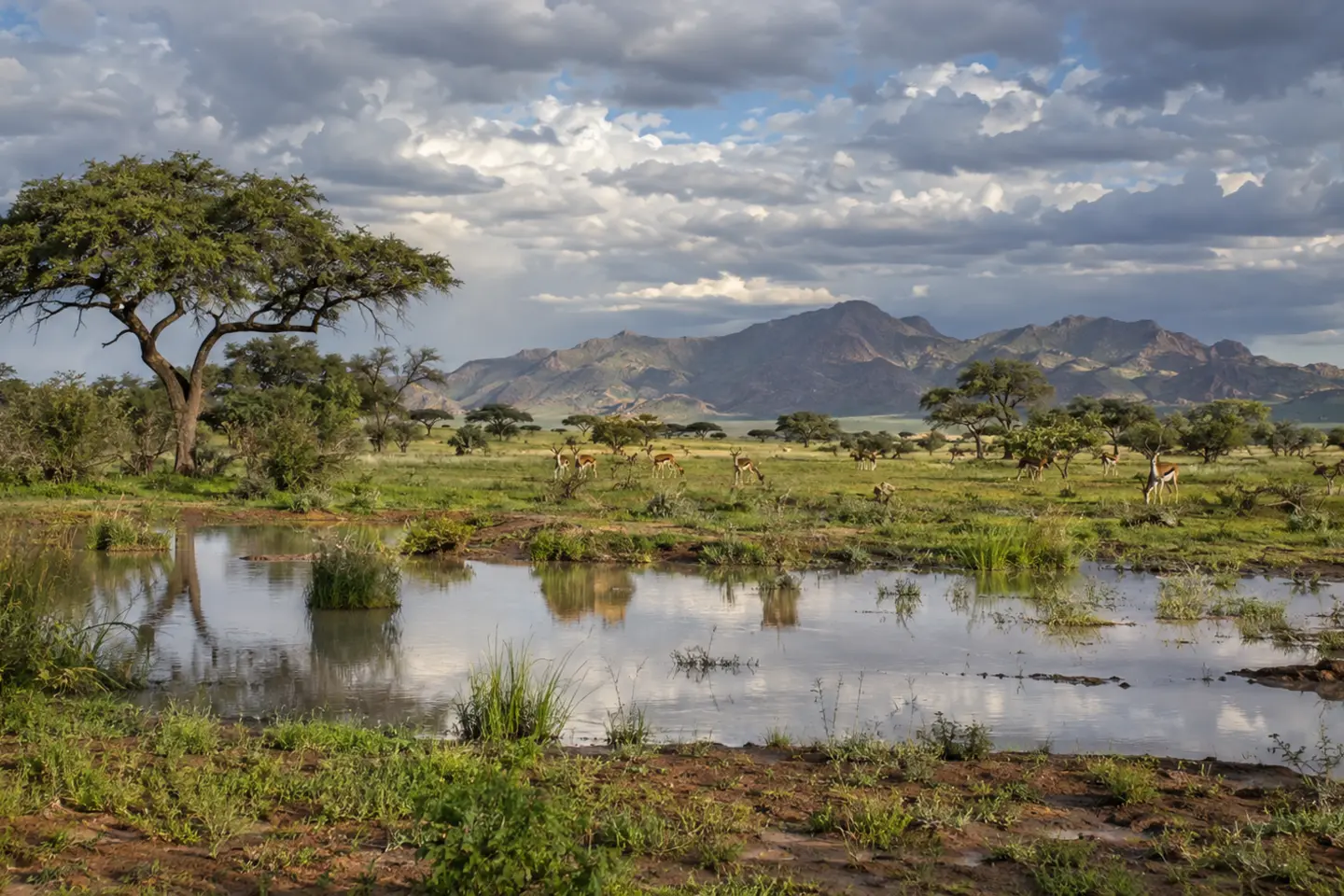
This period is the heart of the rainy summer. “Rainy” does not mean continuous rain across the whole country: Namibian rainfall varies in time and space. Think in scenarios rather than certainties. A day may stay dry; a single local downpour can still be enough to complicate a gravel road or move an activity.
The Namibia Tourism Board places the best general period for birdwatching from November to April, with the arrival of migratory species and breeding plumage. In Etosha, the wet season may therefore satisfy a birdwatcher more than a traveller who has come only for large gatherings of mammals at waterholes.
Choose it if: birds, living landscapes and flexibility appeal to you more than a postcard safari. Plan for: shorter stages, recent local information, a fallback plan and accommodation able to advise you on access.
April: the pivot month to judge route by route
April cannot be summed up by a label. After a good rainy season, some regions may still be green; after a weak or irregular one, the scenery will look different. The heat generally starts to ease, and organising a self-drive trip can become more comfortable.
This month works well for travellers who want to avoid oversimplified conclusions: they accept that wildlife sightings, colours and some access depend more on the actual year. Ask the accommodation along your route for recent information rather than inferring conditions from a national average.
Four climates not to lump into one forecast
Etosha and the northern interior
The dry season makes waterholes easier to read; the wet season favours birds and changes how wildlife is spread out. The right month therefore depends on what you want to see, not just on a thermometer.
Sossusvlei and the desert interior
The early start shapes the day all year round. In winter, the first hours can be cold; in the hot months, walking and sun exposure demand even more caution. Access times follow the operator’s rules and must be checked at the time of your stay.
Swakopmund and Walvis Bay
The cold Benguela Current cools the coastline and encourages fog. A hot day inland tells you almost nothing about the windproof jacket you will need in Walvis Bay. To share out nights and activities, compare our Swakopmund guide and our Walvis Bay guide.
The Fish River Canyon and the deep south
Seeing the viewpoints and tackling the long hike are two separate projects. Namibia Wildlife Resorts gives a hiking season from May to September, for a route of about 85 km that generally takes four to five days. Registration requires at least three people, excludes children under 12 and calls for a recent medical certificate of fitness. That window is not a guarantee of opening: in 2026, NWR announced the trail’s reopening only for 17 July, after an assessment showed that the river’s level and flow were once again safe for hiking. This example is enough to show that an old blog calendar never counts as confirmation. Check the trail status and bookings directly with NWR before building your trip around the trek, and read our Fish River Canyon first-trip guide if you are aiming for the viewpoints instead.
Your vehicle choice changes with the season too
The Namibia Tourism Board points out that at least 80% of the country’s roads are gravel, generally well maintained, and recommends considering a sturdy 4×4 if you leave the main roads, for ground clearance, power and safety. That page makes no distinction between seasons; what mostly changes with them are the questions to ask.
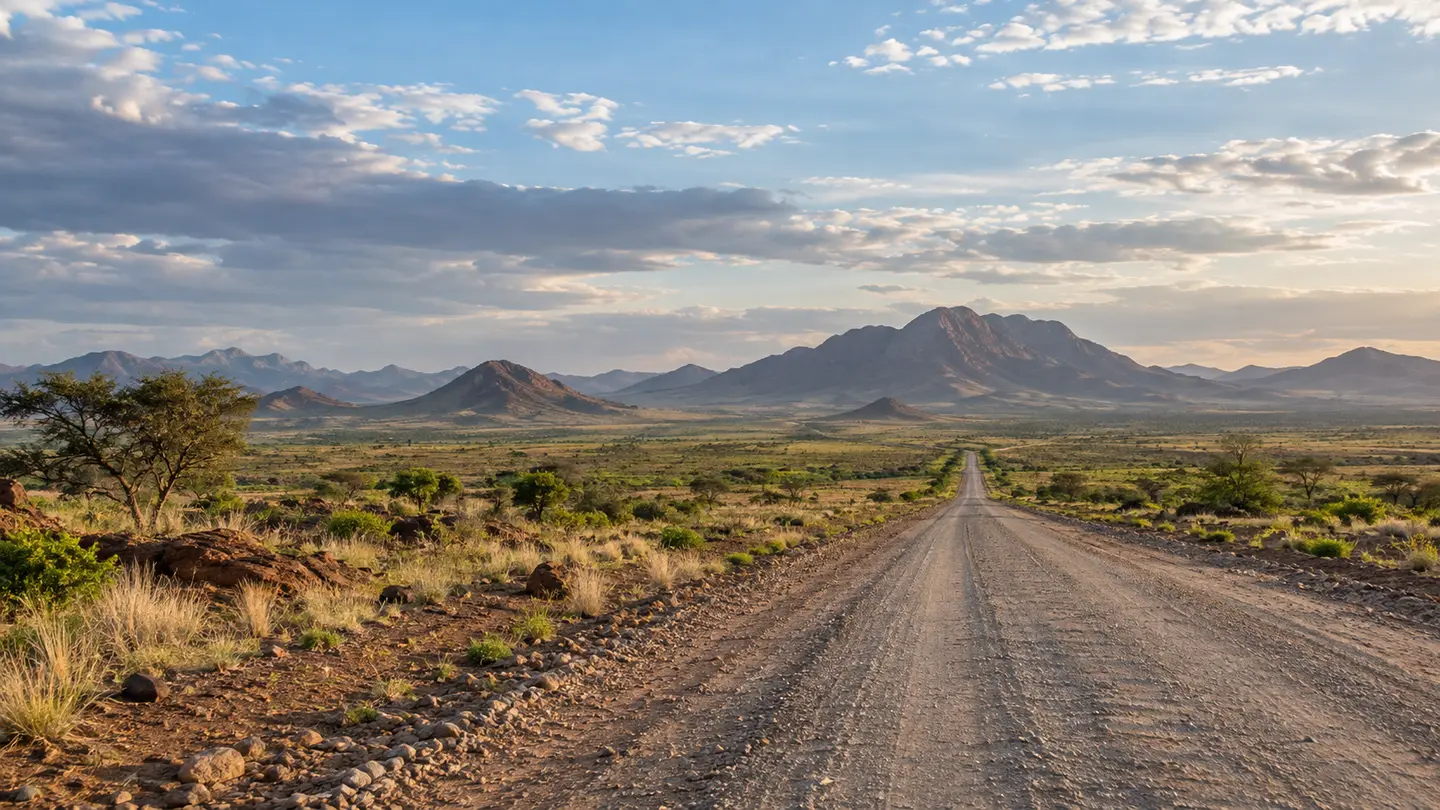
- Dry, cool months (May to August): the main constraint is often the length of the day and the cold at departure. Ask the hire company about the condition of the tyres and spare wheel, and plan your stages so you arrive before dark.
- Hot months (September to November): air conditioning, the amount of water on board and the driver’s pace become deciding factors. A shorter stage is often worth more than a more powerful vehicle.
- Rainy season (December to April): a few days ahead, ask the hire company and your next accommodation whether the planned gravel road is still advisable with your vehicle and what they recommend after recent rain. Do not infer a road’s condition from a national forecast.
Once your dates are set, find 4×4 hire companies on Ayivoo and send each of them the same questions: vehicle offered, air conditioning, equipment provided, assistance and conditions for driving on gravel. A listing tells you who to contact; only the hire company can confirm a vehicle for your dates.
Climate season and pricing season: two different calendars
Prices do not necessarily follow the weather. Each property sets its own rate periods, and they do not always match the seasons described above. One published example: the Okonjima Nature Reserve’s 2026 rack-rate sheet sets a low season from 1 January to 30 June and a high season from 1 July to 31 December. November and December, although hot and sometimes rainy, are therefore charged at high-season rates there. This example applies neither to other properties nor to the following year.
The practical consequence is simple: do not assume that a green-season trip will automatically be cheaper, or that a cool month will be more expensive everywhere. Ask for the rate on your exact dates, what it includes (meals, taxes, any entry fees) and how long the rate sheet is valid. An old seasonal rate sheet is never this year’s price.
The five-minute decision matrix
- Write down your single priority: big game, birds, desert, hiking, coast or a flexible budget.
- Rule out the incompatibilities: a closed trek, heat you tolerate badly or a trip with no bookings in high season.
- Choose two main regions: Namibia cannot be planned as a string of nearby points.
- Add a buffer: a spare night or a lighter day protects the trip more than one extra activity.
- Ask about actual conditions: a week before each remote stop, confirm local weather, access, latest arrival time and equipment.
FAQ: when should you visit Namibia?
What is the best month for a first safari in Etosha?
No month is guaranteed. The dry period from May to October is the most favourable official benchmark for safari, with particularly strong demand in midwinter and through to November. May, June or September can offer a good compromise depending on how you handle cold, heat and crowds.
Can you travel in Namibia during the rainy season?
Yes, if your itinerary stays flexible. November to April is hot, the rains are irregular and birds can be particularly interesting. Check access conditions locally and keep your stages realistic.
When is Sossusvlei at its coolest?
The southern winter, from May to September, generally brings cooler temperatures, especially in the morning. It can be cold before sunrise, though, and the day remains very exposed. An early start, water and sun protection stay essential.
Are July and August too busy?
They are part of the high season. “Too busy” depends on your flexibility and your accommodation: the well-known areas will be in higher demand, but an itinerary booked early enough remains perfectly feasible. Above all, compare location, travel time and cancellation terms.
Do prices drop out of season in Namibia?
Not uniformly. Each property sets its own rate periods: Okonjima’s 2026 rate sheet, for example, puts July to December in high season, including hot and sometimes rainy months. Ask for the rate on your exact dates and how long the rate sheet is valid rather than assuming a green-season discount.
Do you need a 4×4 depending on the season?
The Namibia Tourism Board advises considering a 4×4 if you leave the main roads; its page makes no distinction by season. In the rainy period, ask the hire company and your next accommodation whether the planned gravel road is still advisable with your vehicle; only recent local advice can answer that.
Which period is best with children?
Put temperatures your family can handle, short drives and suitable accommodation first. The dry, cool months make some days simpler, but early starts can be cold. Ask about the actual duration, breaks, toilets, meals and age policy for each activity; the long Fish River Canyon hike, for example, excludes under-12s.
When should you book?
For a trip between July and November, the tourism board recommends booking ahead. There is no universal lead time: ask accommodation, hire companies and guides about your exact dates, then compare the written terms rather than a rule found in an old article.
Sources and last checked
- Namibia Tourism Board — Climate: seasons, temperatures and coastal features. Re-read on 4 October 2026.
- Namibia Tourism Board — FAQ and Safaris & Tours: safari and high season. Re-read on 4 October 2026.
- Namibia Tourism Board — Birding: birdwatching period. Checked on 23 September 2026.
- Namibia Tourism Board — Transportation: gravel roads, 80 km/h, 4×4. Re-read on 4 October 2026.
- Ministry of Environment, Forestry and Tourism — Etosha National Park. Checked on 23 September 2026.
- Namibia Wildlife Resorts — Activities: Fish River Canyon hike season and conditions. Undated page, read on 4 October 2026.
- Namibia Wildlife Resorts — Fish River Canyon hiking trail reopens, announcement of 16 July 2026, re-read on 4 October 2026.
- Okonjima — Rack Rates 2026: rate periods only, document updated on 6 December 2025, read on 4 October 2026.
Opening hours, site and trail openings, road conditions, rates and availability must be checked again for your dates. No Ayivoo price or availability statistics are presented here: the linked searches help you find provider listings, not compare dated offers.
Once you have chosen your period, write to the providers you have shortlisted with your dates, your route and your main constraint. The right question is no longer just “when should we go?”, but “what do we really want to be able to do during that period?”
AI-generated cover illustration for Ayivoo.