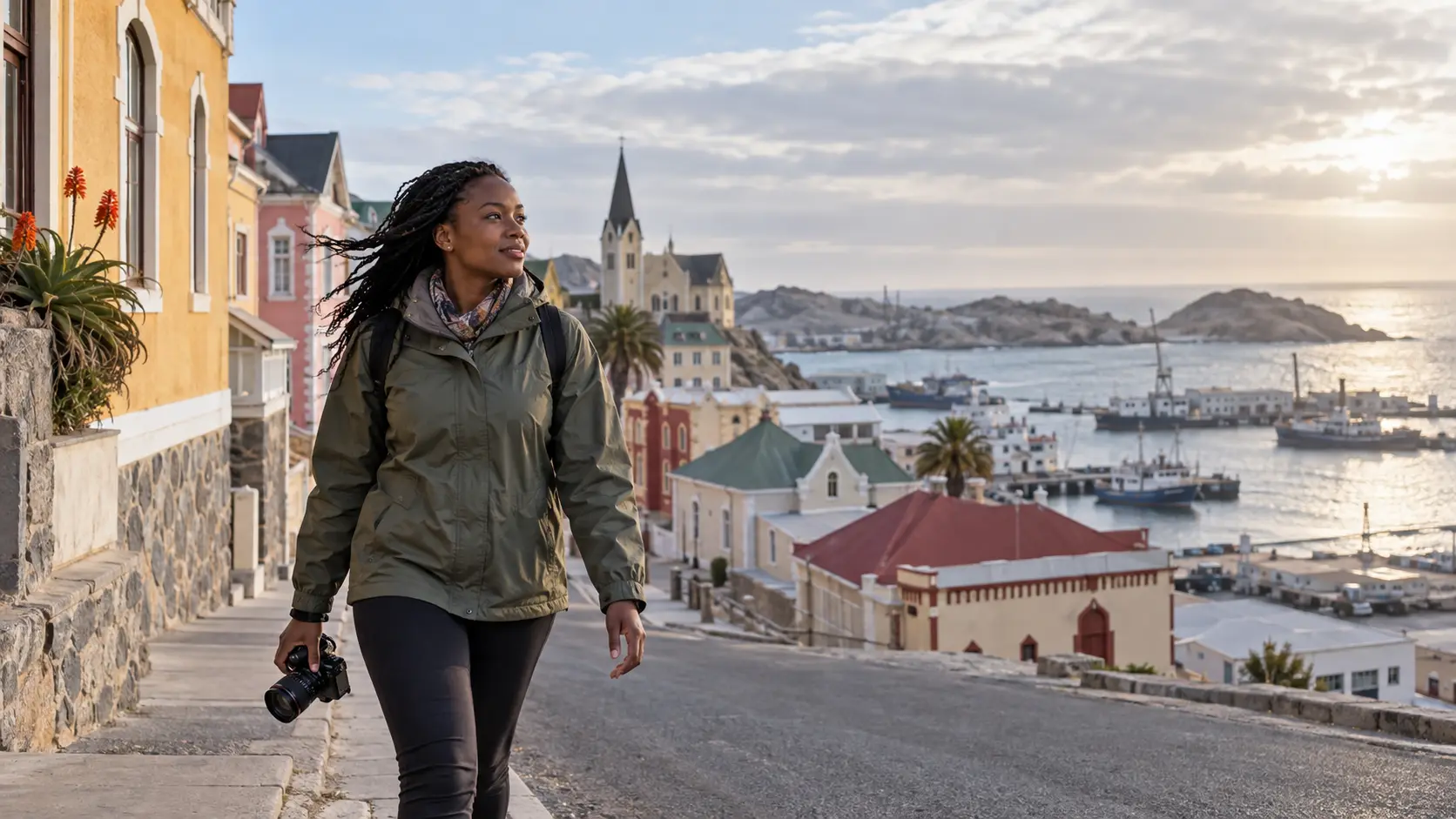

The short answer: give Windhoek one night
For a first trip to Namibia, plan to sleep one night in Windhoek before you hit the road, especially if you land in the afternoon or evening. Arrange the airport transfer before you fly, collect the vehicle the next morning, and leave only once the driver is rested and the first leg is realistic. Windhoek does not need to be the headline of your trip to be one of its most useful decisions.
In short
- Hosea Kutako International Airport (HKIA) is about 45 km east of Windhoek, according to Namibia Airports Company; Eros, about 5 km from the centre, is a different airport. Check which one is on your ticket.
- Late arrival or tired: organised transfer, a night in town, the vehicle the next day.
- Before you sign for a vehicle, make sure you understand existing damage, the spare wheel, tools, fuel, roadside assistance and the breakdown procedure.
- A provider profile on Ayivoo helps you find someone to contact. Price, timing and availability have to be confirmed by the provider directly, and getting that confirmation in writing gives you a record.
There is a very specific moment in Windhoek when the trip really begins. Not when the wheels touch the runway, and not when your passport finally gets its stamp. It comes when you drop your bag in a room, the sun slides down behind the hills, and your brain quietly lists tomorrow's tasks: drive on the left, buy water, sort out the SIM card, collect a vehicle, and remember that the desert does not sell USB chargers. Very relaxing, obviously.
That is why Windhoek deserves better than the thankless role of a mere starting point. Many first-time visitors treat the capital as a place to pass through on the way to Etosha, Sossusvlei, Swakopmund or Damaraland, and that is understandable: the images that sell Namibia are dunes, wildlife, gravel roads and wide horizons. Yet a trip often runs smoothly or struggles because of decisions made here in the first twenty-four hours. Used well, Windhoek is the airlock that stops you starting Namibia like an orienteering race in your pyjamas.
So the useful question is not "Is Windhoek worth visiting?" It is sharper: what should Windhoek do for this trip? This guide treats the city as a real stage of the journey, with its trade-offs, small traps and good habits. The aim is not to book everything in a panic, but to take the two or three decisions that matter before jet lag turns a simple question into a philosophical debate.
What Windhoek actually changes on a first trip
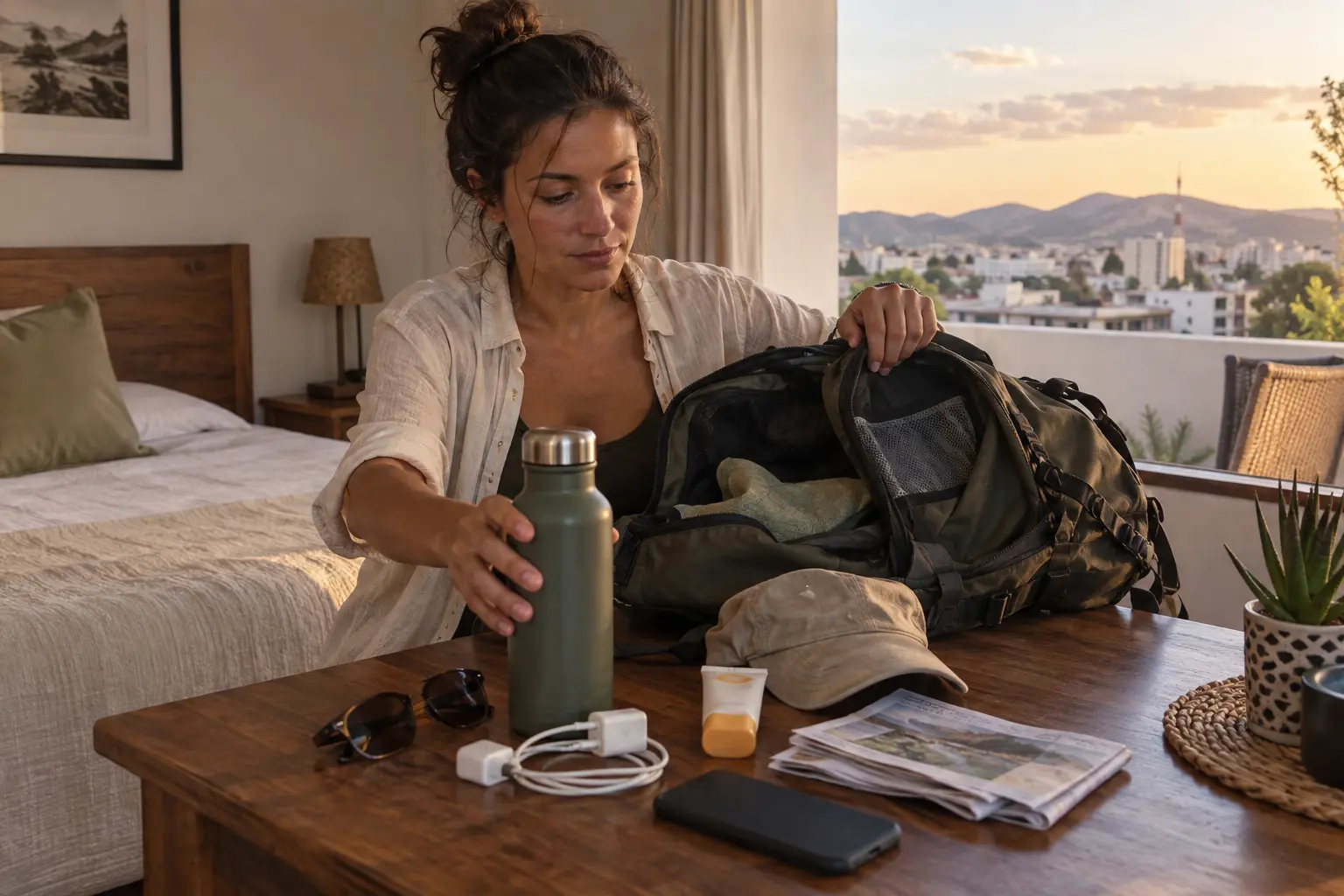
Windhoek is a transition city. Put like that, the role sounds unglamorous, a motorway service station with better light. But the transition is valuable. After a long flight, your trip needs somewhere to become concrete again: check the vehicle collection time, pick a practical part of town, get cash or change money, buy supplies, understand the distances, and ask two or three questions of someone who knows the city.
The capital concentrates practical services that are harder to sort out once the route heads into remote areas: a confirmed transfer, a reliable bed after the flight, a dinner that works for a mixed group, a SIM or eSIM, a supermarket, a pharmacy, rental paperwork, fuel planning, spare water, a clear briefing before the first long drive. Each item looks small on its own. Together they decide whether the trip starts calmly or with friction.
So the best use of Windhoek is not necessarily ticking off ten sights. It is making everything after it simpler. A comfortable night, a clear transfer from the airport, dinner close by, then a structured morning: this plan can look sensible to the point of being a little too grown-up. In Namibia, though, logistical common sense has real charm. It saves you from discovering left-hand driving, opening hours, grocery runs and fatigue all in the same quarter of an hour.
Windhoek is also where the trip you dreamed of becomes a trip you can actually run. You move from "we'll do Etosha, Sossusvlei, maybe Swakopmund, and why not Damaraland" to "where are we really sleeping tonight, who is picking us up, and how many hours are we driving tomorrow?" That is no less romantic. It is simply romance that remembered to fill the tank.
The real test: if your first day in Windhoek leaves you calmer than when you landed, it worked. If it feels like you sat an exam in applied logistics, simplify.
Hosea Kutako or Eros: check where you are landing first
It is the most basic check and the one that pays off most. Windhoek has two airports, and they do different jobs. Namibia Airports Company places Hosea Kutako International Airport about 45 km east of Windhoek, beyond the Khomas mountains; as the name says, it is the capital's international airport. Eros Airport is about 5 km from the city centre and, according to the same operator, handled commercial, private and scheduled traffic in 2016, from jets down to the small aircraft commonly used for charters and fly-in safaris.
In practice, a "Windhoek transfer" with no detail can mean two trips that have nothing in common in duration or price. Write the airport's name, not just the city, in every exchange with your accommodation, rental company or transport provider. Namibia Airports Company's page on Hosea Kutako says transport to the city is provided by airport shuttles; it gives no fares or timetables, so both still need to be confirmed by whichever operator you choose. That 45 km also matters more than it looks on a map: immigration, baggage, rental queues, unfamiliar roads and late-afternoon light can squeeze the day very quickly.
The first night: sleep in town or push on?
The classic trap is wanting to "save time" from the moment you land. On paper it is tempting: collect the car, cross town, hit the road, and off you go on the big adventure. In real life there is slow baggage, paperwork, tiredness, your first roundabout on the left, the sun dropping, and a small inner voice asking why nobody stopped you.
Your landing time is the best referee. The table below is not an official rule: it is a cautious decision grid, to adjust for how you feel, how used you are to driving on the left, and sunset time on your dates.
| You land… | Simplest plan | What would change the plan |
|---|---|---|
| Early morning after an overnight flight | Transfer, room (ask about early access), nap, shopping in the afternoon, leave the next day. | A genuinely rested driver and a short first leg: a late-morning start becomes possible. |
| Early afternoon | Transfer or vehicle collection in town, night in Windhoek, leave the next morning. | A rental briefing that drags on: move the vehicle handover to the next day. |
| Late afternoon or evening | Organised transfer, dinner nearby, vehicle the next day, no exceptions. | Nothing sensible: driving at night after a long flight gains you nothing but stress. |
If you arrive late in the day, the gentlest option is still an airport transfer, a well-placed first night and vehicle collection in the morning. It lacks swagger, but the next day, rested behind the wheel, you will see why. To find people to contact, you can browse the airport transfers listed for Windhoek on Ayivoo, then write to them using the message further down.
If you are already rested, used to driving on the left or travelling with a provider, you can move a little faster. But keep one rule: day one must not depend on impossible perfection. A slightly late flight, a temperamental bank card or a queue at the rental desk is enough to turn a "reasonable" drive into a farce. Your plan should still work if arrival slips by two hours.
The same logic applies at the end of the trip. A last night near Windhoek protects your international flight from a late return from Etosha and the north, a tyre problem or a slow day on the road.
Who gains most from time in Windhoek
Windhoek is especially useful for travellers who value control, context and smoother logistics. It is not always the emotional high point of Namibia, but it can be the place that turns a complicated route into a manageable one.
| Traveller profile | Best use of Windhoek | What to sort out early |
|---|---|---|
| First-time self-drivers | Vehicle handover, road questions, supplies and a low-pressure first night | Transfer or rental timing, first accommodation, who to ask about the onward route |
| Families | Recovering after the flight, pharmacy or grocery stop, an easy dinner | Accommodation that suits children, child seats, space for luggage in the transfer, whether early check-in is possible |
| Guided or safari-focused trips | Meet the guide, go over the route, check camera and luggage needs | Briefing time, luggage storage, departure time |
| Short stays | A little city context and a clean start to the route | A short city visit if energy allows, dinner, airport timing |
Choosing your base without unnecessary poetry
In Windhoek, the right first-night accommodation is not just "pretty". It has to work for your arrival, your dinner, your departure and your first shopping run. A view over the hills is nice, granted. But on the first evening, the real quality of a place is often measured in minutes of driving saved and in clear answers to your messages.
For an arrival, look above all for:
- A check-in that fits your real flight, not the optimistic time you had in mind on a Sunday evening while planning the itinerary.
- An easy dinner, on site or nearby, because fine dining becomes secondary when your body thinks it is three in the morning.
- Easy access to the rental company, the shops or the next day's road, depending on whether you are heading for Etosha, Sossusvlei, the Kalahari or the coast.
- Clear communication, especially if you arrive late or travel as a family.
On Ayivoo, the hotels, lodges and guesthouses around Windhoek category is a way to draw up a first list. Read each profile as a starting point: it tells you whom to write to, not whether a room is free on your dates or at what price. The guide to where to stay and eat in Windhoek then explains how to choose between different kinds of accommodation.
A simple plan for the first 24 hours
Picture, purely as an illustration, a late-afternoon arrival at Hosea Kutako. The ideal plan is not heroic at all. That is exactly its strength.
- Leave the airport without improvising: a booked transfer or a clear meeting point. If someone is waiting with your name and the vehicle matches what was described in writing, you have already won a round.
- Settle in with no side quests: shower, water, a message home, phone on charge. Sometimes glamour is a socket that works.
- Dinner close by: no epic drive across town to "get a feel for the place". Tonight, the feel of the place is sleep.
- A preparation morning: shopping, SIM card, vehicle check (photograph it, confirm the spare wheel and tools), a run through the route, questions for the provider or your accommodation.
- Leave in daylight: not too late, not overloaded, with a realistic first leg and a latest departure time fixed the evening before.
This plan may look modest. It is also remarkably effective, and it leaves room for a short visit or a coffee if everything goes smoothly. The nuance matters: the activity becomes a bonus, not the pillar that brings the whole plan down if the flight lands an hour late. If the group includes children, older travellers or nervous drivers, add even more margin.
Who to contact before you arrive, and in what order
For a first stop, the contacts that matter are not the "big experiences". They are the quiet services that rescue an arrival: transfer, driver, responsive accommodation, rental company. Windhoek does not need to become a catalogue; it needs two or three reliable people who answer clearly.
Order matters, because each answer shapes the next:
- Your first-night accommodation, to get the exact address and the latest check-in time.
- The transfer, with that address and the name of the airport. If you would rather hand over the first drive out of town as well, look at private drivers in Windhoek.
- The rental company, to set the vehicle handover after your night, not before. The car rental companies in Windhoek are a starting point for comparing.
On Ayivoo, these searches show provider profiles: businesses or individuals you can contact. No profile is a ranking, and a search with no results only means that no profile matched those words and that filter on that day; widen the search before drawing conclusions. For the full method of comparing and keeping a written record, the article on booking locally in Windhoek goes further.
Before paying or sharing personal details, a few signs are worth watching:
- a price that changes every time you ask for details;
- pressure to pay through a channel you cannot trace before the service is clear;
- no written meeting point, cancellation rule or list of what is included;
- generic answers that could apply to any country;
- no plan for delays, late arrivals or route changes.
A good provider does not need to promise perfection. A good provider makes the unknowns explicit and tells you where their responsibility starts and stops.
The message to send before you book
Here is the kind of message that saves time. It is simple, a little textbook, and that is precisely why it works.
Hello, we are arriving at [Hosea Kutako / Eros] airport on [date] at [time] on flight [number, if useful]. We are [number] travellers with [number] bags. Could you confirm in writing the total price and currency, the exact meeting point, the estimated travel time to [accommodation address], the payment methods you accept and what happens if the flight is delayed? We are planning to leave for [destination] the next day: do you have any advice on timing?
This message reveals a lot: how quickly someone replies, how clear and precise they are, how much they care about the service. A good provider does not necessarily answer with a novel, but they take uncertainty off your plate. A vague provider adds fog to a trip that will have plenty of dust already.
Your first 24 hours in four checkpoints
Before the flight: put the name of the arrival airport, the address of your first bed, the transfer contact and the vehicle handover time in a single document you can open offline, along with your booking references.
On arrival: check the driver's name, the vehicle and your destination against what was confirmed in writing. If you are collecting a car, do not let the briefing be rushed: existing damage, the spare wheel, tools, fuel, roadside assistance and the breakdown procedure must all be clear before you sign. After a late arrival, moving the handover to the next morning is often a travel decision, not a failure.
Before dinner: check what is actually open and how you will get back. The City of Windhoek publishes an emergency contacts page on its website (municipal police, main fire station): take a dated screenshot rather than relying on the network, and check it again before you travel. Wider safety habits are covered in safety and logistics in Windhoek.
Before the road: give twenty minutes to the vehicle, water, fuel, an offline route and your latest departure time. The Roads Authority manages the national road network; this guide does not pass on any road conditions, and an automatically calculated route does not confirm the state of the road on the day. Ask your rental company or your next accommodation what they know about the route you have planned.
The departure decision
Leave Windhoek only when all five boxes are ticked: rested driver, vehicle understood, next accommodation informed, offline navigation, margin before dark. If one is missing, the simplest fix is usually one more hour in town, not one more hour on the road.
Common mistakes, said kindly but firmly
- Trying to leave Windhoek too quickly. The big one. It starts with good intentions and often ends with "why are we in a supermarket at 6.12 pm with three SIM cards and no energy left?"
- Mixing up the two airports. A transfer booked "at the airport" with no name is a meeting that could be some forty kilometres off.
- Confusing distance with fatigue. A drive can look short on a map and weigh heavily after a flight, paperwork, shopping and getting used to a new vehicle.
- Booking the most charming place in the wrong location. Charm matters, of course. But on the first evening, simplicity can be worth more than an imaginary spa.
- Not asking the provider the basic questions. Time, meeting point, payment, delays, luggage, cancellation: the boring details are the ones that save you from slapstick moments.
- Forgetting the end of the trip. Windhoek is useful on the way back too: returning the vehicle, the last night, luggage, a transfer to the right airport.
Mini-checklist before leaving Windhoek
| Check | Why it matters | Good habit |
|---|---|---|
| Transfer or vehicle | This first decision shapes the whole arrival. | Airport name, address and time confirmed in writing. |
| Neighbourhood and dinner | A simple dinner saves you from ending the day hunting for a restaurant. | Look at restaurants, cafés and bars around Windhoek close to your accommodation, then check opening hours with the venue. |
| Next day's departure | Long distances reward clear mornings. | Ask your rental company or next accommodation for a realistic departure time. |
| Shopping and water | Whatever is missing in town gets harder to find outside it. | Make a short list, not a supermarket expedition. |
| Offline contacts | Network coverage is not guaranteed everywhere. | Dated screenshot of the municipal contacts, the rental company and the next stop. |
After Windhoek: choosing the first leg
Windhoek pairs naturally with a first trip to Etosha to the north or Sossusvlei to the south-west, and later with Swakopmund or Damaraland. The right sequence depends on season, vehicle, budget and the nights you have, but each destination has its own rhythm, and the mistake would be to give them all the same rushed start. A generic map estimate is not the same as advice from someone who regularly deals with luggage, gravel roads or late arrivals, so put your route to your rental company or next accommodation. If you stay an extra day in town, two days in Windhoek suggests ways to fill it without wearing yourself out.
FAQ for a first stop in Windhoek
Should I sleep in Windhoek when I arrive in Namibia?
Usually yes, especially after a long flight or an afternoon or evening arrival. That night is not a "lost day": it lets you collect the vehicle in daylight, do your shopping and leave rested. Experienced travellers landing early may choose otherwise, but they should still have a plan for delays.
What is the difference between Hosea Kutako and Eros?
According to Namibia Airports Company, Hosea Kutako International Airport is about 45 km east of Windhoek, while Eros Airport is about 5 km from the centre; the operator described Eros (2016 data) as handling, among other traffic, the small aircraft used for charters. Check which one is on your ticket before booking a transfer.
Is an airport transfer worth it?
Yes if you arrive late, travel as a family, have a lot of luggage or do not want to drive straight away. Ask in writing for the total price, the currency, the meeting point and what happens if the flight is delayed before you confirm.
Should I collect the rental car on the day I arrive?
It depends on the time, how tired you are and how used you are to driving on the left. If anything looks tight, collect the vehicle the next day: the briefing (damage, spare wheel, roadside assistance) deserves your full attention.
Which contacts should I save before leaving Windhoek?
Those of your accommodation, your rental company or transport provider, your next stop, and the emergency contacts published by the City of Windhoek on its dedicated page, screenshotted and dated. Check them again before travelling rather than copying an old list.
How much time does Windhoek need?
One night is enough for the logistics. A second night can make sense for a slower arrival, family recovery time, a guided briefing before a long itinerary, or simply a day to understand the city.
Is Windhoek worth a proper visit?
Yes, in proportion. A short guided visit or one well-chosen outing can give you context without stealing energy from the big stages. The capital is better understood than overloaded.
Ticket in hand: the decision that sets up everything else
Look at the landing time on your ticket, then find it in the first-night table. If it falls in the afternoon or evening, the rest almost writes itself: a night in Windhoek, a transfer confirmed in writing, the vehicle the next day. Then write to two or three contacts found among the airport transfers in Windhoek, using the message above. A first trip to Namibia starts better when the capital has done its job: making you calmer, not more heroic.
Sources and date last checked
Checked on 4 October 2026: Namibia Airports Company, Hosea Kutako overview (about 45 km east of Windhoek, shuttles to the city); Namibia Airports Company, Eros Airport overview (about 5 km from the centre; traffic described with 2016 data); City of Windhoek, emergency contacts (municipal police, main fire station; undated page); Roads Authority, home page (its role in managing the national network). No fare, shuttle timetable or road condition is published here: confirm them with the operator concerned when you travel. The images in this guide are illustrations; they do not show a specific place or provider.