What to remember when choosing where to stay, eat and move around Windhoek
- Choose your first night by logistics first. The most beautiful room is not the best choice if it makes airport arrival, dinner, errands or next-morning departure harder.
- Keep the first evening compact. After a long flight, a close dinner and simple transport plan are often better than crossing the city for an ambitious experience.
- Match accommodation to tomorrow's route. A self-drive departure, guided pickup, airport return or city day each points to a different ideal base.
- Do not separate food and transport decisions. A restaurant choice is also a movement decision, especially after dark or with children, luggage or jet lag.
- Use Ayivoo to connect the pieces. Compare Windhoek providers, hotels and lodges, restaurants and cafés, and transportation services before locking the first day.
Why this guide matters for a Namibia trip
Windhoek is often described as a gateway, but that word can hide the real decision. A gateway is not only a place you pass through. It is where travellers recover, gather supplies, meet providers, make first local payments, test communication, and decide whether the next day begins calmly or under pressure.
For first-time Namibia travellers, the Windhoek stay is usually less about sightseeing volume and more about practical fit. The right combination of accommodation, food and movement can protect the whole itinerary. The wrong combination can turn a simple arrival into a chain of small problems: a late pickup, a restaurant too far away, a missed grocery stop, a tired drive, or a vehicle handover squeezed into the wrong hour.
This article helps you plan Windhoek as a working travel base: where to sleep, how to think about dinner, how to move around, and which details to confirm before you pay.
Where to stay: choose by travel job, not only style
Accommodation in Windhoek should be chosen around what it needs to do for the trip. A first-night stay, a final-night stay, a business-leisure stop and a two-night city pause do not have the same requirements.
| Travel situation | Best accommodation logic | Question to ask before booking |
|---|---|---|
| Late international arrival | Simple check-in, reliable transfer, food nearby and a calm first morning | Can the property handle late arrival and help with transport if the flight is delayed? |
| Self-drive departure next morning | Easy access to rental handover, fuel, groceries and main outbound route | Is parking secure and practical for luggage loading? |
| Two-night city pause | Comfortable base for restaurants, local experiences, errands and slower recovery | Can the location reduce taxi time between meals, activities and supplies? |
| Final night before flight | Predictable airport access and minimal last-morning complexity | What transfer time do they recommend for your exact flight? |
When browsing hotels and lodges on Ayivoo, compare more than photos. Look for check-in rules, meal options, parking, family fit, airport transfer help, distance to planned errands and whether staff can support early departures.
Where to eat: plan the first meal like a service
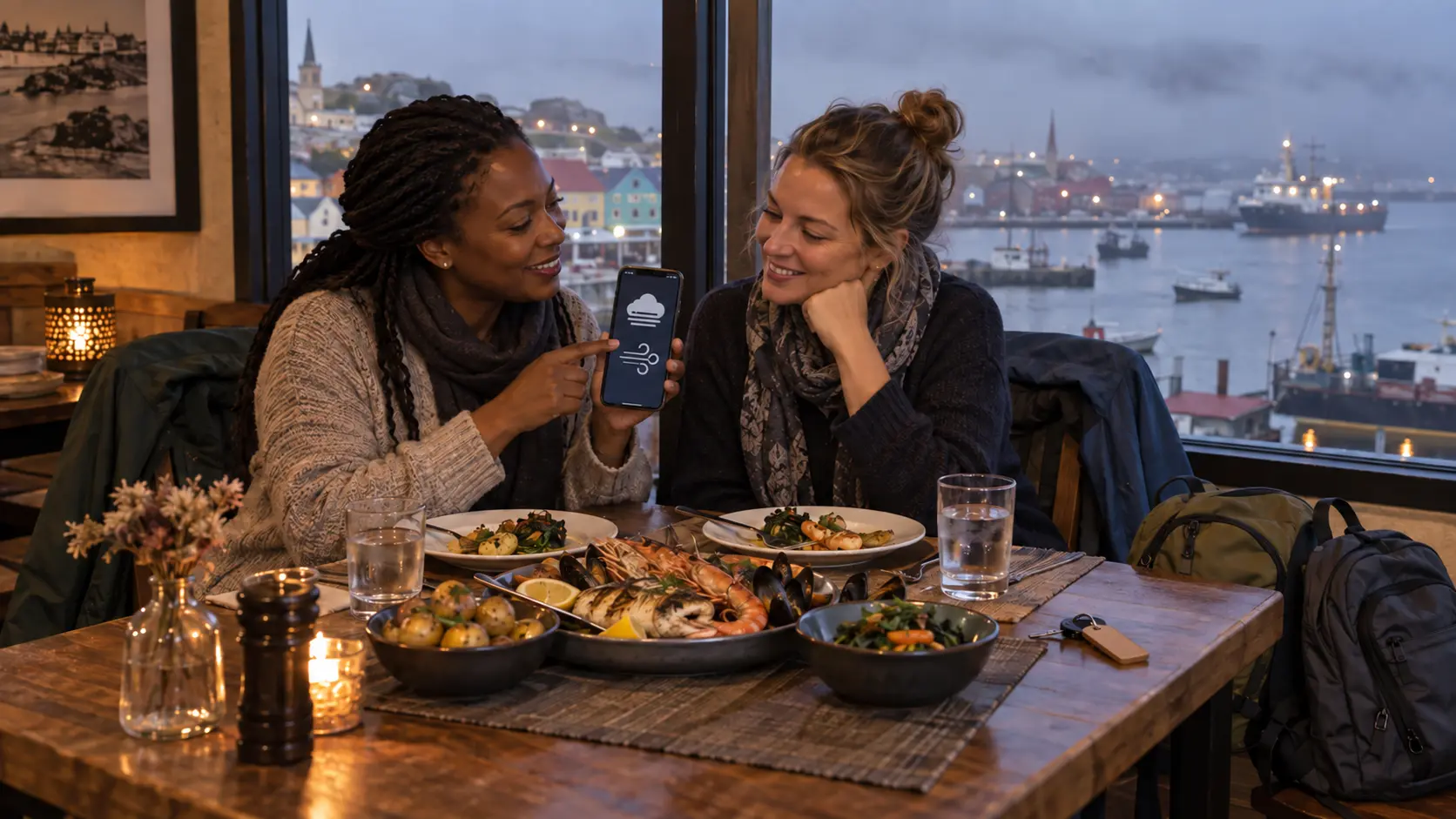
A first Windhoek dinner is not just a meal. It is the point where the group either settles into the trip or spends extra energy solving logistics. After a long flight, the best restaurant choice is usually the one that is close, confirmed, flexible and suitable for the actual group.
Before choosing where to eat, ask:
- How tired will the group be when dinner begins?
- Will you have a car, a transfer, a taxi arrangement or hotel transport?
- Are children, older travellers or dietary needs part of the group?
- Does the restaurant require a booking or close earlier than expected?
- Will you need cash, card, tip planning or transport after dark?
If the trip starts early the next morning, dinner should make the route easier, not become the first major activity. Use Ayivoo restaurant and café listings to shortlist options that fit the timing, location and mood of the first night.
Moving around Windhoek without making the day heavy
Movement in Windhoek should be planned around certainty. If travellers are collecting a rental vehicle, the first drive may already include unfamiliar roads, paperwork and orientation. If they are not driving, then transfer reliability becomes central. Either way, avoid vague movement plans such as "we will find something when we arrive" for the first evening.
Use transportation services on Ayivoo for airport transfers, city movement, luggage support or point-to-point arrangements. Confirm pickup point, driver contact, included waiting time, luggage fit, child seats if needed, payment method and late-arrival policy.
For self-drivers, movement planning includes parking and timing. Ask accommodation providers whether parking is secure, easy to access with luggage, and suitable for early departures. Ask restaurants whether parking or drop-off is straightforward, especially after dark.
A simple arrival-evening sequence
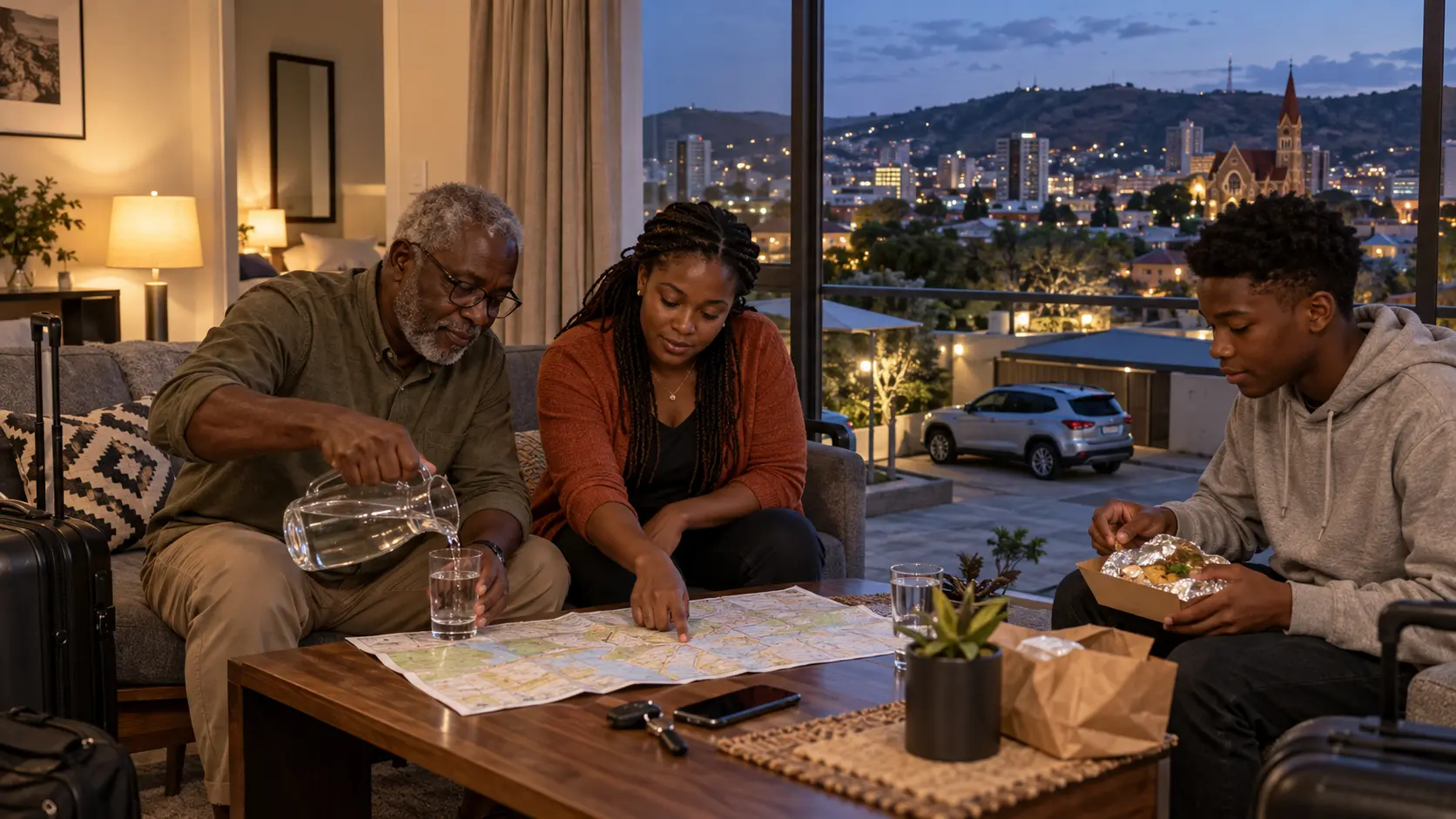
The strongest first evening is often the least complicated one. Here is a sequence that works for many first-time travellers:
- Airport to accommodation. Use a pre-confirmed transfer or clear vehicle collection plan.
- Check in and reset. Drop bags, drink water, check tomorrow's essentials and avoid making new decisions while tired.
- Eat nearby or with arranged transport. Choose one practical meal rather than a long city crossing.
- Confirm the next morning. Departure time, route, provider contact, fuel, supplies and documents.
- Sleep early if driving tomorrow. Namibia distances deserve a rested start.
This is not a rule for every traveller. It is a good default when the group is new to Namibia, arriving after a long journey, or starting a route with substantial driving.
When a two-night Windhoek stay makes sense
A two-night stay is not wasted time if it improves the rest of the trip. It can be especially useful when travellers want a city orientation, a slower first day, time for shopping or SIM setup, meetings with local providers, a guided experience, or a buffer after a complicated flight connection.
Use the second day for focused tasks rather than random filler:
- a guided city, food, craft or neighbourhood experience;
- vehicle handover and self-drive briefing without rushing;
- shopping for water, snacks, medication, camera items or child supplies;
- checking route assumptions with a local operator;
- resting before the first long drive.
Travellers comparing Namibia with South Africa, Botswana or East Africa sometimes underestimate how much route confidence matters in Namibia. A calm Windhoek day can be the difference between a route that feels adventurous and one that feels improvised.
Families and groups: reduce tiny decisions
Families and groups should design Windhoek around fewer decisions. The more people in the group, the more valuable it becomes to pre-confirm accommodation, dinner, movement and payment responsibilities.
For family trips, ask accommodation and transport providers about child seats, room layout, meal timing, secure parking, laundry, pharmacies, and whether breakfast works with early departures. For friend groups, clarify who holds booking references, who communicates with providers, and how shared costs are paid.
The most common group mistake is leaving too many details informal: "we will decide there." That can work for relaxed city breaks, but it is weaker when the next destination is hundreds of kilometres away.
Common Windhoek planning mistakes
- Booking accommodation only by appearance. A beautiful property can still be awkward if it complicates transfer, parking, dinner or departure.
- Planning a demanding first evening. Long flights and unfamiliar logistics make travellers less flexible than they expect.
- Separating dinner from transport. A restaurant is only practical if the return journey is practical too.
- Ignoring the final night. The last leg back to Windhoek should protect the international flight, not gamble on perfect roads and timing.
- Not saving confirmations offline. Mobile data, roaming and battery problems are bad reasons to lose a pickup detail.
FAQ about staying, eating and moving around Windhoek
Which area of Windhoek should I stay in?
Choose the area based on the job of the stay: airport access, first-night recovery, restaurant convenience, vehicle handover, secure parking or a two-night city pause. The best area is the one that reduces movement stress for your specific itinerary.
Do I need a car in Windhoek?
Not always. If you are not self-driving immediately, pre-arranged transfers can be simpler for the first night. If you are collecting a rental vehicle, confirm parking and avoid unnecessary night driving after arrival.
Should I book dinner before arrival?
For late arrivals, families and larger groups, yes. A flexible nearby dinner or accommodation meal can remove one more decision from the first evening.
Should I spend the last night in Windhoek?
Often yes, especially before an international flight. A final Windhoek night creates a buffer against road delays, vehicle issues and overly optimistic drive times.
Sources to verify before publication
- Namibia Airports Company: Hosea Kutako International Airport overview for airport location, airport transport and facility context.
- U.S. State Department Namibia travel advisory or the traveller's own official advisory for current safety and health wording.
- Namibia Ministry of Environment, Forestry and Tourism for official tourism context and national resources.
- Ayivoo live listings for current Windhoek accommodation, restaurant and transport providers before publication.
Next step on Ayivoo
Search Windhoek on Ayivoo and build the first day in one connected pass: where you sleep, where you eat, how you move, and what must be ready before the route continues. The best Windhoek plan is the one that makes tomorrow feel simple.