What to remember before booking local providers in the Zambezi Region
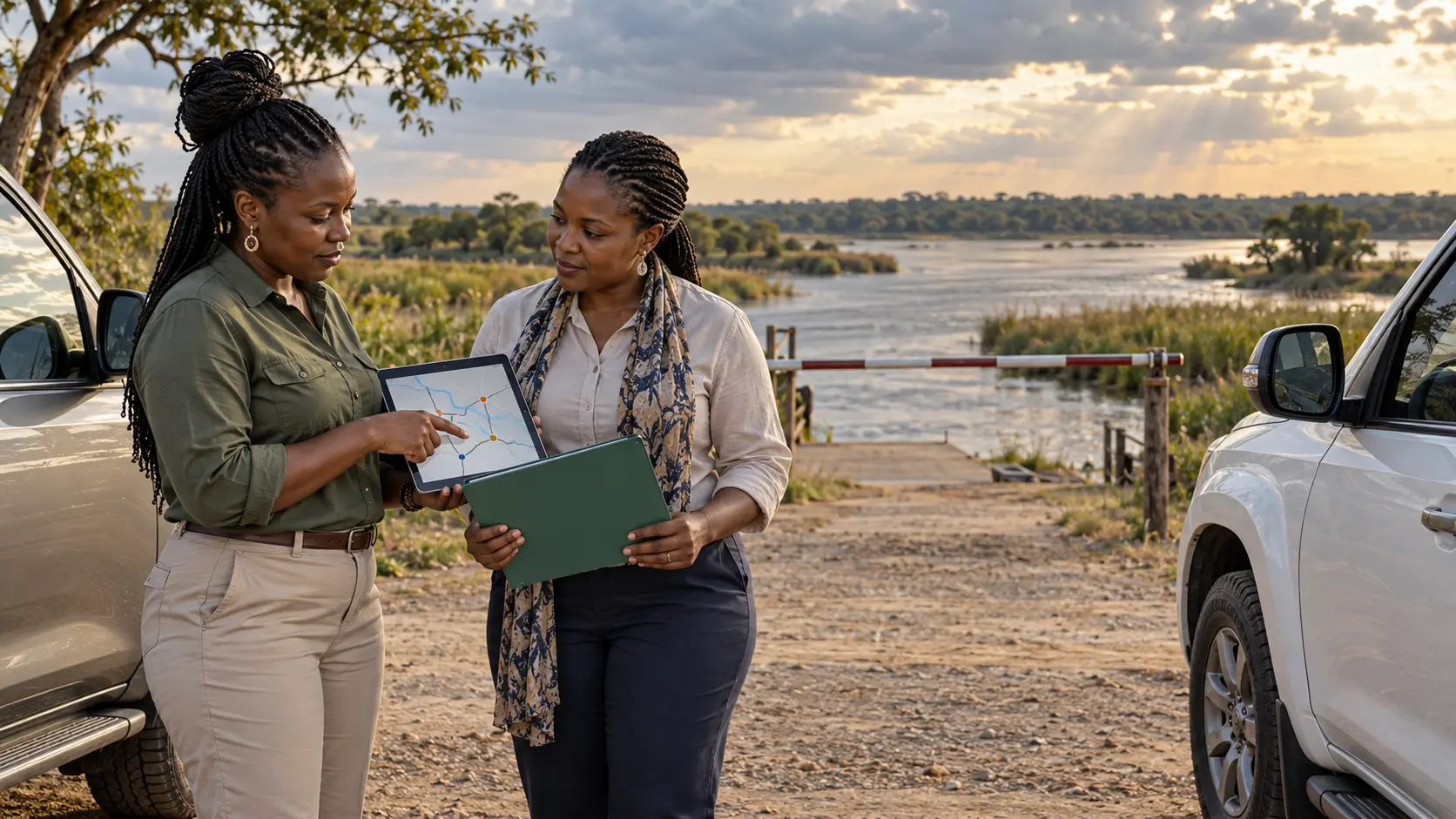
Booking locally in the Zambezi Region means booking knowledge, not just beds or activities. Providers need to understand rivers, parks, water levels, seasonality, border routes, health precautions, vehicle conditions and timing. A generic “Namibia safari” operator may not be enough if your plan involves Bwabwata, Mudumu, Nkasa Rupara, boat activities or a cross-border transfer.
Before paying, decide which problem the provider should solve. Do you need a river lodge, guided park drive, boat trip, birding specialist, fishing operator where permitted, transfer, or cross-border itinerary support? The clearer your problem, the easier it is to compare providers fairly.
Use Ayivoo’s Zambezi Region search and Ayivoo activities and experiences to build a shortlist. Then message providers with your complete route, not only the Zambezi dates.
What to book first
The route anchor
Start with the direction of travel: Etosha and Kavango into Zambezi, Zambezi toward Botswana, or Zambezi as part of a guided north-east package. Once the direction is fixed, choose the provider who best supports that route. In this region, the wrong sequence can cost more than the wrong room.
The lodge and activity pair
Many Zambezi experiences are lodge-linked: boat trips, river sunsets, park drives, birding and meals. Ask whether the lodge operates activities itself or uses partners. If using partners, ask who is responsible for timing, pickup, safety and refunds if weather or water levels affect the plan.
The cross-border layer
If your route touches Botswana, Zambia or Zimbabwe, confirm border processes before paying for non-refundable services. Vehicle paperwork, insurance, visas, child documents where relevant and border operating conditions can change. A strong provider will tell you what to verify officially rather than pretending all borders are routine.
Provider types and what they solve
| Provider type | Best for | Questions before paying |
|---|---|---|
| River lodge | Meals, river activities, rest, local advice | Included activities, mosquito precautions, transfers, meals |
| Park guide | Bwabwata, Mudumu, Nkasa Rupara-style planning | Vehicle, fees, route, season, wildlife expectations |
| Boat or birding specialist | Wetlands, birds, photography, river interpretation | Seasonality, boat safety, duration, guide expertise |
| Transfer or cross-border operator | Connections to Botswana, Zambia, Zimbabwe or airports | Paperwork, border timing, luggage, delay policy |
Trust signals in Zambezi bookings
Look for providers who ask where you are coming from and where you are going next. They should discuss seasonality, road conditions, health precautions, park rules and border timing without being prompted. They should use conservative wildlife language and explain what is included in writing.
- Seasonal honesty: water, roads, mosquitoes and wildlife movement are discussed.
- Route awareness: the provider understands Etosha, Kavango, Botswana or Victoria Falls connections.
- Health realism: mosquito and malaria precautions are flagged for medical advice.
- Inclusion clarity: meals, fees, boats, drives, transfers and park costs are separated.
- Border caution: cross-border claims come with instructions to verify official requirements.
- Fallback planning: rain, water levels, vehicle delays and border disruption are considered.
Red flags include guaranteed sightings, casual border promises, no malaria mention, no answer on park fees, and providers who treat the Zambezi Region like a generic Etosha extension. This part of Namibia needs local specificity.
Questions to send before paying
- Which exact area, park, river or border point do you serve?
- What changes in our travel month compared with other seasons?
- Are activities operated by you or by a partner?
- Are park fees, boat trips, meals, transfers and guide services included?
- What health precautions should we discuss with a travel clinic?
- What vehicle type is realistic for our route?
- What happens if rain, water levels, road conditions or border delays affect the plan?
How to compare provider replies
Once several providers answer, compare them on specificity. The strongest reply usually names the route, season, pickup point, activity owner, included meals, excluded fees and fallback logic. A weaker reply may sound friendly but skip the details that matter. In the Zambezi Region, friendliness is welcome, but operational clarity is what protects the itinerary.
| Reply signal | What it tells you | Booking action |
|---|---|---|
| Mentions your previous and next stops | The provider understands route context | Keep on shortlist |
| Separates lodge, boat, drive and transfer inclusions | Pricing is less likely to surprise you | Ask for written confirmation |
| Discusses season and water conditions | Local knowledge is being applied | Compare with another local provider |
| Uses generic safari language only | The offer may not be Zambezi-specific | Ask follow-up questions before paying |
Payment, deposits and proof
Before paying a deposit, make sure the provider has confirmed dates, number of travellers, exact service, pickup point, meal inclusions, cancellation rules and responsibility for any partner activity. If a border or park is involved, distinguish provider confirmation from official permission. A provider can help you prepare, but official requirements still need independent verification.
Keep copies of booking confirmations, transfer details, emergency contacts and any cross-border vehicle letters offline. In a region where phone signal, rain, border queues or road changes can affect timing, having the basic paperwork available without internet is simple but valuable.
Common booking mistakes to avoid
The first mistake is booking a lodge before deciding the route direction. In the Zambezi Region, a stay that looks excellent can still be inconvenient if it sits on the wrong side of your next border, park or transfer. The second mistake is assuming that all river activities are similar. A sunset boat trip, birding outing, fishing activity where permitted, lodge transfer and park-linked boat route may use different timings, guides and safety assumptions.
The third mistake is paying separately for accommodation, activities and transport without asking who coordinates delays. If a morning boat returns late and a transfer waits elsewhere, who decides what happens? If a border crossing runs long, does the lodge hold dinner? If rain changes road timing, does the guide adapt the route or does the traveller absorb the cost? These are not pessimistic questions. They are the difference between a locally organised itinerary and a stack of isolated bookings.
The fourth mistake is underestimating health preparation. A provider can describe mosquito precautions at the lodge, but cannot replace travel-clinic advice. Build health checks into the booking timeline early, especially for children, pregnancy, medication interactions or travellers with medical conditions.
Coordination scenarios worth confirming
If you are arriving from Etosha or the Kavango area, ask whether your arrival time leaves enough daylight for the final approach and dinner. If you are leaving for Botswana, ask whether the transfer plan includes border buffer time and what documents the provider expects you to verify. If you are booking multiple activities from the same lodge, ask whether they can be rearranged if weather, water levels or fatigue make the original order less sensible.
For families, ask whether activities can be shortened or softened without losing the whole booking. For photographers, ask whether private guiding changes timing and stops. For birders, ask whether the guide can explain seasonal expectations before you choose dates. For self-drivers, ask where to park, what roads are unsuitable after rain, and whether the provider recommends arriving with a fuller tank before remote stretches.
Booking sequences that work
Lodge-led stay
Book a river lodge that coordinates meals, boat activities and local drives. This is the cleanest option for families and travellers who want the region to feel restful.
Guide-led park focus
Use a specialist guide for park and wildlife days while choosing accommodation separately. This suits photographers, birders and repeat travellers.
Transfer-led cross-border route
Book transport and border support first, then fit accommodation around transfer timing. This suits travellers connecting toward Botswana, Zambia or Zimbabwe.
How to compare providers on Ayivoo
Shortlist providers by problem solved: lodge, activity, park, transfer or cross-border support. Send the same route brief to each provider so answers are comparable. Save replies that mention constraints; in the Zambezi Region, constraints are useful.
Use the Ayivoo English blog hub to connect local booking with safety, stay and first-trip Zambezi guides. This region is best booked as a system, not as disconnected items.
FAQ
Should we book in advance?
Yes for lodges, specialist guides, cross-border transfers and peak travel periods. The region is route-sensitive and benefits from advance coordination.
Can one provider handle everything?
Sometimes. A strong lodge or itinerary operator may coordinate meals, drives and boat activities. Confirm what is operated directly and what is outsourced.
Should health precautions affect booking?
Yes. Discuss malaria, mosquito and vaccination guidance with qualified professionals before finalising dates and accommodation style.
Can providers guarantee border smoothness?
No. Providers can guide and support, but official requirements must be verified before travel.
Sources to verify before publication
- Namibia Tourism Board destination information for the Zambezi Region and north-east travel routes.
- Ministry of Environment, Forestry and Tourism information for relevant parks and access rules.
- Current official border, visa, insurance and vehicle paperwork requirements for Botswana, Zambia or Zimbabwe links.
- Current travel health guidance for malaria, mosquitoes and vaccinations from official target-country sources.
- Live Ayivoo listings for Zambezi Region lodges, activities, guides, transfers and cross-border support.