What to remember before treating Swakopmund as the easy part of Namibia
Swakopmund is easier to manage than many remote Namibia stops, but “easier” does not mean risk-free. The main safety and logistics issues are practical: coastal fog, wind, cold mornings, activity safety standards, valuables in town, road timing to and from the coast, marine conditions around Walvis Bay, and fatigue after long gravel drives. A good Swakopmund plan gives you flexibility without letting the town become a chaotic activity sprint.
The safest approach is to separate three layers. First, town safety: accommodation location, evening movement, valuables, parking and trusted transport. Second, activity safety: equipment, guides, group size, weather policy, medical or age restrictions and cancellation terms. Third, route safety: realistic travel time from Sossusvlei, Windhoek, Damaraland, Walvis Bay or the Skeleton Coast. If one of those layers is weak, solve it before booking extras.
Use Ayivoo’s Swakopmund search to find providers serving the coast, and compare practical transfers through Ayivoo transportation services. Ask providers for operational detail: pickup points, vehicle type, weather adjustments, safety briefing, insurance or liability process, and latest safe return time.
Town safety: normal precautions, coastal-town context
Swakopmund is a well-used visitor base with restaurants, accommodation and activity providers, but travellers should still use normal urban precautions. Keep valuables out of sight, avoid leaving bags visible in parked vehicles, use known transport at night, and ask accommodation staff about areas and walking routes after dark. Government travel advisories for Namibia continue to highlight crime awareness and road safety, so treat Swakopmund as comfortable, not careless.
Choose accommodation that matches your evening habits. If you want to walk to dinner, location matters. If you will drive back after dark, parking and security matter. If you are arriving tired from Sossusvlei or Damaraland, a simple check-in and easy dinner may be safer than crossing town for a complicated plan.
Fog, wind and coastal weather
Swakopmund’s coastal weather can surprise travellers coming from the inland desert. Foggy mornings, cool air and wind are common enough that they should be part of your packing and booking logic. Bring layers, especially for early starts, marine activities and open vehicles. Do not judge the day only by inland Namibia expectations.
Weather affects activities differently. Fog may change visibility for photography or scenic flights. Wind may affect dune activities. Marine conditions may affect kayaking, boat trips or lagoon outings from Walvis Bay. A good provider should explain whether the activity runs, reschedules or adapts when conditions shift. Avoid providers who treat weather questions as an inconvenience.
Activity risk: choose providers who explain safety before spectacle
Swakopmund’s activity scene is part of its appeal: dunes, desert ecology, marine trips, Skeleton Coast routes, scenic flights and adventure sports. The risk is that dramatic photos hide ordinary safety questions. Before booking, ask how the operator manages equipment, group size, age limits, guide ratios, emergency communication, weather decisions and environmental boundaries.
| Activity type | Main risk to manage | Question to ask |
|---|---|---|
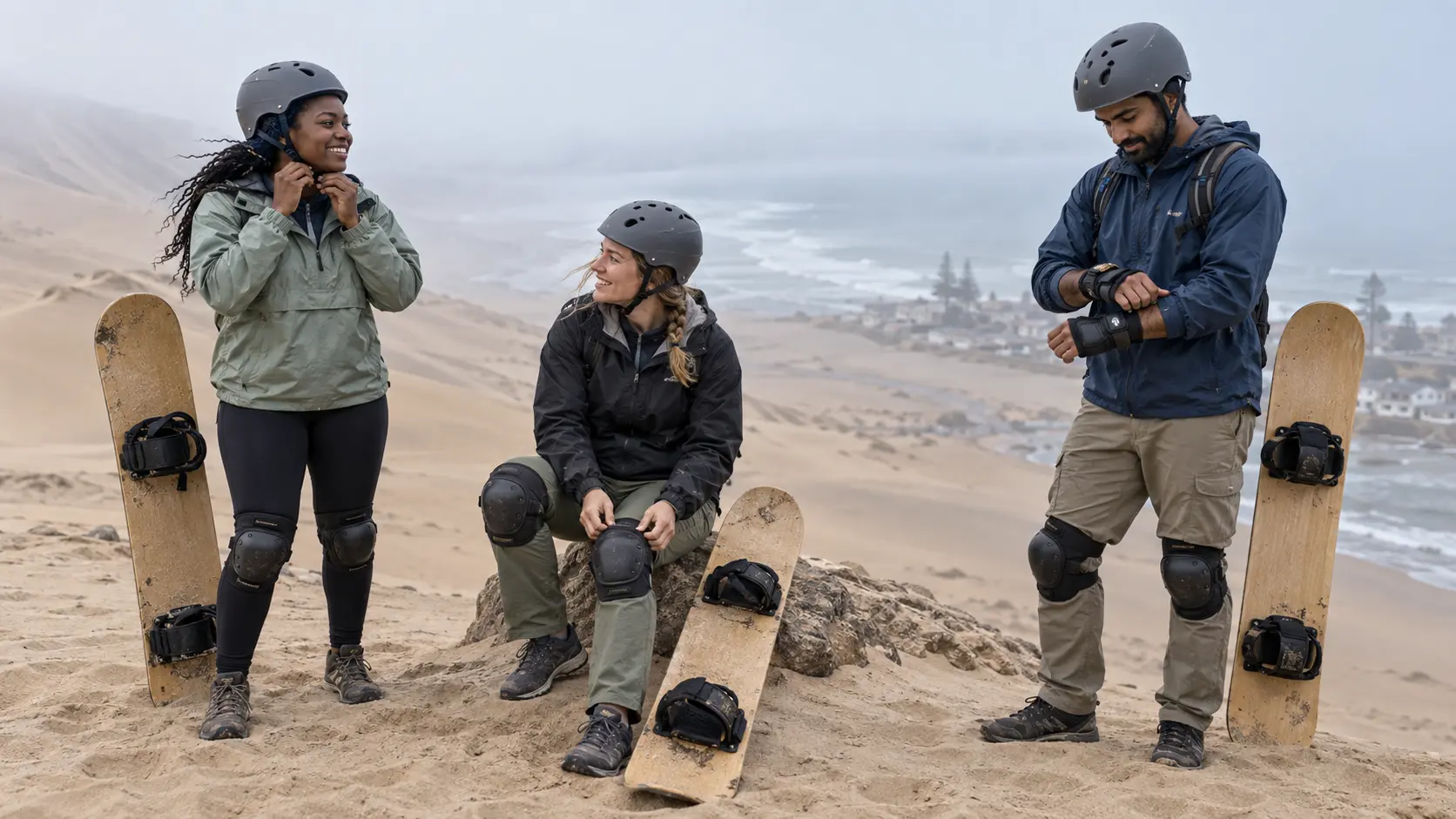
| Dune adventure | Speed, visibility, group control, falls, wind | What safety briefing, gear and guide ratio are used? |
| Living desert tour | Heat, vehicle route, conservation boundaries | How do you protect fragile desert areas and pace the group? |
| Marine or Walvis Bay day | Cold, sea conditions, transfer timing | What happens if wind, fog or sea conditions change? |
| Skeleton Coast route | Long distances, meal stops, fuel, access rules | What is the realistic route, return time and contingency plan? |
Road logistics before and after Swakopmund
The road into Swakopmund can feel like relief after remote regions, but fatigue remains real. Travellers often arrive after long drives from Sossusvlei, Windhoek, Damaraland or Etosha-side routes. Plan the first evening lightly. If you are coming from Sossusvlei, do not assume you will want a major activity immediately after arrival. If you are leaving for Damaraland or Skeleton Coast, confirm fuel, route timing and whether any coastal detour will overfill the day.
Official travel advisories for Namibia frequently emphasise road safety, including caution on gravel roads, avoiding night driving where possible and planning for remote stretches. That guidance still matters when Swakopmund feels more serviced. The town may be easy; the routes around it can still be long.
- From Sossusvlei: keep arrival night simple; use the next day for activities.
- From Windhoek: confirm vehicle, fuel and daylight timing before adding detours.
- To Damaraland: leave early if adding Cape Cross or coastal stops.
- To Walvis Bay: confirm pickup and transfer time for marine activities.
- To Skeleton Coast: treat distance, access and meals as one route plan.
Cash, communications and backup plans
Swakopmund has better services than remote regions, but do not build a trip that depends on every card terminal, phone signal or shop hour working exactly as expected. Carry a sensible amount of local cash for contingencies, keep devices charged, download offline maps for transfer days, and keep provider contact details available outside your inbox.
For activities, ask who you contact if you are delayed or cannot find the meeting point. For transfers, ask what happens if the previous route runs late. For self-drivers, know where you will park and whether your accommodation has secure parking. These details feel small until the day becomes windy, foggy, late or crowded.
Provider questions, trust checks and red flags
When using Ayivoo or contacting providers directly, send your dates, group size, accommodation, previous and next destination, ages, fitness considerations and desired activity intensity. Then ask specific questions.
- What are the exact pickup point, departure time and return time?
- What safety briefing, protective gear and guide ratio are used?
- What weather conditions change or cancel the activity?
- Are transfers, equipment, fees, meals, water and photos included?
- Is the activity suitable for children, older travellers or nervous participants?
- What happens if our previous drive into Swakopmund is delayed?
- Can this fit safely with our next travel day?
Red flags include vague pickup details, no weather policy, no clear safety briefing, pressure to book multiple activities in one day, refusal to discuss age or fitness limits, or dramatic marketing that says little about operations. Good providers make the day feel clearer and calmer.
Safe route combinations
Rest-first Swakopmund
Arrive, eat, sleep, then book one full activity day. This is the safest pattern after Sossusvlei or another long approach. It suits families and road-weary travellers.
Activity-first Swakopmund
Use Swakopmund as an adventure base with two or three activity slots, but keep at least one flexible block. This suits travellers who came specifically for dunes, marine days or scenic flights.
Route-first Swakopmund
Use Swakopmund mainly as a logistics hub before Walvis Bay, Skeleton Coast or Damaraland. In this version, transport quality, timing and meals matter more than town sightseeing.
FAQ
Is Swakopmund safe for tourists?
It is a popular visitor base, but normal precautions still apply. Manage valuables, parking, night movement and provider choice carefully, and follow current travel advisories for Namibia.
Will fog cancel activities?
Sometimes conditions affect timing, comfort or safety. It depends on the activity. Ask providers for their weather policy before paying.
Can we walk at night?
Ask your accommodation for local advice and use known transport if unsure. Choose accommodation location according to your dinner and evening plans.
Can we do an activity and drive to Damaraland the same day?
Sometimes, but avoid stacking a demanding activity with a long gravel route unless a local provider confirms timing. A calmer departure is often safer.
Sources to verify before publication
- Namibia Tourism Board and official Swakopmund visitor information for current destination and activity guidance.
- Current government travel advisories for Namibia from the United States, United Kingdom, Canada or other target-reader countries, especially road safety and crime guidance.
- Official municipal, protected-area or operator notices for beach, dune, marine and route conditions where relevant.
- Current route checks from reliable maps and local providers for Swakopmund connections to Sossusvlei, Windhoek, Walvis Bay, Damaraland and Skeleton Coast.
- Live Ayivoo listings for current Swakopmund transportation providers, guides, activities, transfers and accommodation support.