What to remember before treating Sossusvlei as an easy desert stop
Sossusvlei is safe for well-prepared travellers, but it is unforgiving of casual planning. The main risks are not dramatic. They are ordinary mistakes: leaving too late, underestimating heat, assuming the final section works like a normal road, carrying too little water, overloading a transfer day, or relying on old access information after rules or shuttle arrangements have changed. A good Sossusvlei plan protects the morning, the vehicle, the travellers and the onward route.
The first safety decision is timing. Plan the most exposed walking and dune time for early morning, build shade and rest into the middle of the day, and avoid pairing a full Sossusvlei morning with a punishing onward drive unless local providers confirm it is realistic. The second decision is access. Confirm current Namib-Naukluft Park, Sesriem and Sossusvlei access rules through official or provider channels before travel, especially because self-drive and final-section arrangements are the kind of operational detail that can change. The third decision is support: if your route, vehicle, heat tolerance or confidence is weak, a local guide, transfer or lodge-arranged service is not a luxury; it is risk reduction.
Use Ayivoo’s Sossusvlei search to identify local providers, and compare route support through transportation services on Ayivoo. Ask for practical answers before paying: exact pickup time, current access process, vehicle type, water plan, walking effort, fees, and what happens if the day becomes hotter or slower than expected.
The main Sossusvlei risk map
Travellers often imagine desert risk as getting lost in empty dunes. Around Sossusvlei, the more common planning risks are much more mundane. You sleep too far from Sesriem for the sunrise you wanted. A rental vehicle is not suitable for the plan you imagined. A traveller in the group discovers that walking across exposed sand in heat is harder than expected. The day’s second leg to Swakopmund, Windhoek or Damaraland becomes too long because the morning ran late. These are preventable with better sequencing.
| Risk | Why it happens | Better planning response |
|---|---|---|
| Heat stress | Late start, long exposed walks, insufficient water or shade | Start early, carry water, skip optional climbs, rest at midday |
| Vehicle trouble | Soft sand, tyre issues, unsuitable vehicle or overconfident driving | Confirm current final-section process and use guide, shuttle or transfer when appropriate |
| Missed timing | Accommodation too far away or vague pickup plan | Book close enough to Sesriem or use a provider with written timing |
| Overloaded route | Combining dunes, canyon, long lunch, activities and a major transfer | Protect one main objective and keep the onward drive conservative |
| Access confusion | Using old information about gates, fees, self-drive access or shuttles | Verify official rules and provider instructions shortly before travel |
Heat, walking and realistic effort
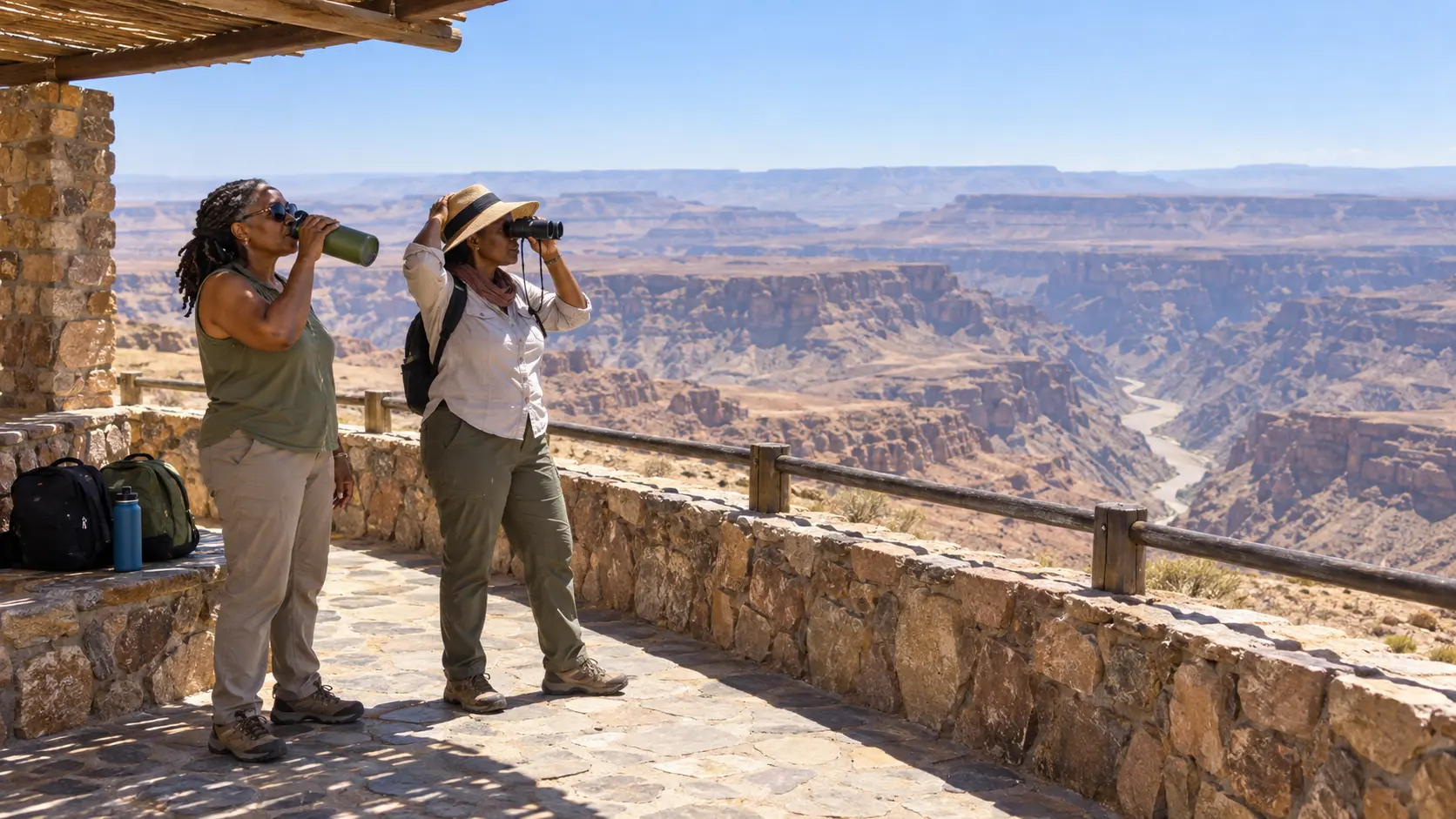
Sossusvlei’s beauty can make the physical effort feel optional until you are standing in the sun. Dune climbing, Deadvlei walks and photo stops all expose travellers to heat, glare and dry air. The correct safety mindset is not fear; it is humility. You can see an extraordinary amount without climbing the highest dune or forcing every traveller to walk at the same pace.
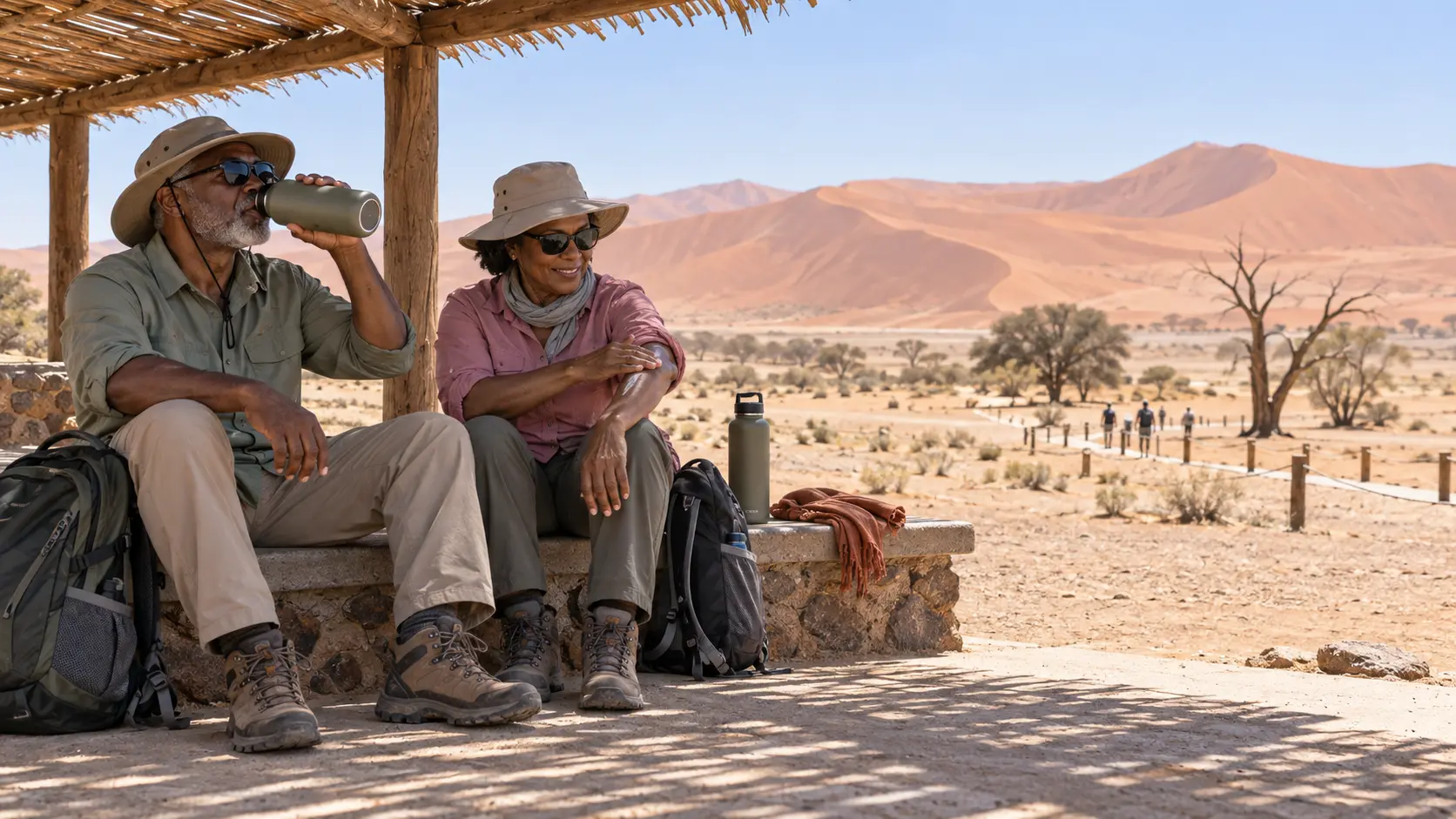
Carry more water than the minimum suggested by a casual plan. Wear sun protection that actually works in wind and glare: hat, sunglasses, sunscreen and breathable layers. Keep snacks accessible, especially with children. If someone begins to feel light-headed, nauseous, unusually tired or confused, stop early and seek shade. Do not let a photo goal override the group’s condition.
For families, older travellers and mixed-fitness groups, ask providers to describe the walking in plain terms. How long is the walk from the parking or transfer point? Is the sand soft? Is there shade? Can one person wait while others continue? Which stop can be skipped if the heat builds? A good guide should answer these questions without making you feel dramatic for asking.
Access, vehicle and final-section decisions
Namib-Naukluft Park, Sesriem and Sossusvlei access details should be treated as live operational facts. Official information from Namibia’s environment ministry identifies Namib-Naukluft as a major conservation area with Sossusvlei dunes and Sesriem Canyon among its key attractions. Namibia Wildlife Resorts and official park channels are relevant for Sesriem accommodation and park-linked services. However, travellers should not rely on stale blog posts for gate, fee, shuttle or self-drive rules. Check close to departure.
The final approach to Sossusvlei and Deadvlei has historically involved a distinction between regular vehicles and the sandy final section, with shuttle or 4x4 arrangements often discussed by operators. Because access policies can evolve, this article should not be your final authority on the exact current process. Instead, use it as a checklist: confirm whether your rental vehicle is allowed and suitable, whether a shuttle or official transfer is required, what is included in any guide service, and where you meet the operator.
If you are renting a vehicle, read the rental agreement before assuming off-road or soft-sand use is covered. Ask the provider how the route will be handled and whether the plan keeps you within rental terms. A small saving on transport can become expensive if it creates vehicle damage, recovery costs or insurance exclusions.
Route logistics before and after the dune morning
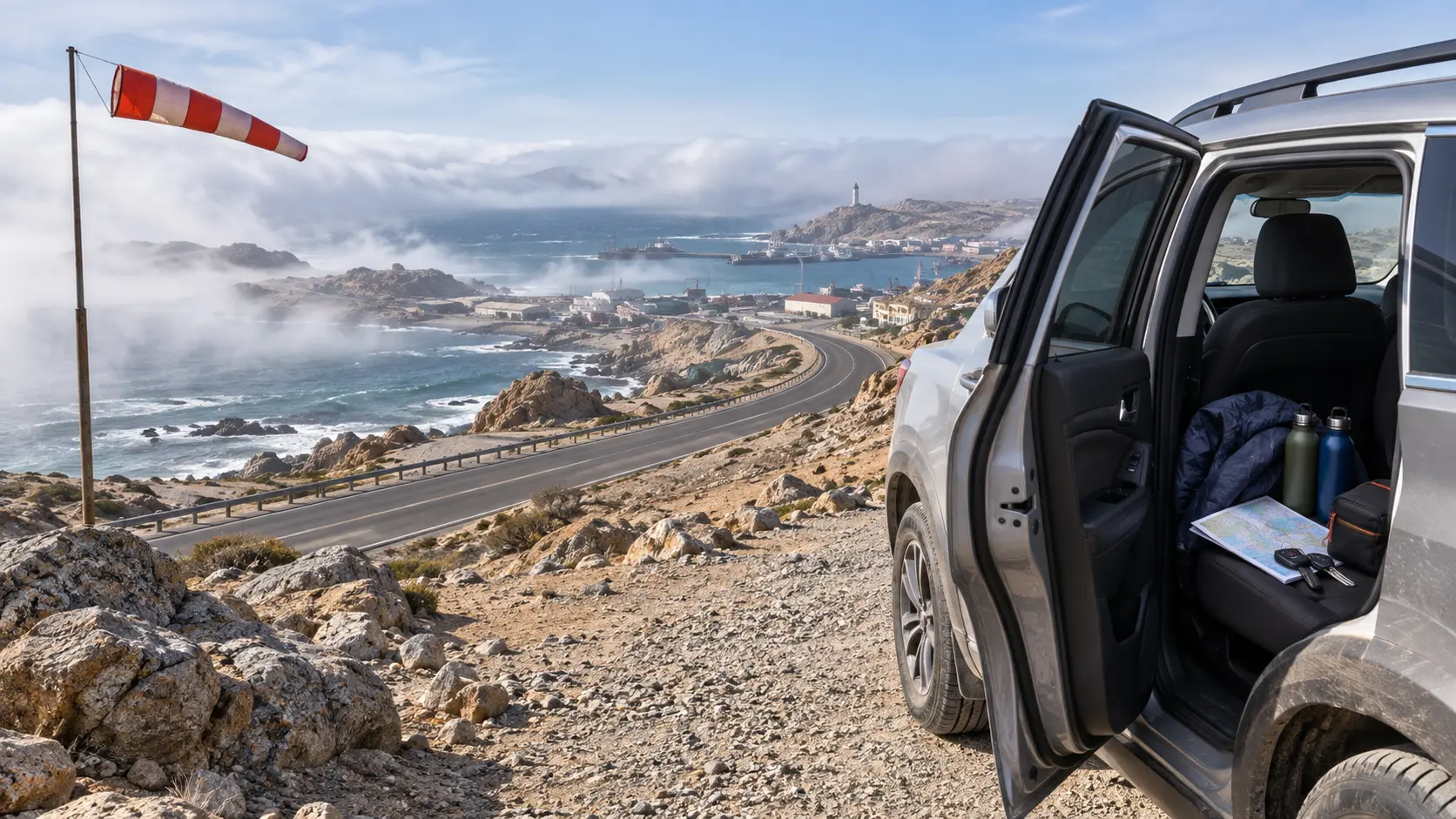
Many Sossusvlei problems begin the day before. Travellers drive from Windhoek, the coast, the south or Damaraland, arrive later than expected, then try to start early without a clear breakfast, fuel, gate or guide plan. A safer approach is to arrive with enough daylight to refuel if needed, check in calmly, confirm the next morning and go to sleep early.
After Sossusvlei, be conservative. Driving to Swakopmund or Walvis Bay can be a beautiful transfer, but it is still a long day when combined with an early desert morning. Returning to Windhoek for an international flight should include a larger buffer than a map app suggests. Continuing to Damaraland or Etosha requires even more route discipline. Namibia rewards margin.
- Previous night: sleep close enough to the gate for your sunrise or heat objective.
- Morning: focus on one main goal: Deadvlei, dunes, canyon or photography.
- Midday: recover in shade; avoid scheduling exposed activity by default.
- Afternoon: keep onward transfers realistic, especially on gravel.
- Evening: plan dinner and arrival window before the day begins.
Choosing transport support on Ayivoo
Transportation support around Sossusvlei may mean a full guided day, a lodge transfer, a shuttle-style solution, private driver, broader Namibia route service or a specialist operator who connects your accommodation with the park morning. The right choice depends on your weak point. If the weak point is sand driving, solve that. If it is early timing, solve that. If it is a long transfer from Windhoek or the coast, solve that.
When using Ayivoo, compare providers on operational clarity rather than only price. A useful transport provider can explain pickup time, meeting point, vehicle type, passenger comfort, luggage limits, fee inclusions, meal or water support, and delay procedures. If the service touches park access, ask how they verify the current rules for your travel date.
Provider questions, trust checks and red flags
Send a provider your accommodation name, dates, group size, vehicle status, previous and next stops, and the level of physical effort your group wants. Then ask concrete questions.
- What time should we leave our accommodation for the plan we want?
- What current access, gate, fee, shuttle or transfer process applies on our date?
- How much walking is involved, and which parts can be skipped?
- How much water should each traveller carry, and do you provide any?
- What vehicle will be used, and is our luggage or camera gear practical?
- What happens if wind, heat, access changes or a delayed arrival affects the plan?
- Are park fees, guide, transfer, shuttle, breakfast or lunch included?
Red flags include a provider who cannot explain the current final-section process, promises a perfect sunrise regardless of location, encourages unsuitable vehicles into sand, ignores children or older travellers in the group, or gives paved-road-style timing for gravel transfers. A trustworthy operator will make the plan feel clearer, not more heroic.
Cash, communications and health basics
Card acceptance, mobile signal and opening hours should not be assumed in a remote desert itinerary. Carry some local cash for contingency, keep your phone charged, download offline maps, and share your route with accommodation or a trusted contact. If you have a medical condition affected by heat, dehydration or exertion, adjust the plan before the day rather than hoping the desert will be forgiving.
Travel advisories from governments such as the United States, United Kingdom and Canada generally emphasise road safety, remote-area preparation and keeping valuables secure in Namibia. Those advisories are not Sossusvlei-specific itineraries, but they support the same practical conclusion: drive conservatively, plan fuel and water, avoid unnecessary night driving, and keep documents and valuables managed.
FAQ
Is Sossusvlei safe for first-time visitors?
Yes, with sensible preparation. The key risks are heat, timing, vehicle suitability, access confusion and overambitious routing. Use official sources and local providers to confirm current arrangements before travel.
Can we self-drive to Sossusvlei?
Do not rely on a fixed answer without checking current rules. Self-drive and final-section arrangements are operational details that may change. Confirm with official park channels, your accommodation, your rental company and any local operator you plan to use.
Is it suitable for children?
It can be, especially with an early start, shorter walking expectations, plenty of water and a flexible guide or accommodation plan. Avoid forcing long dune climbs in heat, and make sure meals and shade are planned.
Should we drive at night?
Avoid unnecessary night driving. Gravel roads, wildlife, livestock, fatigue and limited services make daylight travel the safer default in rural Namibia.
Sources to verify before publication
- Ministry of Environment, Forestry and Tourism information for Namib-Naukluft Park, Sossusvlei, Sesriem Canyon and current access guidance.
- Namibia Wildlife Resorts and official park or concession channels for Sesriem accommodation, gate, fee, shuttle and access details.
- Namibia Tourism Board destination information for current visitor guidance and responsible-travel messaging.
- Current route checks from reliable maps, local lodges and transfer operators for travel times between Windhoek, Sesriem, Swakopmund, Walvis Bay, Damaraland and the south.
- Current government travel advisories for Namibia, especially road safety, remote-area preparation and personal security guidance.
- Live Ayivoo listings for current transportation, guide, transfer and lodge providers serving Sossusvlei and Sesriem.