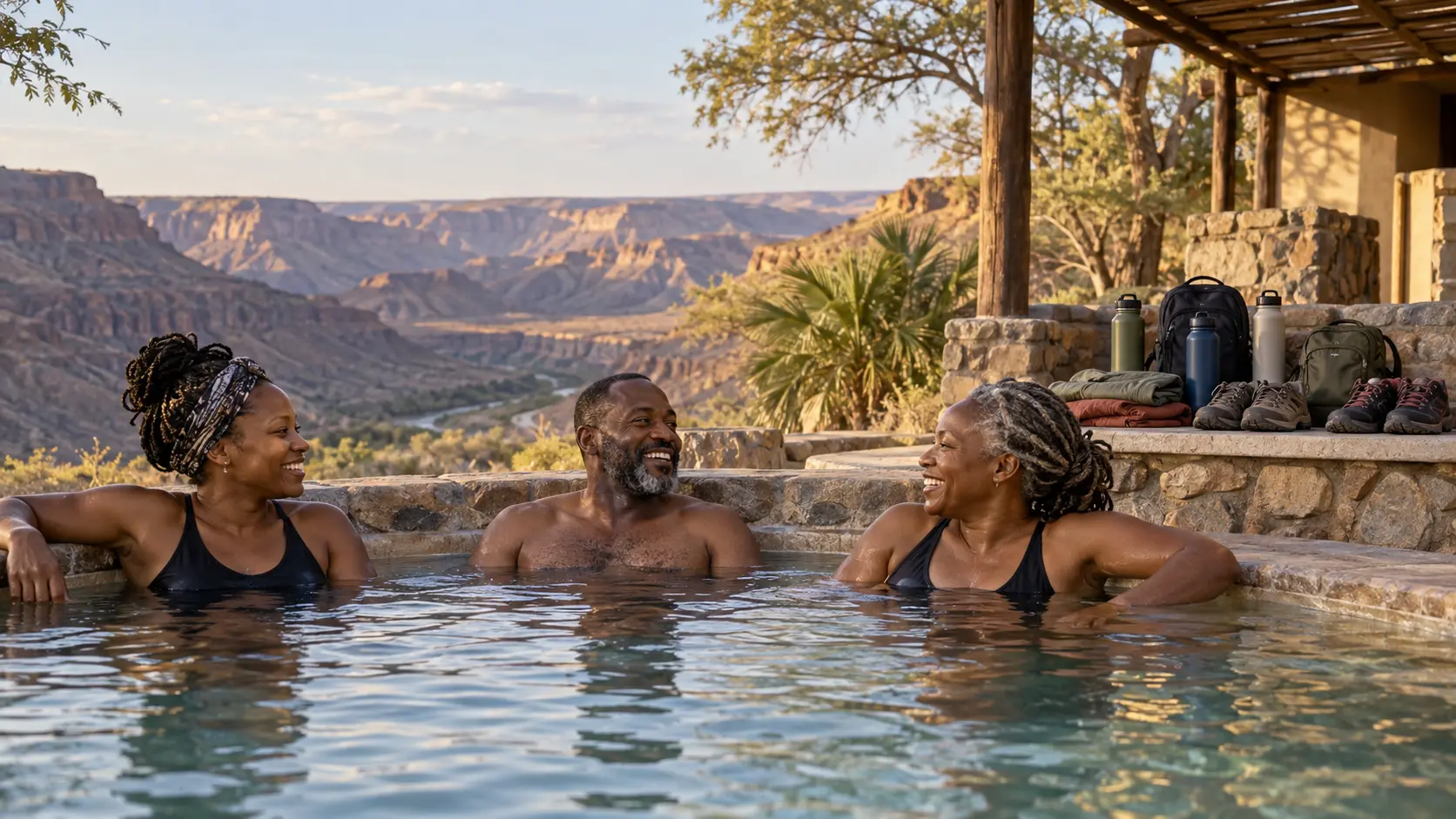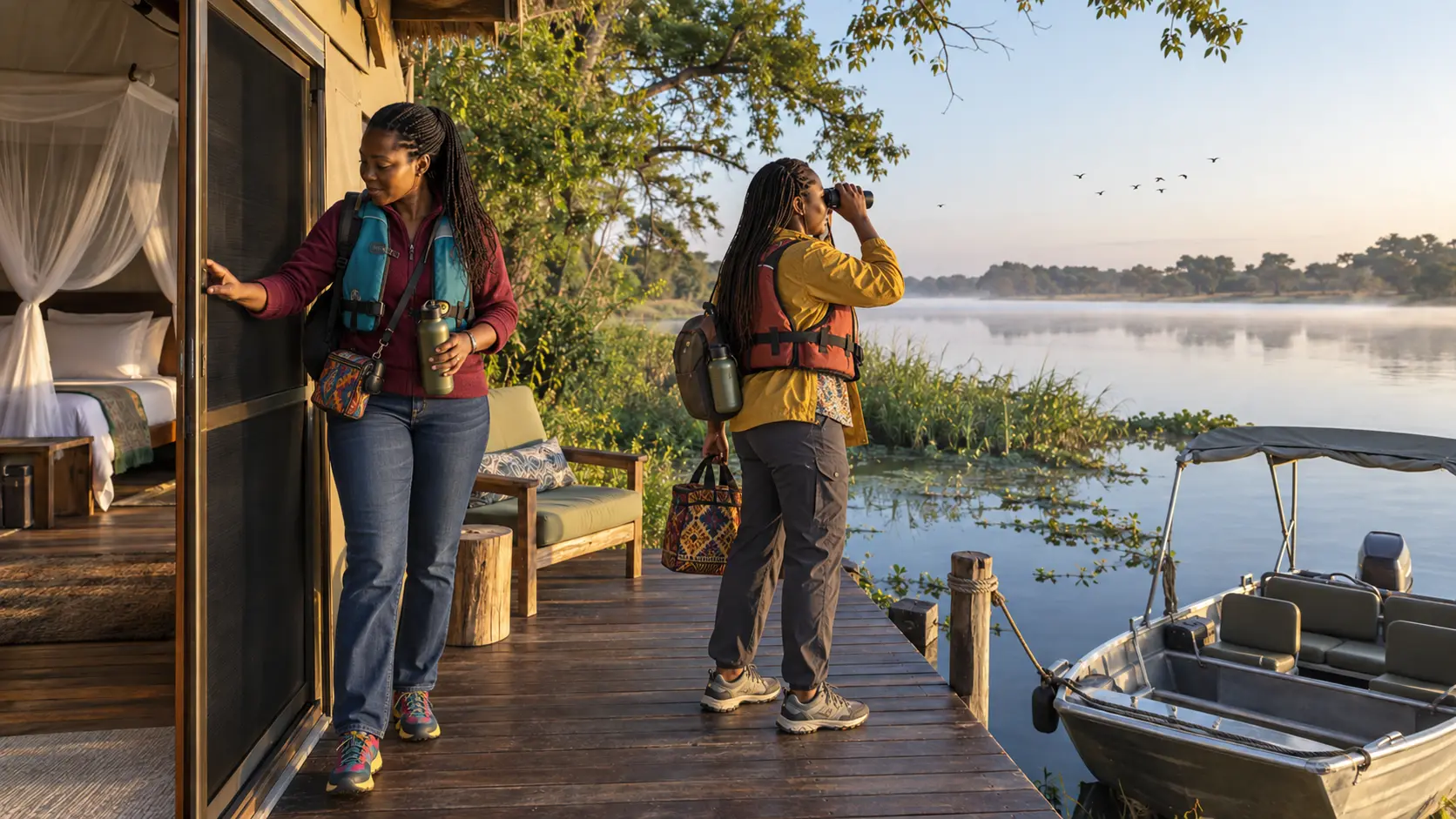
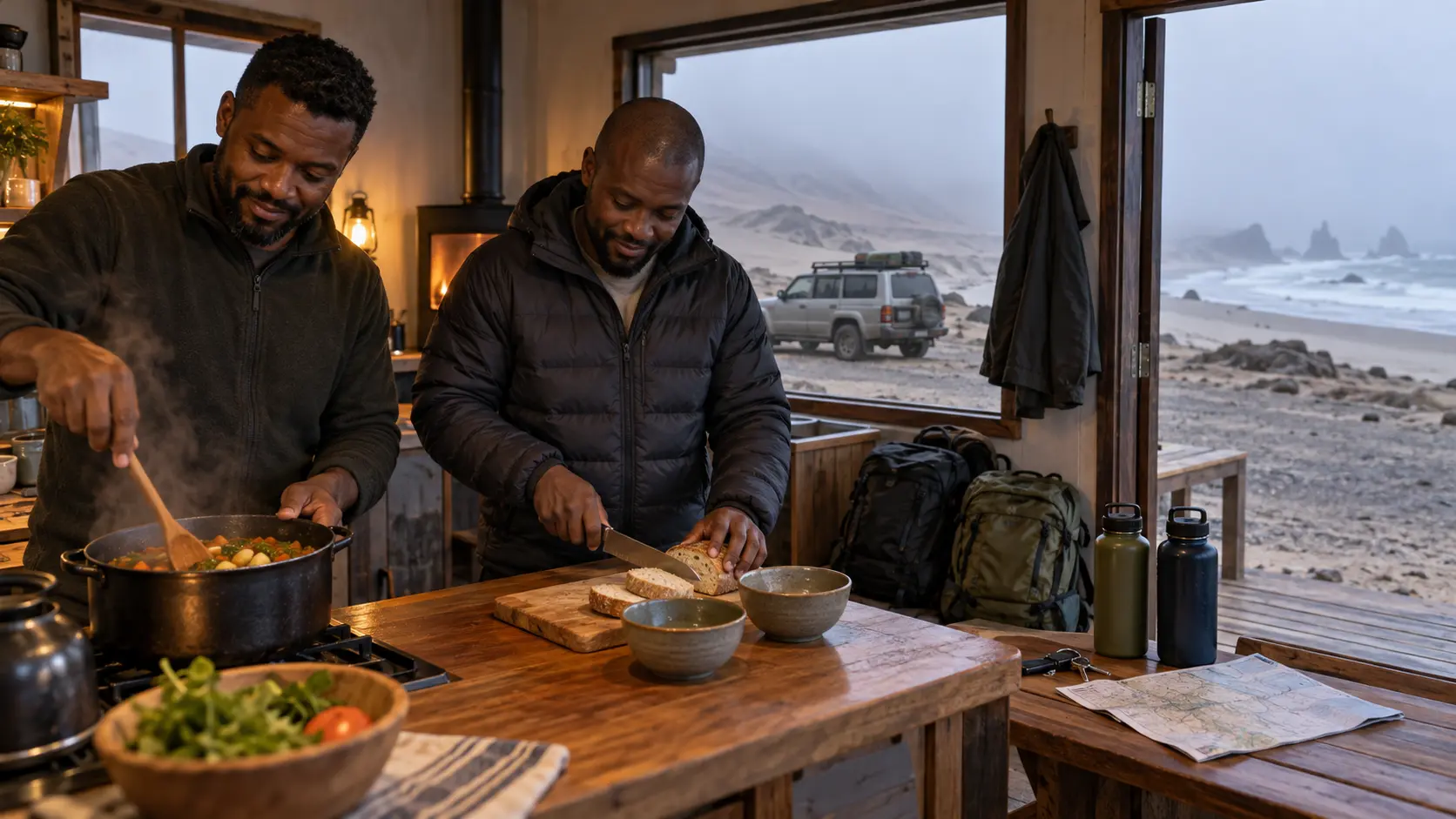
What to remember before choosing where to stay on the Skeleton Coast
The Skeleton Coast is not a destination where accommodation, meals and transport can be improvised separately. The useful question is not simply “where is the best lodge?” It is “which base lets us sleep, eat, refuel, respect park rules and still make the next section of the journey without wasting a day?” For most travellers, the answer depends on how far north they want to go, how much remoteness they actually want, and whether they are self-driving or relying on a lodge, transfer operator or guide.
For a short first visit, many itineraries work best from Swakopmund, Walvis Bay, Cape Cross, Henties Bay or a lodge south of the most remote park sections. You can taste the foggy Atlantic edge, seal colonies, gravel-road scenery and desert mood without committing to a deep remote-coast logistics plan. For a true Skeleton Coast stay inside the park or farther north, you should treat accommodation, permits, food and transport as one package. Rooms, campsites, meal arrangements, fishing licences, gate permissions and fuel assumptions all need to line up before you drive.
Use Ayivoo’s Skeleton Coast search to shortlist local providers by destination, then compare accommodation and ground operators through the hotels and lodges category. Keep the decision practical: if a property cannot clearly explain access, meals, driving time, road conditions and cancellation terms, it may still be attractive, but it is not yet a complete plan.
Why the Skeleton Coast changes normal Namibia planning
International travellers often compare Namibia with South Africa’s Garden Route, Botswana’s lodge circuits or East Africa’s fly-in safaris. The Skeleton Coast behaves differently from all three. It is spectacular because it is sparse. Distances feel longer than they look on a map, fog and wind change the driving mood, and services become thinner as you move away from the central coast. A lodge name on a booking site does not automatically mean easy restaurants nearby, flexible transfers, late check-in or spontaneous activity choices.
The coast also sits at the meeting point of several trip styles. Some travellers use it as a day extension from Swakopmund or Walvis Bay. Some link it with Damaraland, Etosha or Kunene. Others want the romance of an isolated lodge, fishing camp or guided fly-in experience. Each style is valid, but mixing them without a service plan creates friction. A family that wants flexible meals and shorter drives will not enjoy the same base as a photographer chasing empty coastlines before sunrise. A self-drive couple may love the independence of the gravel road but still need a provider who can confirm where food and fuel realistically fit.
The safest editorial lens is this: choose the base that matches your weakest logistics point. If you are uncomfortable with remote driving, stay closer to established towns or book transfers. If you need dietary certainty, choose accommodation with clear meal arrangements rather than assuming restaurants will appear. If you are trying to reach Terrace Bay, Torra Bay, the Ugab entry area or a remote northern lodge, confirm the official access position and your booking evidence before paying non-refundable extras.
Where to stay: match the base to the depth of the trip
Swakopmund, Walvis Bay, Henties Bay and Cape Cross
The central coast is usually the most forgiving base for first-time travellers. Swakopmund and Walvis Bay have broader accommodation choice, restaurants, activity operators, fuel, medical access and vehicle support than the more remote Skeleton Coast sections. Henties Bay and Cape Cross can work for travellers who want to be closer to the coastline north of Swakopmund while keeping a simpler access pattern than a deep park stay.
This base style suits travellers who want one or two coast-focused days without restructuring the whole Namibia trip. It also suits families, travellers with dietary constraints, travellers arriving after a long Etosha or Damaraland drive, and visitors who would rather pay for a guided excursion than manage every permit and route detail themselves. The trade-off is obvious: you will not be sleeping in the wildest part of the coast, and some iconic remote sections may be too far for a casual day.
Park, camp and remote lodge options
Official information from Namibia’s environment ministry describes Skeleton Coast Park as extending from the Ugab River in the south to the Kunene River in the north, with entry and accommodation rules that must be checked before travel. MEFT’s current public page states that Terrace Bay has double rooms, a beach chalet, restaurant, bar and freezing facilities, that entrance is only with a booking, and that camping at Terrace Bay is permitted only during December and January with booking essential. Treat these details as planning signals, not a substitute for a live reservation check, because operations, closures and seasonal availability can change.
Remote lodges and specialist camps can deliver the most memorable Skeleton Coast experience, but they should be judged as managed logistics rather than just rooms. Ask what is included in the rate, how guests arrive, what meals are provided, which activities are operated by the lodge, what weather can disrupt, and what happens if a vehicle or flight leg is delayed. A remote lodge can be excellent value if it removes uncertainty from transport, food and guiding. It can be poor value if you book it as a standalone bed and then discover that the real cost sits in access.
Southern edge stops for a lighter Skeleton Coast feel
Some travellers do not need to sleep deep inside the park. They want the atmosphere: Atlantic fog, desert meeting ocean, fishing settlements, seal colonies, salt roads, gravel tracks and huge empty horizons. For them, a southern-edge plan may be more satisfying than forcing a long remote detour. Look for lodges, guesthouses or camps that clearly explain day routes, meal options, parking, early breakfast or packed lunch policies, and whether they can connect you with guides or transfers.
This approach is especially useful when the Skeleton Coast is one part of a wider Namibia trip. If you are moving between Sossusvlei, Swakopmund, Damaraland and Etosha, a southern-edge stay can protect your schedule. It gives you coastal texture without making every next day depend on a remote gate time or a long gravel-road recovery.
Where to eat: plan meals before you plan activities
Food planning on the Skeleton Coast should be boring in the best possible way. Before you book an activity or remote night, know where breakfast, lunch and dinner will come from. In Swakopmund and Walvis Bay, restaurants and guesthouse meals are easier to arrange, though opening days, kitchen hours and holiday periods still need checking. Farther north, you should assume meals are part of the accommodation plan or a pre-packed self-drive plan unless a provider confirms otherwise.
For remote stays, ask accommodation providers five direct questions. Is dinner available every night of your stay? Can they provide packed lunches for a drive day or activity day? Are vegetarian, halal, kosher, gluten-free or child-friendly meals possible with advance notice? Is drinking water included or should travellers bring their own supply? What is the latest realistic dinner time if the arrival drive takes longer than expected?
Self-drivers should not rely on finding a casual lunch stop inside remote sections. Carry more water than you expect to need, add simple food that survives heat and dust, and keep a separate “late arrival” meal in the vehicle. This is not dramatic survival language; it is simply good Namibia travel hygiene. A delayed tyre change, fog-slowed driving or longer-than-expected permit process can turn a neat restaurant plan into a hungry evening.
Moving around: self-drive, guided drive or lodge transfer
Self-drive
Self-drive gives the most control, but it also transfers responsibility to you. On the Skeleton Coast that means more than being comfortable on gravel. You need a suitable vehicle, tyre-changing confidence, conservative fuel planning, offline navigation, water, food, warm layers, and a route that respects official access rules. If your itinerary includes park entry, confirm whether your booking is sufficient, whether a permit or licence is required for your activity, and what gate or office process applies on your travel date.
The best self-drive accommodation is not necessarily the prettiest. It is the place that answers practical questions quickly: road approach, parking, fuel distance, dinner timing, arrival window, nearby services, and what to do if you are delayed. If a lodge or camp sends vague answers to concrete questions, keep searching.
Guided drive or day excursion
A guided excursion can make sense when travellers want context, wildlife interpretation or a lower-stress day from the central coast. It is also useful for travellers who are nervous about gravel, families who want a simpler rhythm, or visitors with only one full coastal day. Compare guides on route clarity, vehicle condition, group size, language, meal arrangements, park or activity permissions, and the guide’s plan for fog, wind or poor visibility.
Do not choose only by the most dramatic description. A good Skeleton Coast guide should sound practical. They should explain what can and cannot be covered in the available hours, where bathroom and meal breaks fit, and which parts of the plan depend on weather, tides, gate rules or wildlife luck.
Lodge transfer or fly-in connection
For high-end remote stays, the transfer may be part of the experience. It can also be the difference between a beautiful itinerary and an exhausted one. Ask whether transfers are private or shared, where they begin, what luggage limits apply, whether the route includes stops, and how delays from earlier legs are handled. If a fly-in component is involved, confirm the luggage rules, weather contingency and whether onward ground transfers are included.
This is where comparing Namibia with Botswana or East Africa becomes useful. In lodge-heavy safari regions, travellers often expect the operator to choreograph the journey. On the Skeleton Coast, some products do this extremely well, while other stays expect more self-management. Read the inclusions carefully and ask providers to write down what is and is not included.
Quick decision table for travellers
| Traveller need | Best-fit base | What to confirm before booking |
|---|---|---|
| First Namibia trip, limited time, wants restaurants and easy support | Swakopmund, Walvis Bay or nearby central coast | Day route length, guide availability, breakfast timing, road conditions and return time |
| Remote coast atmosphere without a deep expedition | Henties Bay, Cape Cross or a southern-edge lodge | Meal options, fuel distance, seal reserve or coastal access rules, parking and packed lunch policy |
| Fishing, park stay or Terrace Bay-style experience | Official park accommodation or approved camp | Booking evidence, park entry rules, licence requirements, seasonal camping rules and meal facilities |
| Premium remote lodge, photography or guided wilderness focus | Specialist lodge or guided remote operator | Transfers, meals, activities, luggage, weather contingency and cancellation conditions |
Provider questions, trust checks and red flags
When using Ayivoo or contacting providers directly, make the first message specific. Share your dates, group size, vehicle type if self-driving, previous night, next destination, dietary needs and the level of remoteness you want. A strong provider will respond with constraints as well as possibilities. That honesty is valuable.
- Access: “Which gate, road or transfer route should we use, and what official booking or permit evidence should we carry?”
- Meals: “Which meals are included, which can be packed, and what happens if we arrive late?”
- Distances: “What is the realistic driving time from our previous stop, including gravel speed and stops?”
- Vehicle: “Is a high-clearance or 4x4 vehicle recommended for the route we are planning?”
- Weather: “How do fog, wind or coastal conditions affect the activity or transfer?”
- Rules: “Are fishing licences, park entry bookings or seasonal restrictions relevant to our dates?”
- Fallback: “Who do we contact if we are delayed, and what is the latest arrival time you can safely handle?”
Red flags include a provider who treats remote access as a minor detail, refuses to put inclusions in writing, promises wildlife or shipwreck access without explaining route rules, cannot describe meal arrangements, or gives driving times that look more like paved-road optimism than Namibia reality. Another red flag is a stay that looks affordable until transfers, meals and permissions are added later.
Suggested route combinations
Easy central-coast version
Sleep in Swakopmund or Walvis Bay, book a guided coastal or desert-edge day, keep restaurants and activities flexible, then continue toward Damaraland or Sossusvlei. This version is ideal when the Skeleton Coast is one flavour in a broader Namibia itinerary. It protects energy and works well for families or travellers who dislike complicated one-night moves.
Cape Cross and Henties Bay version
Base north of Swakopmund or add a night near the southern Skeleton Coast edge. Focus on seal reserve access, fishing-town atmosphere, Atlantic scenery and shorter gravel-road segments. Confirm restaurant availability carefully, especially outside peak periods or public holidays, and avoid arriving without dinner certainty.
Park-stay version
Use official park information and reservation channels to confirm Terrace Bay, camping windows or other park-linked stays before building the rest of the route. This version suits travellers who specifically want to sleep inside the park context, anglers with the right licences, or repeat Namibia visitors who understand remote travel rhythms. Keep the following day conservative; remote coast mornings do not always pair well with aggressive onward drives.
Remote lodge version
Book a specialist lodge or guided package that bundles access, meals and activities. This version is often the most expensive but can be the cleanest if you want a remote Skeleton Coast experience without self-managing each logistics layer. Ask for a single written summary of the whole arrival-to-departure chain before paying.
How to use Ayivoo for the shortlist
Start broad, then narrow. Search the destination page for Skeleton Coast providers, then filter by the service you need: lodging, transfers, activities, guided trips or broader travel support. If a provider is not physically on the coast but operates from Swakopmund, Walvis Bay, Damaraland or Windhoek, do not dismiss them automatically. Many useful Skeleton Coast plans are assembled from nearby bases rather than from one property inside the park.
Open several providers and compare the practical signals: exact area served, languages, response style, listed services, photos, pricing transparency and whether the description sounds specific to Namibia rather than generic safari copy. Then send a concise message asking for a route-aware recommendation. For onward planning, keep the English Ayivoo blog hub open and pair this guide with related Namibia articles on Damaraland, Swakopmund, Walvis Bay and Etosha so the coast does not become an isolated planning island.
FAQ
What is the best base for a first Skeleton Coast visit?
For many first-time visitors, Swakopmund, Walvis Bay, Henties Bay or Cape Cross is easier than a deep remote stay. You get more accommodation and meal flexibility, easier activity booking and better recovery time. Choose a park or remote lodge stay only when you actively want that level of remoteness and have confirmed access details.
Can we rely on restaurants along the Skeleton Coast?
Only in established towns or at accommodation that confirms meals. Farther north, plan meals as part of your lodging, guide or self-drive provisions. Ask about packed lunches and late arrival food before booking.
Do we need a 4x4?
It depends on the exact route and season. Some coastal and central routes are manageable with suitable high-clearance vehicles in good conditions, while remote sections or lodge access may require stronger vehicle planning or transfers. Ask the provider for route-specific advice and confirm with your rental company.
Is one night enough?
One night can work near the southern or central coast, but it can feel rushed for remote stays. If arrival and departure both involve long gravel drives, two nights often gives the coast enough space to feel like a destination rather than a transit penalty.
Sources to verify before publication
- Ministry of Environment, Forestry and Tourism Skeleton Coast Park page for park boundaries, access language, Terrace Bay facilities, fishing licence requirements and seasonal camping notes.
- Namibia Wildlife Resorts or other official reservation channels for current accommodation availability, meal facilities, park fees and operational notices.
- Namibia Tourism Board destination information for current visitor guidance and registered tourism operator context.
- Current travel advisories from the United States, United Kingdom, Canada or other target-reader governments for road safety and remote-area guidance.
- Live Ayivoo listings for current accommodation, lodge, guide, transfer and activity providers serving the Skeleton Coast, Swakopmund, Walvis Bay, Henties Bay, Cape Cross, Damaraland and Kunene.