What to remember before driving, booking or entering Etosha
- Etosha is easy to underestimate. The roads, gates and camps are organised, but distance, heat, dust, wildlife behaviour and sunset timing still require disciplined planning.
- Safety is mostly logistical. The biggest avoidable problems usually come from late starts, overlong routes, poor fuel planning, weak communication and unclear provider responsibilities.
- Gate and camp timing shape the whole day. Do not build an itinerary that depends on racing across the park or arriving after permitted movement windows.
- Provider clarity matters more than sales language. Before paying, confirm vehicle type, pickup point, fees, route, delay policy, emergency contact and what the traveller must bring.
- Use Ayivoo to compare operational fit. Start with Etosha providers on Ayivoo, then compare transportation services, guided safaris and related planning articles in the English Ayivoo blog.
Why Etosha safety is really a logistics question
Many travellers think about Etosha safety in dramatic terms: large animals, remote roads, sudden sightings and long distances. Those factors matter, but most of the practical risk is quieter. It lives in ordinary decisions made before the gate: how early the group starts, whether the vehicle is suitable, how much water is in the car, whether the driver knows where to sleep, and whether a provider has explained the plan in writing.
Etosha National Park is a major Namibia highlight, but it is not a theme park. Wildlife is unpredictable. Roads can be dusty or slow. Heat can change the group's energy. A spectacular sighting can tempt drivers to forget speed, distance or other vehicles. A tired family can make poor decisions late in the day. Good logistics do not remove all risk, but they reduce the number of decisions travellers must improvise when they are hot, tired or excited.
The safest Etosha itinerary is usually not the most ambitious one. It is the one that leaves room for slow driving, patient waiting, missed sightings, comfort stops, meals, water and a calm return before the day becomes compressed.
The core Etosha risk map for travellers
| Risk area | What can go wrong | Practical control |
|---|---|---|
| Timing | Late start, rushed gate entry, unrealistic camp-to-camp drive or sunset pressure | Plan fewer stops, verify gate and camp rules, and leave a buffer |
| Vehicle and route | Wrong vehicle expectations, dust fatigue, low fuel or long unplanned loops | Confirm vehicle condition, fuel plan, route logic and luggage needs |
| Wildlife behaviour | Unsafe stopping, crowding animals, leaving the vehicle or blocking other cars | Follow park rules, stay in the vehicle where required and keep distance |
| Heat and comfort | Dehydration, hungry children, tired drivers or poor concentration | Carry water, snacks, sun protection, layers and a realistic rest plan |
| Communication | No offline copy of bookings, weak signal or unclear pickup instructions | Save confirmations, contact names, meeting points and backup numbers offline |
Before you book transport, a guide or a self-drive plan
Start by deciding what kind of Etosha day the traveller is actually trying to have. A first-time family might need short loops, easy meals and a guide for one morning. A photographer may prioritise early light, patient waterhole time and a vehicle with space for equipment. A self-drive couple crossing northern Namibia may care most about gate choice, fuel and the next overnight stop.
Use Ayivoo transportation services when the route, airport connection, lodge transfer or vehicle support is the main problem. Use safaris and tours when interpretation, wildlife strategy and reduced decision load matter more. If the traveller is still choosing the destination base, compare the earlier Ayivoo Etosha guides on the English blog alongside provider listings.
A good provider should be able to explain the operational plan without overselling. Listen for specifics: pickup time, pickup place, gate, route, vehicle, group size, included fees, water, meals, documents, cancellation rules and what happens if the traveller is delayed. Vague reassurance is not enough for a route that depends on daylight and park rules.
Provider questions that reduce avoidable risk
- Which gate, camp, lodge or town is this service designed around?
- What exact pickup point should travellers use, and how will they recognise the driver or guide?
- Are park entrance fees, conservation fees, vehicle fees, meals, water and guide fees included?
- What is the planned route, and what parts can change if sightings, heat or delays change the day?
- What vehicle is used, how many guests are in it, and where does luggage go?
- What happens if the flight, transfer or self-drive arrival is late?
- Which phone number works on the day, and is there a backup contact?
- What should travellers bring in cash, documents, clothing, medication or equipment?
- Are children, older travellers or travellers with mobility limits suitable for the planned route?
- Which rules will the guide expect travellers to follow around wildlife and vehicles?
Ask these questions before payment, not at pickup. The answers reveal whether the provider is selling a pretty idea or operating a real Etosha day.
Gate, camp and sunset logic
Etosha planning must respect movement limits. Travellers should verify current official rules before travel, but the basic principle is simple: do not design a day that depends on illegal or rushed movement. Namibia Wildlife Resorts' park regulations include rules around staying on marked roads, not disturbing wildlife, not overnighting outside rest camps and respecting permitted camp and movement conditions. Current rules, fees and gate details should be checked directly before publication and travel.
For practical planning, treat the final part of the day as fixed first. Where must the group sleep? Which gate or camp must they reach? How much daylight buffer is needed? Only then decide how far to drive during the day. This reverse planning prevents the common mistake of adding one more waterhole until the return becomes stressful.
If a provider proposes a route, ask which part of the plan can be shortened if the day runs late. A responsible plan should have a calm fallback.
Self-drive checklist for Etosha
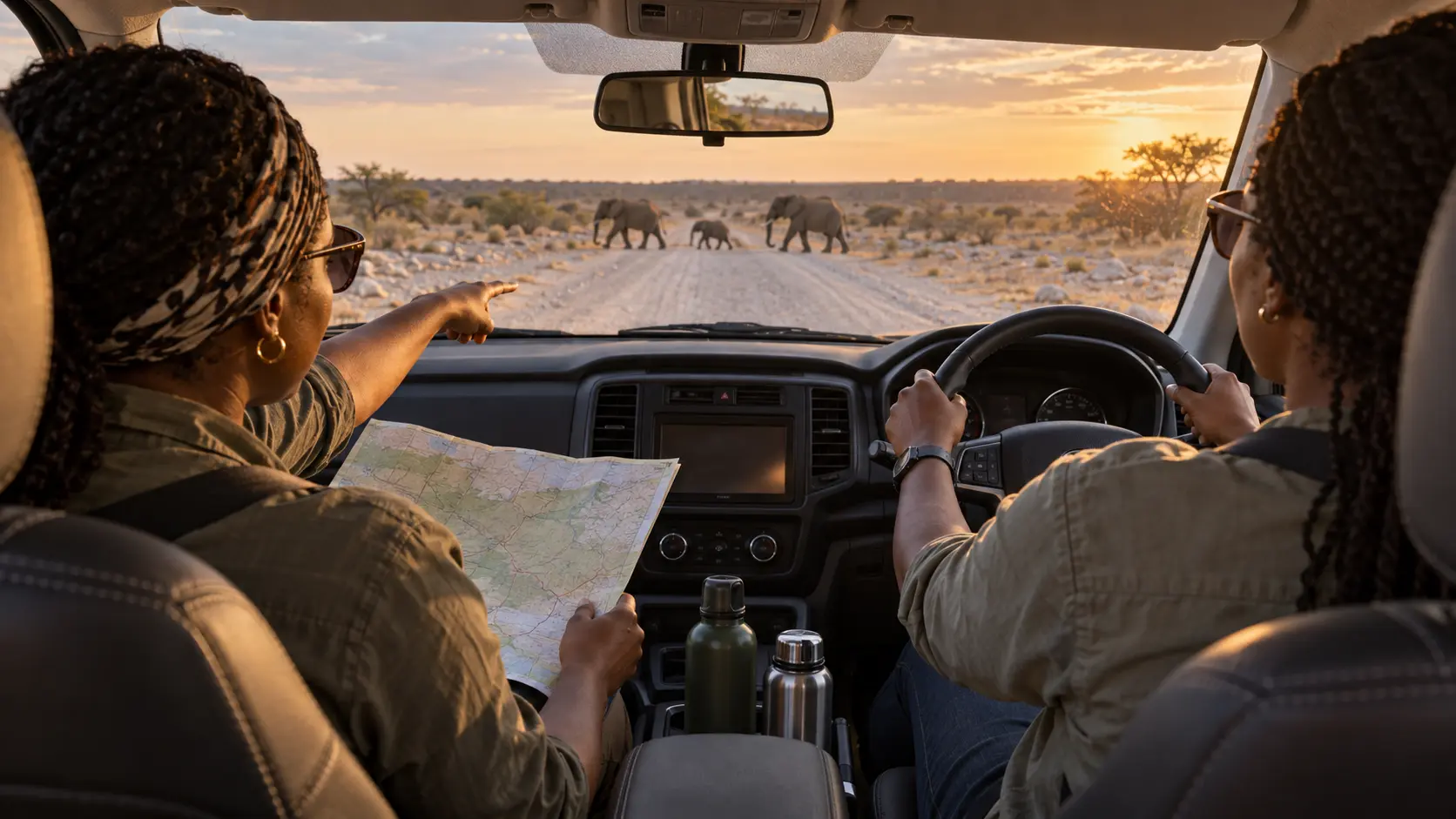
Self-driving can be a rewarding way to experience Etosha when travellers are realistic. It gives flexibility, privacy and the freedom to wait quietly at waterholes. It also puts route discipline on the driver.
- Confirm the vehicle type, spare tyre, fuel range, insurance terms and emergency contacts.
- Start with a route that is shorter than the maximum possible distance.
- Keep offline maps, booking confirmations and provider contacts available without mobile data.
- Carry more drinking water than the group expects to need.
- Plan meals, snacks and comfort stops before entering long wildlife blocks.
- Stay on official roads and follow park instructions around animals, speed and stopping.
- Do not leave the vehicle except where permitted.
- Let wildlife move first, and avoid blocking roads or crowding sightings.
- Stop the route early if the driver is tired or the return timing becomes tight.
Self-drive freedom is only useful when it is paired with restraint. Etosha rewards patience more than distance.
Guided route checklist
A guided Etosha route can reduce safety and logistics pressure, especially for first-time travellers. The value is not only animal knowledge. It is also timing, interpretation, route judgement, communication and helping guests understand what not to do.
Before confirming a guide or tour, compare:
- whether pickup is inside the park, outside a gate, at a lodge or from a town;
- how long the drive lasts and whether it suits the group;
- whether the guide explains rules and wildlife etiquette before departure;
- how food, water and restroom stops are handled;
- whether the itinerary is private, shared or part of a larger lodge schedule;
- what happens if weather, road conditions or wildlife movement change the plan.
Be careful with providers who promise guaranteed sightings. Wildlife cannot be guaranteed responsibly. A stronger sign is a provider who explains timing, patience, safety and realistic expectations.
Health, cash and communications
International travellers should check official health and travel-advisory information before Namibia travel, especially for general safety, road conditions, insurance, medication and regional health precautions. These sources can change, so do not freeze medical or safety advice into an article without verifying it close to publication.
For Etosha itself, practical comfort planning is usually more immediate: water, sun protection, layers for early drives, medication, dust management, camera batteries and a plan for children or older travellers. Travellers should also confirm whether payments around the route require cash, card or prepayment. A provider who can explain payment and emergency communication clearly is reducing friction before the day begins.
Save the important details offline: accommodation, gate or pickup point, provider phone number, park or lodge contact, cancellation policy and the next destination. Connectivity should be treated as helpful, not guaranteed.
Red flags before paying
- The provider cannot name the pickup point, route logic or expected return timing.
- The itinerary depends on very long driving days with no clear buffer.
- Fees are described vaguely, especially park, conservation, vehicle or guide fees.
- The provider dismisses park rules or wildlife safety concerns.
- The offer promises guaranteed rare sightings instead of a well-run experience.
- The cancellation, delay or no-show policy is unclear.
- Communication is slow before payment but urgent when asking for money.
One red flag does not always mean a provider is unsuitable, but several together should slow the booking down.
A safer one-day Etosha structure
This is not a fixed itinerary, because gates, accommodation and seasonality must be verified. It is a planning shape that keeps the day from becoming too tight.
- Early start: leave from the base with water, snacks, fuel, offline confirmations and a realistic first route.
- Morning focus: spend patient time around selected waterholes or areas rather than chasing every report.
- Midday reset: pause for food, restroom, shade, camp facilities or a shorter loop depending on heat and fatigue.
- Afternoon choice: choose one final route that still leaves enough return buffer.
- Calm return: end the day before pressure builds around gate, camp or sunset timing.
Travellers who want support can shortlist Etosha local providers on Ayivoo and compare which provider makes this structure easiest for their dates.
FAQ about Etosha safety and logistics
Is Etosha safe for self-drive travellers?
Many travellers self-drive successfully, but safety depends on responsible behaviour, route discipline, vehicle readiness, water, fuel, daylight timing and respect for park rules. First-time travellers who feel unsure should consider guided support for at least one drive.
Is a guide necessary?
Not always. A guide is most useful when travellers want interpretation, reduced decision load, help with waterhole timing or extra confidence around rules and route choices.
Can travellers move around at night?
Travellers should follow current park and camp rules. Night movement is not something to improvise independently; only authorised activities where currently available should be considered.
What is the most important provider question?
Ask the provider to explain the day from pickup to return, including fees, route, timing, vehicle, delays and traveller responsibilities. A clear operational answer is more useful than a beautiful description.
Sources to verify before publication
- Namibia Wildlife Resorts: Etosha National Park for current resort, camp and activity context.
- NWR park entrance and conservation fees for current fee references before publication.
- NWR park regulations PDF for movement, vehicle, camp and wildlife-behaviour rules that affect logistics.
- Namibia Ministry of Environment, Forestry and Tourism for official conservation and park updates.
- U.S. State Department Namibia travel advisory and CDC Namibia traveller health information for current international safety and health context.
- Ayivoo live listings for Etosha transport, guide and accommodation availability before publication.
Next step on Ayivoo
Search Etosha on Ayivoo and compare providers by logistics first: pickup, route, timing, rules, fees, vehicle and fallback plan. The best safety choice is usually the provider who makes the ordinary details completely clear.