What to remember before driving into Damaraland
- Most Damaraland problems are preventable. The region feels remote, but the main risks usually come from rushed timing, weak vehicle planning, poor water discipline and unclear route support.
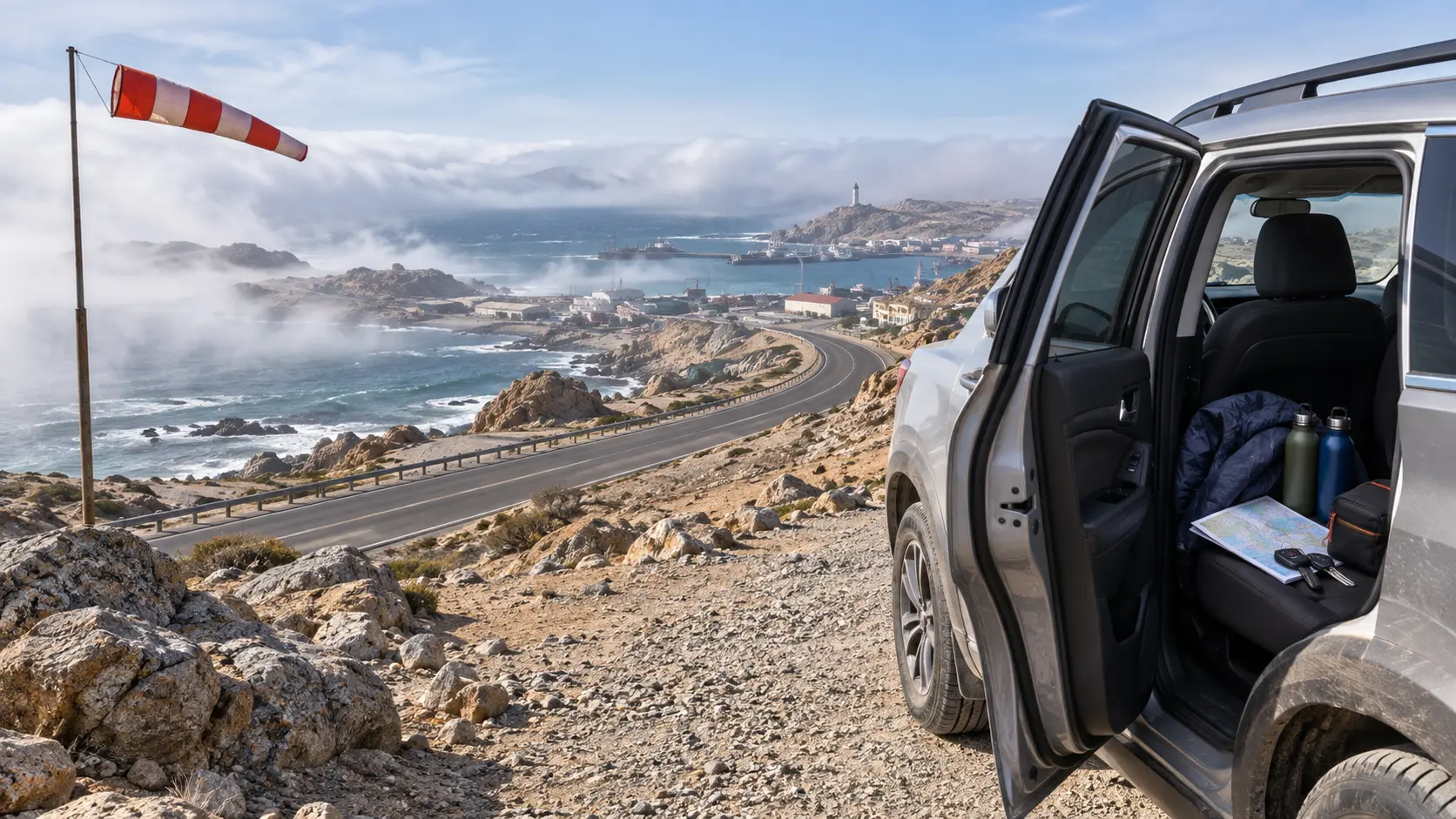
- Gravel-road pace matters more than map distance. Corrugation, dust, animals, heat, photo stops and fatigue can make a short-looking drive take longer than expected.
- Do not improvise essentials. Fuel, water, offline maps, booking confirmations, tyres, cash and emergency contacts should be checked before leaving the main town or lodge.
- Transport providers must understand the region. Ask about vehicle type, route, luggage, pickup timing, rest stops, delay policy and what happens if road conditions change.
- Use Ayivoo for logistics fit. Compare Damaraland providers, transportation services and related planning articles in the English Ayivoo blog.
Why logistics matter so much in Damaraland
Damaraland is one of Namibia's great road-trip regions, but it is not a place to plan casually. The landscape is open, distances can feel elastic, and services are not spaced like they are in a city or dense safari corridor. A traveller who leaves late, underestimates gravel, misses a fuel stop or loses a booking confirmation can turn a beautiful day into a stressful one.
The goal is not to make Damaraland feel dangerous. It is to make it feel manageable. With a suitable route, a prepared vehicle, realistic daylight timing and clear provider communication, the region can be calm, spacious and deeply rewarding. Without those basics, travellers start making decisions when they are already hot, dusty and tired.
For travellers comparing Namibia with South Africa, Botswana or East Africa, this is a key difference: Namibia often gives more independence, but independence only works when logistics are treated as part of the experience.
Damaraland risk map for first-time travellers
| Risk area | Typical problem | Better planning habit |
|---|---|---|
| Distance | Trying to combine too many stops in one gravel-road day | Protect fewer priorities and build a daylight buffer |
| Vehicle | Unsuitable car, tyre issues, weak fuel plan or overloaded luggage | Confirm vehicle suitability, spare tyre, insurance and fuel range |
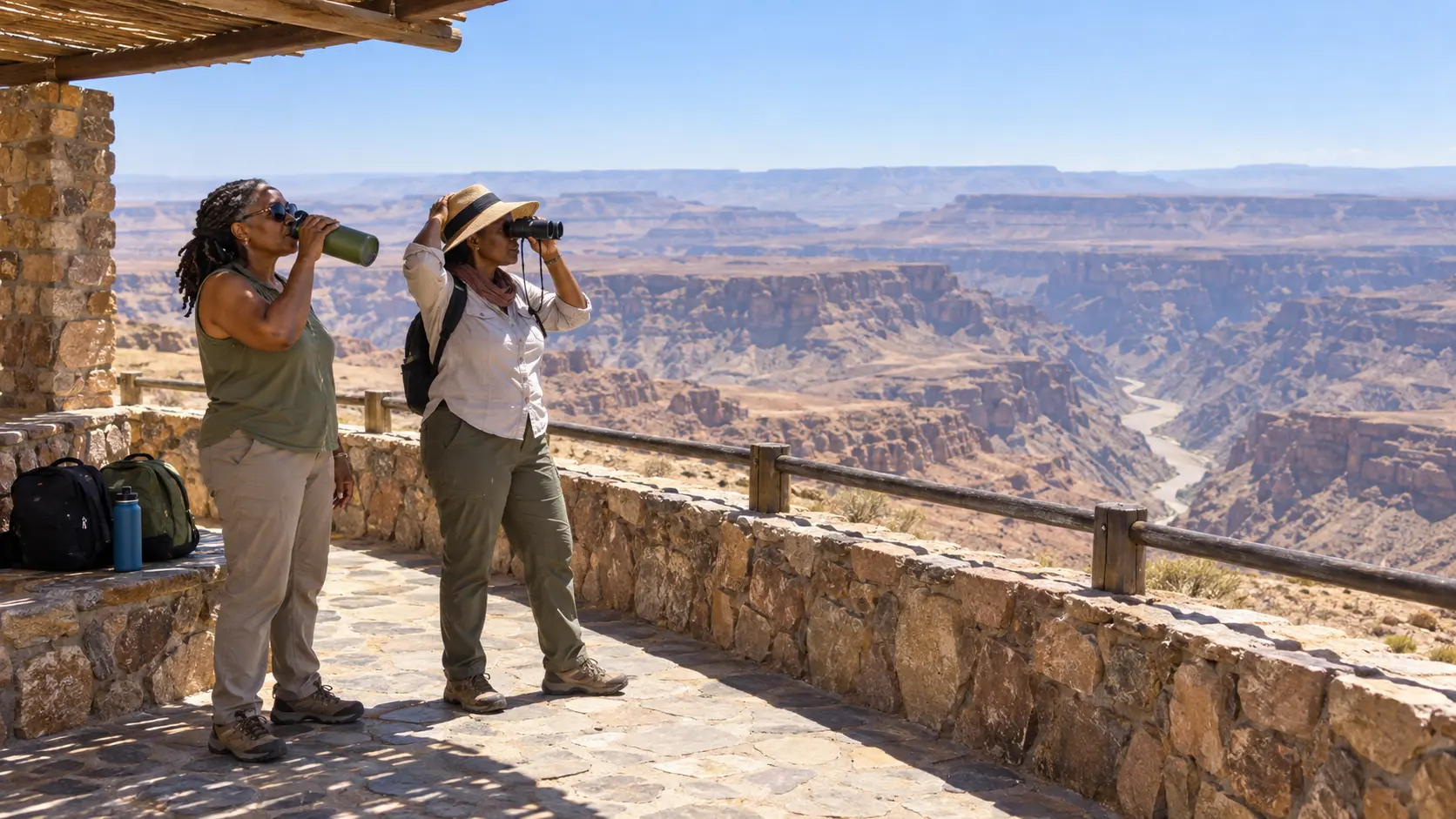
| Heat and dust | Dehydration, fatigue, camera damage or uncomfortable children | Carry water, snacks, sun protection, layers and dust protection |
| Communication | No signal, unclear pickup point or missing provider number | Save maps, bookings and contacts offline before departure |
| Cash and fees | Arriving without the right payment method for sites, fuel or local services | Ask providers which payments are prepaid, card-based or cash-only |
Before leaving Windhoek, Etosha, Swakopmund or a lodge
Damaraland logistics should be checked before the drive begins, not when a problem appears. Whether travellers self-drive or use a provider, the pre-departure list is similar.
- Confirm the route and the intended arrival time with the next accommodation or provider.
- Save offline maps and written directions, especially for lodge turnoffs and meeting points.
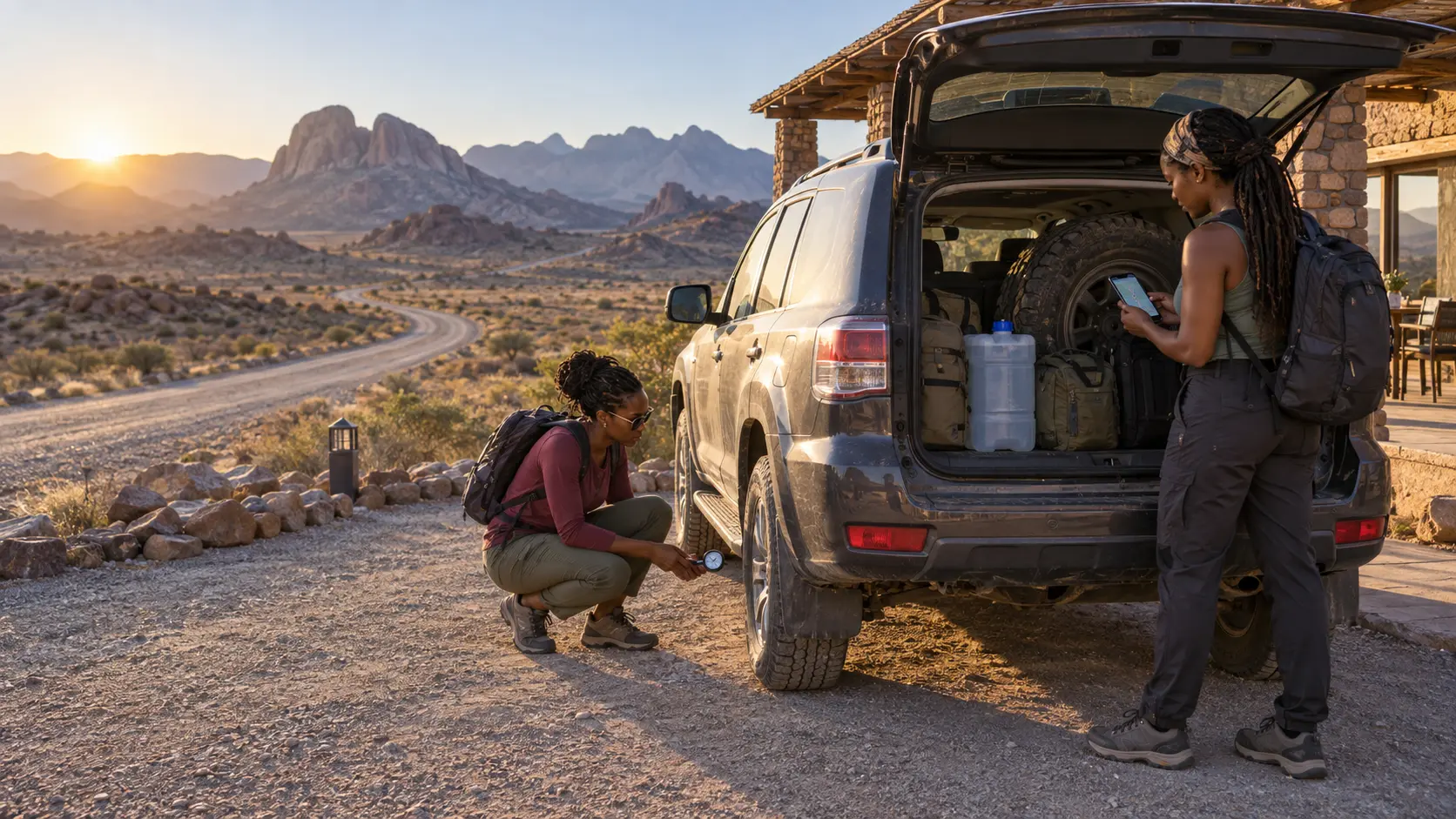
- Check fuel, tyres, spare tyre, jack, water and rental-vehicle emergency contacts.
- Carry enough drinking water for delays, not only for the planned drive.
- Download booking confirmations, permits or activity details before losing signal.
- Ask whether the next stop accepts card, cash, prepayment or mixed payment.
- Tell the next provider if the group is running late before the signal disappears.
Travellers using transportation services on Ayivoo should ask the provider to confirm these points in writing. A good transfer is not just a vehicle; it is a plan.
Vehicle and road choices
Vehicle suitability depends on the exact route, season and rental terms. Some Damaraland routes are manageable for confident travellers in appropriate vehicles, while others may require higher clearance, a 4x4, local advice or a guided approach. Travellers should verify current road conditions with accommodation, providers and official or reliable local sources close to departure.
Official travel advisories for Namibia commonly emphasise road safety outside urban areas, including caution on gravel roads and night driving. The wording and risk level can change, so travellers should check their own government's latest advice before travel.
Practical road rules for planning:
- avoid building a route that requires night driving;
- treat gravel-road time as slower and more tiring than paved-road time;
- stop before fatigue becomes obvious;
- keep distance from dust clouds and other vehicles;
- expect livestock or wildlife near roads, especially in low light;
- do not let photo stops consume the buffer needed for arrival.
Questions for transport providers
If travellers are not self-driving, the transport provider becomes one of the most important safety decisions in the itinerary. Ask:
- What vehicle will be used, and is it suitable for the planned route?
- How much luggage can the vehicle carry comfortably?
- Where exactly is pickup, and how will travellers identify the driver?
- What is the realistic driving time, including gravel sections and rest stops?
- Are fuel, driver, waiting time, park or site detours and meals included?
- What happens if a flight, previous transfer or activity runs late?
- Can the driver support a supply stop for water, snacks or cash if needed?
- What phone number works on the travel day, and is there a backup?
Use Ayivoo Damaraland search to compare providers who can explain these details clearly.
Timing and daylight discipline
In Damaraland, the safest itinerary is often the one that looks slightly underfilled on paper. Travellers should protect daylight for slow driving, roadside stops, lodge check-in, unexpected delays and the simple fact that gravel driving is tiring.
A useful planning method is to define the latest comfortable arrival time first, then work backwards. If the route only works when everything goes perfectly, it is too tight. If travellers can remove one stop and still feel the day has purpose, the route is probably healthier.
For families or mixed-age groups, schedule important activities after a calmer night rather than at the end of a long arrival day. A guided morning from a well-chosen base is usually better than forcing a tired group into a late activity because the booking calendar looked efficient.
Cash, card and connectivity
Payment assumptions should be verified before travel. Some services may accept cards or prepayment; others may involve cash, local fees or separate site payments. Travellers should ask each provider what is included and what must be paid separately on the day.
Connectivity should be treated as unreliable in route planning. Save:
- provider phone numbers;
- lodge directions and coordinates where available;
- booking confirmations;
- rental-car support details;
- passport and insurance copies stored securely;
- the next day's route notes.
This does not replace live advice, but it prevents the group from depending on a signal at the exact moment they need clarity.
Wildlife and heritage safety
Damaraland is associated with desert-adapted wildlife and important heritage sites such as Twyfelfontein. Both require respect. Travellers should avoid approaching animals, pressuring guides for closer sightings, leaving marked routes where prohibited or treating rock art as a backdrop for careless behaviour.
For Twyfelfontein, verify current site rules, guiding arrangements, fees and preservation guidance before visiting. For wildlife activities, choose providers who explain conservation sensitivity and realistic sightings rather than promising guaranteed encounters.
Red flags in a Damaraland logistics plan
- The route depends on arriving after dark or driving long gravel sections late in the day.
- The provider cannot explain the vehicle, pickup, route, timing or delay policy.
- The plan has no fuel, water or meal logic.
- Wildlife experiences are sold with guaranteed close encounters.
- The traveller has no offline directions or backup contact.
- Cash, card and fee assumptions are unclear.
- The itinerary combines too many distant highlights because they look close on a map.
A safer Damaraland route shape
This example is a planning pattern, not a fixed route. Travellers should adapt it to current conditions and provider advice.
- Arrival day: drive to the base with conservative stops, arrive before pressure builds, confirm the next day's activity.
- Activity day: use a local guide or carefully planned self-drive loop for rock art, landscapes or wildlife, with water and rest built in.
- Departure day: leave early enough for the next destination, treating the drive itself as part of the itinerary rather than dead time.
This shape works because it separates the longest drive from the most meaningful activity. Damaraland is better when travellers are not always arriving tired.
FAQ about Damaraland safety and logistics
Is Damaraland safe for independent travellers?
It can be, when travellers plan realistically, use suitable vehicles, avoid night driving, carry essentials and verify current route conditions. Remote does not need to mean risky, but it does require preparation.
Should travellers book a transfer instead of self-driving?
Travellers who dislike gravel roads, have tight timing or want less decision pressure should consider a transfer or guided route. Confident self-drivers can still use local activities for interpretation.
How much cash should travellers carry?
There is no universal amount. Ask each provider which fees are prepaid, card-based or cash-only, then carry a sensible buffer securely. Refresh this advice before publication or travel.
Are Damaraland roads difficult?
Difficulty depends on route, season, weather, vehicle and driver experience. Travellers should verify current road information locally and avoid judging the day by map distance alone.
Sources to verify before publication
- Government of Canada Namibia travel advice, UK FCDO Namibia safety advice and U.S. State Department Namibia advisory for current road, safety and travel guidance.
- UNESCO: Twyfelfontein or /Ui-//aes for current heritage-site framing and preservation context.
- Save the Rhino International: Namibia for current conservation context where rhino-related experiences are mentioned.
- Current Namibia tourism-board and local provider updates for Damaraland route, weather, fuel, site and access conditions.
- Ayivoo live listings for Damaraland transport, guide and accommodation availability before publication.
Next step on Ayivoo
Search Damaraland on Ayivoo and compare providers by logistics clarity first: vehicle, route, pickup, timing, payments, water, delay policy and local knowledge. The safest option is usually the one that removes guesswork before the road day begins.