What to remember before planning the Skeleton Coast
- The Skeleton Coast is not a normal beach stop. It is remote, weather-shaped, permit-sensitive and best planned as part of a wider Namibia route.
- Access rules matter. Travellers should verify current park gates, permitted routes, accommodation, camping and concession rules before building the itinerary.
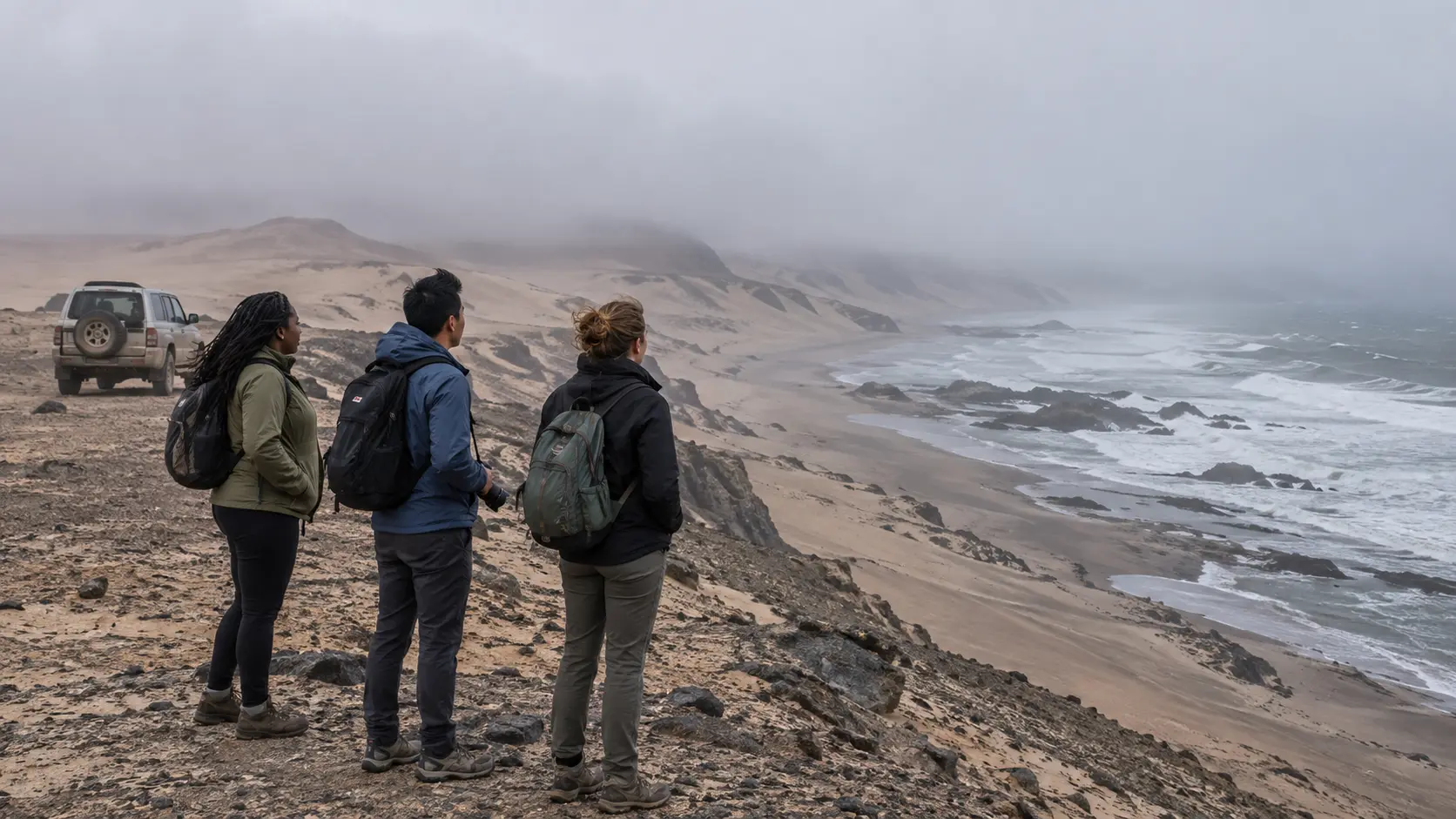
- Fog, wind and distance are part of the experience. The coast can feel cold, stark and logistically demanding even when inland Namibia is hot and dry.
- Guided support can be worth it. A good provider can explain which coast section fits the traveller, how to handle permits, and when self-drive is or is not sensible.
- Use Ayivoo to compare route fit. Start with Skeleton Coast providers on Ayivoo, then compare guided tours, transport, lodge support and remote-coast itineraries.
Why the Skeleton Coast matters in a Namibia itinerary
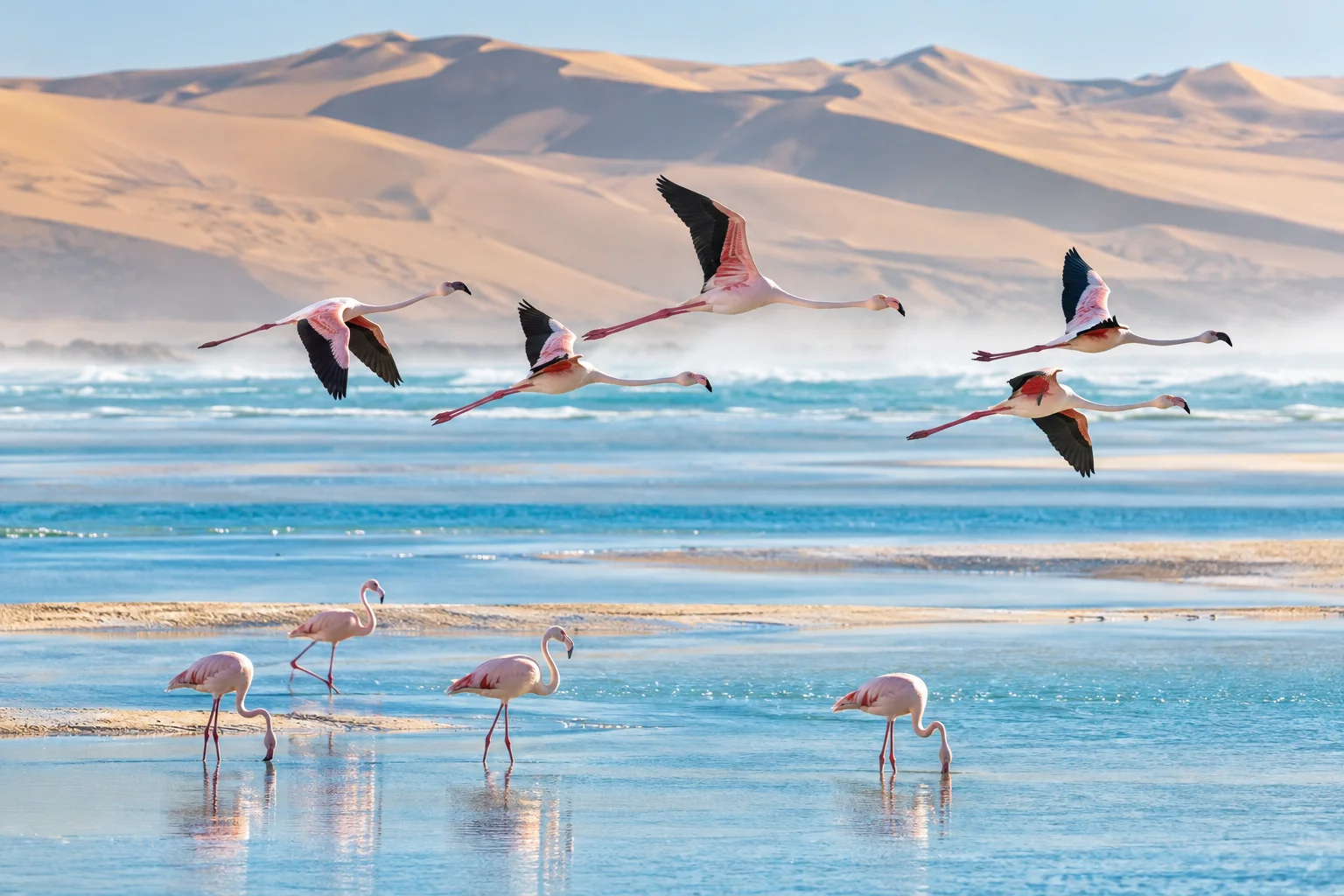
The Skeleton Coast is one of Namibia's most evocative names: shipwrecks, fog, dunes, Atlantic surf, seal colonies, empty roads and a sense of remoteness that is very different from Etosha, Sossusvlei or Swakopmund. It appeals to travellers who want Namibia to feel raw, spacious and strange.
That appeal should be respected, not simplified. The Skeleton Coast is not a place to add casually because it sounds dramatic. It changes route timing, vehicle planning, accommodation choices and safety margins. Some travellers may only need a taste of the southern coastal section from Swakopmund or Henties Bay. Others may plan a more serious route toward Terrace Bay, Torra Bay, Damaraland or fly-in lodge experiences.
For first-time travellers, the key question is: which version of the Skeleton Coast fits your route and risk tolerance? The answer decides whether to self-drive, book a guide, stay near the coast, or treat it as a scenic add-on from another base.
Who the Skeleton Coast suits best
| Traveller profile | Why it fits | Planning caution |
|---|---|---|
| Landscape and photography travellers | Fog, surf, desert light and emptiness create unusual scenes | Weather and access can affect timing and visibility |
| Experienced road-trippers | The coast can link Swakopmund, Damaraland and northern routes | Fuel, permits, accommodation and road discipline need careful checks |
| Wildlife and natural-history travellers | Seal colonies, desert-adapted life and coastal ecology add a different Namibia layer | Do not expect safari-style wildlife density or guaranteed sightings |
| Families | A shorter coastal section can be memorable and manageable | A long remote route may be too cold, windy or monotonous for children |
| Short-stay visitors | Only a southern taste may make sense | A deep Skeleton Coast route can consume too many days |
Which Skeleton Coast experience should travellers choose?
First-time travellers should avoid treating the Skeleton Coast as one uniform destination. The practical experience changes by section, access, accommodation and route direction.
- Southern taste from Swakopmund or Henties Bay: useful for travellers who want Atlantic desert scenery without committing to a deep remote route.
- Park route toward Terrace Bay or Torra Bay: more remote and more dependent on current access, accommodation, permits and fuel planning.
- Damaraland plus coastal link: powerful for travellers who want desert, dry riverbeds, wildlife context and coast in one route.
- Fly-in or specialist guided experience: appropriate for travellers who want remoteness, interpretation and less self-drive uncertainty.
The right version depends on route time, budget, confidence, season and how much remoteness the group genuinely wants.
Season, weather, permits and route trade-offs
Skeleton Coast planning depends on changeable details. Weather can bring fog and wind. Park access and accommodation rules can change. Some areas may require permits, bookings or concession arrangements. NWR has published information on Terrace Bay and Torra Bay, while official conservation and park sources should be checked for access and rules before publication and travel.
Do not build the route on hearsay. Verify current gate times, overnight options, fuel assumptions, fishing or camping rules where relevant, and whether the intended route is permitted for independent travellers. If a provider says they handle access, ask exactly which permits, bookings or permissions are included.
How many nights should travellers plan?
A short coastal day from Swakopmund may be enough for travellers who only want a taste. One night can work for a more focused coastal route if accommodation and access are clear. Two or more nights make sense for travellers going deeper into the remote coast or linking it with Damaraland.
The most common mistake is adding the Skeleton Coast as if it were a quick scenic detour. It can be, but only in the southern sections. A deeper route should be treated as a major itinerary block.
How to use Ayivoo for Skeleton Coast planning
Use Ayivoo's Skeleton Coast search to identify local providers and route support. Compare guided tours when interpretation, permits, route judgement or reduced decision load matter. Also compare transport and accommodation providers if the coast is part of a longer Namibia loop.
Provider fit matters more than dramatic wording. Ask whether the provider is supporting a short scenic excursion, an overnight park route, a fly-in experience, or a remote link to Damaraland. Those are different products.
Questions to ask before booking
- Which section of the Skeleton Coast does this itinerary cover?
- Are permits, park fees, accommodation, camping or concession access included?
- What vehicle, fuel, water and communication assumptions does the route require?
- How does fog, wind or poor visibility affect the plan?
- Is the route suitable for children, nervous travellers or first-time self-drivers?
- What happens if access, weather or road conditions change?
- Where does the route connect next: Swakopmund, Damaraland, Palmwag, Etosha or another base?
- What should travellers bring in layers, food, water, cash, documents and offline confirmations?
Route combinations that work
| Combination | Why it works | Watchpoint |
|---|---|---|
| Swakopmund plus southern Skeleton Coast | Gives a manageable coastal taste without deep remote logistics | Do not oversell it as the full wilderness experience |
| Skeleton Coast plus Damaraland | Strong contrast between Atlantic coast, dry riverbeds and desert landscapes | Requires careful route, fuel and accommodation planning |
| Terrace Bay or Torra Bay-style stay | More committed coast experience for travellers who want remoteness | Verify NWR availability, access, facilities and seasonal operation |
| Fly-in remote lodge experience | Reduces self-drive complexity and adds interpretation | Budget, baggage, weather and booking terms matter |
Common first-trip mistakes
- Assuming the whole coast is easy self-drive. Some sections are far more remote and rule-dependent than a day trip.
- Underestimating cold wind and fog. Layers and flexible timing matter.
- Booking without access clarity. Permits, gates, accommodation and concessions should be verified.
- Expecting safari-style wildlife. The Skeleton Coast is about landscape, atmosphere and ecology more than dense wildlife viewing.
- Overloading the route. Remote coast, Damaraland and Etosha need enough days to breathe.
FAQ about a first trip to the Skeleton Coast
Is the Skeleton Coast worth it on a first Namibia trip?
Yes, if the traveller wants remote coastal landscapes and has enough time. On a short classic route, a southern taste may be better than a deep remote itinerary.
Can travellers self-drive the Skeleton Coast?
Some sections may be suitable for prepared self-drivers, while others require stronger planning or guided arrangements. Verify current access, permits, accommodation and road advice before deciding.
Is the weather a problem?
Fog, wind and cool coastal air are part of the experience. They are not automatically a problem, but travellers should pack layers and keep timing flexible.
Should travellers book a guide?
A guide is useful when the route is remote, permit-sensitive, weather-dependent or part of a longer Damaraland connection. For a simple southern taste, local advice may be enough.
Sources to verify before publication
- Namibia Ministry of Environment, Forestry and Tourism for current park, conservation and access context.
- Namibia Wildlife Resorts for current Terrace Bay, Torra Bay, accommodation and booking information where relevant.
- Current Namibia tourism-board destination information for Skeleton Coast routes, gates, seal colonies and coastal travel conditions.
- U.S. State Department Namibia advisory, Government of Canada Namibia travel advice and UK FCDO Namibia safety advice for current road and traveller-safety guidance.
- Ayivoo live listings for Skeleton Coast guided tours, transport and accommodation before publication.
Next step on Ayivoo
Open Skeleton Coast on Ayivoo and decide the level of remoteness first: short coastal taste, guided route, park overnight, Damaraland link or fly-in experience. The right provider is the one who makes access, timing and risk clear before you commit.