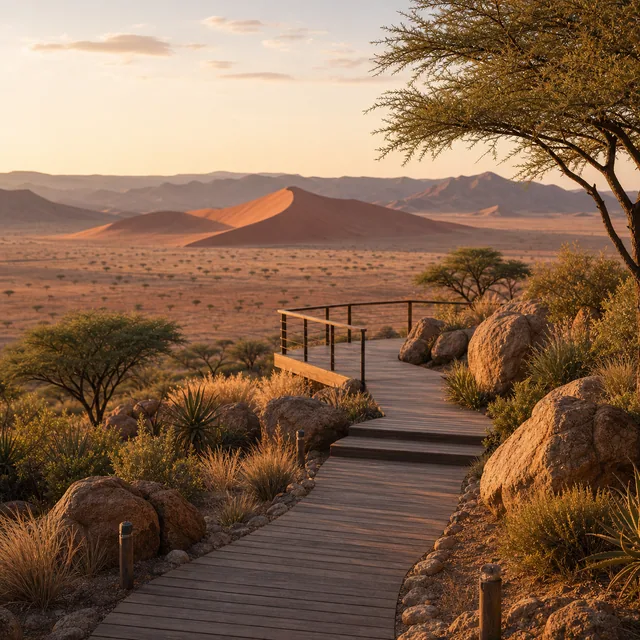

A landscape shaped by water, geology and time, revealing one of Namibia’s most remarkable natural formations.
Fish River Canyon was not created in a single moment.
Its immense cliffs, deep valleys and layered rock formations are the result of millions of years of geological change, shaped gradually by natural forces including the movement of water through the landscape.
Standing above the canyon today means looking at a place that has recorded different periods of Namibia’s history in stone.
The scale is impressive, but what makes Fish River Canyon unique is the story behind its formation.
A Canyon Shaped by Water and Time
The Fish River is one of the main forces responsible for shaping this landscape.
Over millions of years, the river has cut through layers of rock, creating the canyon that stretches across southern Namibia today.
The exposed rock formations reveal different stages of geological history, showing how the region has changed over immense periods of time.
Although the canyon appears dry and dramatic today, water remains central to its story. Seasonal flows continue to influence the environment and support life in one of Namibia’s most arid regions.
Understanding the Scale of Fish River Canyon
Fish River Canyon is often recognised as one of the largest canyons in the world.
Its size can be difficult to understand from photographs alone. The distance between viewpoints, the depth of the valley and the vast open surroundings create a sense of scale that becomes clearer when experienced in person.
Different viewpoints offer different perspectives, from wide panoramic views to closer observations of the canyon walls and the landscape below.
The experience is not only about reaching a viewpoint, but about taking time to appreciate the dimensions of a place created over such a long period.
Beyond the Viewpoints
While many visitors discover Fish River Canyon through its viewpoints, the region offers other ways to experience it.
The famous Fish River Canyon Trail is one of southern Africa’s most demanding hiking routes, taking experienced hikers through the canyon over several days.
For those looking for a different pace, nearby areas such as Ai-Ais offer opportunities to explore the region while experiencing the natural surroundings of the south.
Sunrise and sunset also reveal different aspects of the canyon, with changing light highlighting the shapes and textures of the rock formations.
A Landscape With Human History
The canyon is not only a geological site.
For generations, communities have lived in and around this region, adapting to its dry conditions and using their knowledge of the environment to navigate the landscape.
The surrounding areas contain traces of human history, reflecting the long relationship between people and this challenging environment.
Understanding Fish River Canyon means looking beyond the cliffs and recognising that this landscape has always been connected to human movement and survival.
Planning Your Fish River Canyon Journey with Ayivoo
A visit to Fish River Canyon requires planning.
The region is remote, distances are significant and travellers need to consider accommodation, transport, hiking options and activities before arriving.
Ayivoo helps visitors organise different parts of their journey by connecting them with local providers, including accommodation, guides and experiences in southern Namibia.
For travellers combining Fish River Canyon with other destinations such as Lüderitz, the Namib Desert or southern Namibia’s wildlife areas, Ayivoo helps bring different stages of the itinerary together.