What to remember before planning Damaraland
- Damaraland is a route, not a single stop. The region works best when travellers plan distances, gravel-road pace, guided activities and overnight bases together.
- The reward is not only wildlife. Desert-adapted animals, rock art, geological landscapes, community conservancies and remote-road silence all shape the trip.
- Local support matters. A guide, lodge team or transfer provider can help travellers understand riverbeds, track etiquette, cultural sites, route conditions and realistic timing.
- Self-drive freedom needs restraint. Damaraland can look empty on a map, but corrugation, heat, livestock, wildlife, fuel planning and long gravel sections change the day.
- Use Ayivoo to compare the practical fit. Start with Damaraland providers on Ayivoo, then shortlist guided tours, lodges, transfers and route support.
Why Damaraland matters in a Namibia itinerary
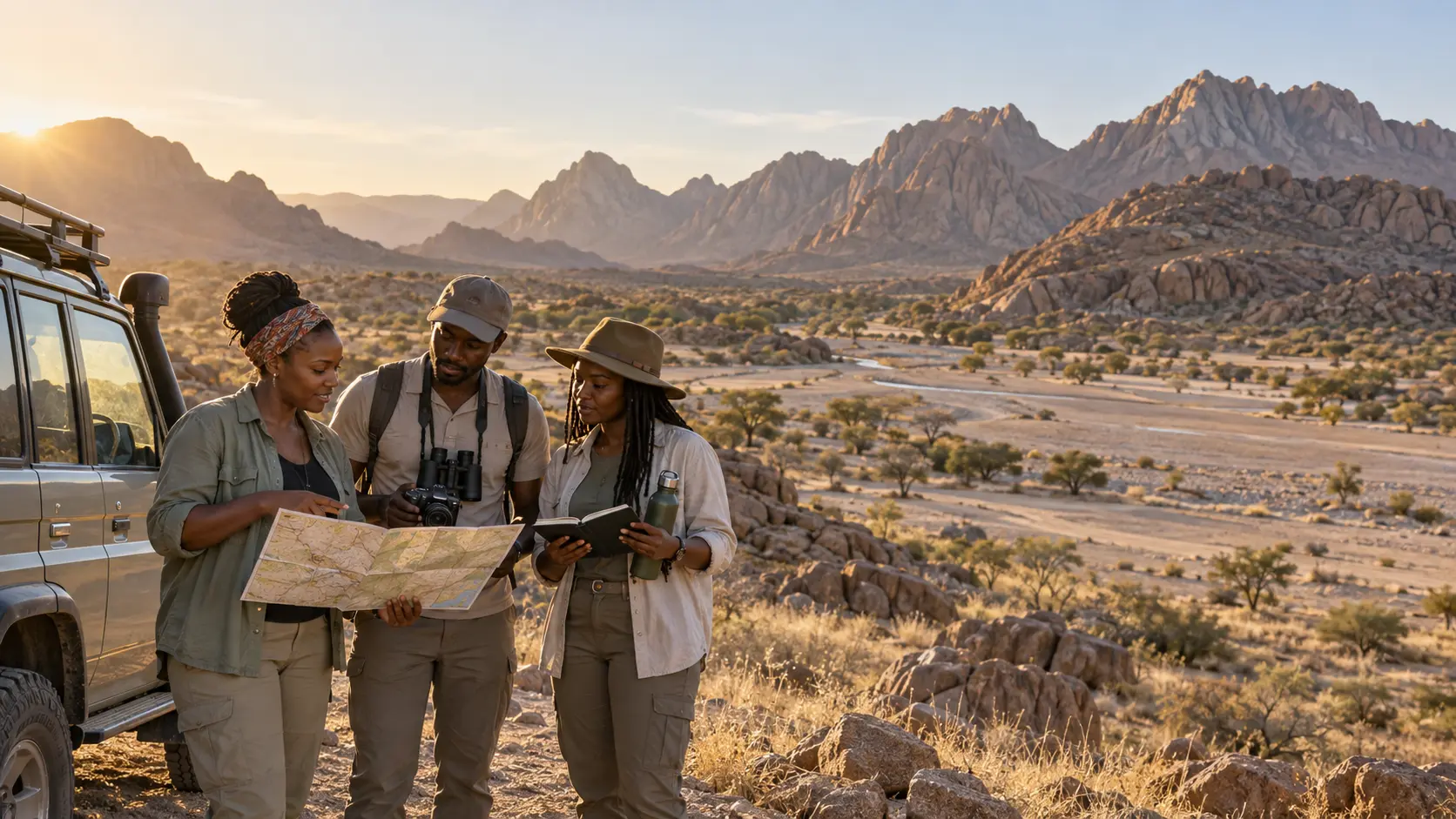
Damaraland gives Namibia a different rhythm from the dunes of Sossusvlei, the wildlife circuits of Etosha or the coastal towns around Swakopmund. It is rugged, open and layered. Travellers come for desert-adapted wildlife, ancient rock art, mountain scenery, dry riverbeds and the feeling of moving through a landscape that asks for patience rather than speed.
For international travellers comparing Namibia with South Africa, Botswana or East Africa, Damaraland is often the place that makes Namibia feel most distinctive. It is not about ticking off a dense list of sightings in one afternoon. It is about reading tracks in dust, learning why animals move through dry country, visiting cultural heritage sites respectfully and accepting that distance is part of the experience.
The region is especially valuable as a bridge between Etosha, the Skeleton Coast, Swakopmund and northern routes. A well-planned Damaraland stop can turn a long transfer into one of the strongest parts of the trip. A rushed stop can feel like too much driving for too little time on the ground.
Who Damaraland suits best
| Traveller profile | Why Damaraland works | Main planning watchpoint |
|---|---|---|
| First-time Namibia road-trippers | It adds remote landscapes and cultural depth between classic highlights | Do not underestimate gravel-road time or fatigue |
| Wildlife travellers | Desert-adapted wildlife creates a very different experience from Etosha | Sightings are never guaranteed, and ethical guiding matters |
| Families | Short guided activities and strong lodge bases can make the region memorable | Keep driving days shorter and plan meals, shade and rest |
| Culture and landscape travellers | Twyfelfontein and surrounding landscapes reward slower interpretation | Use local guides and verify site rules before visiting |
| Photographers | Morning and late-afternoon light on rock, dust and dry riverbeds can be exceptional | Protect equipment from dust and avoid overloading the route |
How many nights should travellers plan?
One night can work as a positioning stop, but it is rarely enough for travellers who want to understand Damaraland. Two nights give a much better chance to include a guided activity, a cultural or geological visit and a calmer departure. Three nights can make sense for travellers who want a slower lodge stay, specialist wildlife tracking, photography or a link toward the Skeleton Coast.
The right length depends on the route. A traveller coming from Etosha toward Swakopmund may need a different base from someone linking Palmwag, Twyfelfontein and the coast. The first planning question should be: what does this stop need to do for the overall itinerary? If the answer is only "break up the drive", choose a simple base. If the answer is wildlife, rock art or deeper landscape time, protect at least one full activity day.
The main Damaraland experiences
Damaraland is often described through three headline experiences, but each one needs responsible planning.
- Twyfelfontein and rock art: Twyfelfontein, also known as /Ui-//aes, is recognised by UNESCO for its rock engravings. Travellers should verify current opening, guiding, fee and preservation rules before visiting.
- Desert-adapted wildlife: Elephants, rhino and other wildlife may be associated with the wider region, but sightings depend on location, season, conservation rules and ethical guiding.
- Remote-road landscapes: Dry riverbeds, basalt, granite, open plains and mountain views are part of the appeal, but they also make route planning, fuel and daylight important.
Good Damaraland planning does not treat these as quick photo stops. It asks which experience deserves the best hours, which provider can interpret it responsibly, and where the group should sleep before and after.
Guided tour or self-drive?
Self-driving Damaraland is possible for many experienced Namibia travellers, but it should not be casual. Roads may be gravel, corrugated, sandy or remote depending on the route and season. Travellers should verify current conditions, insurance rules, tyre guidance, fuel options and whether a 4x4 is advisable or required for their exact route.
A guided tour or local activity can be a better choice when travellers want wildlife tracking, cultural interpretation, safer route judgement or reduced decision fatigue. For desert-adapted wildlife in particular, ethical guiding matters. Travellers should avoid pressure for close encounters and choose providers who explain distance, behaviour, conservation rules and community context.
Use Ayivoo guided tour listings to compare providers by the job they need to do, not just by price. A transfer provider, a lodge guide and a specialist tracking guide may solve different problems.
Provider checklist before booking
- Which exact area, base, conservancy or landmark is the activity built around?
- What is included: guide, vehicle, park or site fees, meals, water, pickup and drop-off?
- How does the provider handle wildlife distance, sensitive species and conservation rules?
- What happens if weather, road conditions or animal movement change the plan?
- Is the activity suitable for children, older travellers or travellers with mobility limits?
- What vehicle is used, and where does luggage or camera equipment go?
- How long is the drive time versus actual time outside the vehicle?
- Which cancellation, delay and payment terms apply?
- Can the provider share clear pickup instructions and an on-the-day contact number?
The strongest providers answer these questions plainly. Be cautious when communication is vague, wildlife promises are exaggerated, or route timing sounds too ambitious for daylight and gravel roads.
How to combine Damaraland with other Namibia stops
Damaraland can sit in several classic Namibia routes. The goal is to avoid making it a rushed middle day squeezed between two long drives.
| Combination | Why it works | Planning risk |
|---|---|---|
| Etosha to Damaraland to Swakopmund | Balances classic wildlife, desert landscapes and coast | The transfer days can become too long if bases are poorly chosen |
| Swakopmund to Damaraland to Etosha | Builds from coast into remote interior and then denser wildlife viewing | Travellers may arrive tired before their first guided activity |
| Damaraland and Skeleton Coast | Creates a strong remote-landscape route for photographers and repeat visitors | Road conditions, permits and fuel planning need current confirmation |
| Damaraland as a two-night lodge base | Gives time for rock art, landscape and guided wildlife interpretation | Choose the base around the activity, not only the room photo |
For internal planning, pair this guide with other English Ayivoo destination articles through the blog hub. Then use Ayivoo's Damaraland search to see which local providers can support the route you actually want.
Season, road and wildlife trade-offs
Damaraland planning changes with season, weather and route condition. Dry periods may make some wildlife tracking easier to structure, but they can also mean dust, heat and long exposed days. Rainy-season travel can bring dramatic landscapes, but official travel advisories and local providers should be checked for road closures, flooding risk or difficult gravel sections.
International travel advisories commonly remind travellers to take care on Namibia's roads, especially outside urban areas. Current details vary by country and date, so travellers should check their own government's advice before departure. For article publication, road-safety claims should be refreshed from official sources close to the publication date.
Do not plan Damaraland by kilometre count alone. Gravel pace, stops, gates, wildlife time, lunch, fuel and fatigue can matter more than the map distance.
Common first-trip mistakes in Damaraland
- Trying to do it as a quick transit. Damaraland is usually better when one activity day is protected.
- Choosing a lodge without route logic. A beautiful base can still sit awkwardly for Twyfelfontein, wildlife tracking or the next destination.
- Assuming wildlife sightings are guaranteed. Desert-adapted wildlife requires patience, ethics and realistic expectations.
- Driving too late. Gravel roads, livestock, wildlife and fatigue make night driving a poor planning choice.
- Underestimating dust and heat. Water, sun protection, camera protection and rest matter more than travellers expect.
- Skipping local interpretation. Without context, rock art and conservation landscapes can become shallow photo stops.
FAQ about a first trip to Damaraland
Is Damaraland worth it on a first Namibia trip?
Yes, when the itinerary has enough time. It adds landscape, heritage and desert-adapted wildlife context that travellers will not get in exactly the same way at Etosha, Sossusvlei or the coast.
Is one night enough?
One night can work for positioning, but two nights are usually more comfortable if travellers want a guided activity, Twyfelfontein, photography time or a slower lodge experience.
Do travellers need a 4x4?
It depends on the exact route, season, rental terms and provider advice. Many Damaraland routes involve gravel or rougher sections, so travellers should confirm vehicle suitability before booking.
Can travellers see desert-adapted elephants or rhino?
Possibly, but sightings should never be promised. Choose ethical providers who follow conservation rules, respect sensitive species and explain realistic chances for the current area and season.
Sources to verify before publication
- UNESCO: Twyfelfontein or /Ui-//aes World Heritage listing for current site status and heritage framing.
- Save the Rhino International: Namibia for current conservation context around desert-adapted rhino work.
- U.S. State Department Namibia travel advisory, Government of Canada Namibia travel advice and UK FCDO Namibia safety advice for current road and traveller-safety guidance.
- Current Namibia tourism-board destination information for Damaraland, Twyfelfontein, Brandberg, Palmwag and surrounding routes.
- Ayivoo live listings for Damaraland guided tours, transport, accommodation and local availability before publication.
Next step on Ayivoo
Open Damaraland on Ayivoo and build the route around one clear priority: rock art, desert-adapted wildlife, remote landscapes, photography or a calmer link between Etosha and the coast. Then choose the provider who makes that priority safer, clearer and easier to experience well.